LED Panels vs. Fresnels: A Video Lighting Guide
Struggling between the soft wash of an LED panel and the focused punch of a Fresnel? Choosing the wrong fixture flattens your footage. Over our two decades supplying European broadcast sets, we’ve found that matching light types to your environment dictates your production success.
The Physics of Light Quality
The fundamental difference between these two lighting technologies lies in how they shape and project photons. You cannot simply swap one for the other without fundamentally altering the mood, depth, and contrast of your scene.
Fresnels utilize a specialized stepped lens to focus light from a single source. This mechanical design gives you precise spot-to-flood control, typically allowing you to adjust the beam angle anywhere from a tight 10° to a wide 60° wash. Because the light originates from a single point, Fresnels cast sharp, defined shadows that create dramatic dimension.
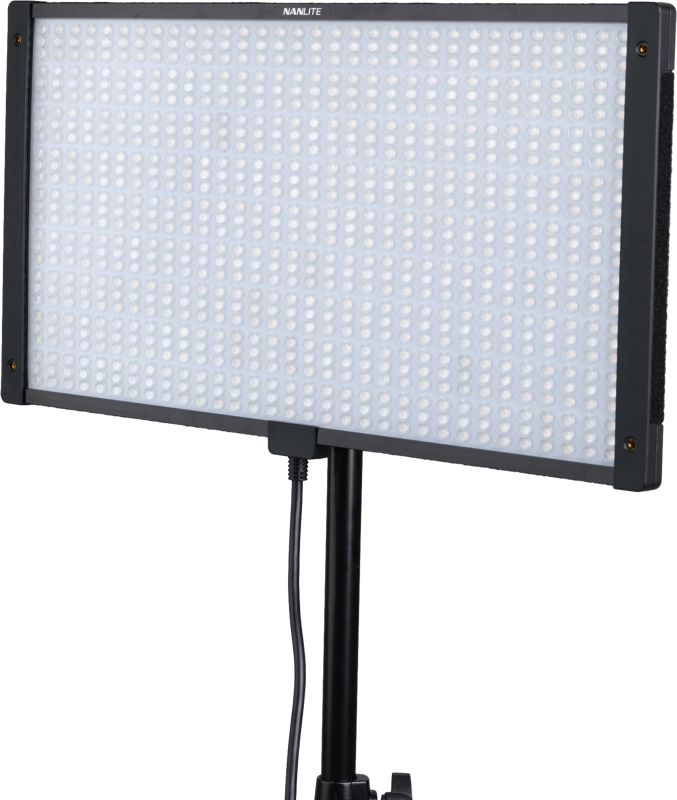
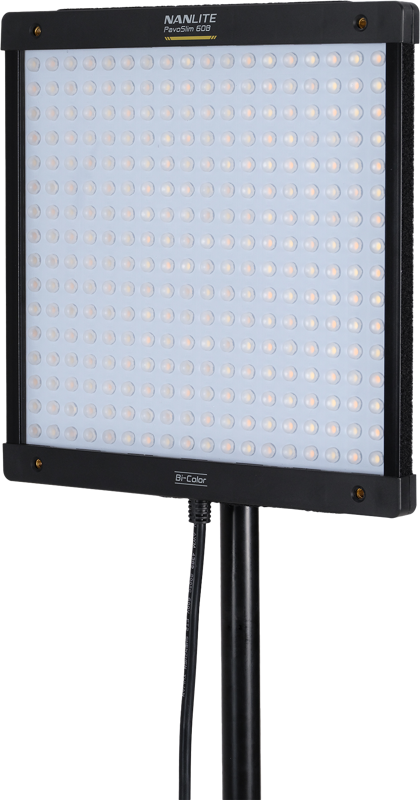
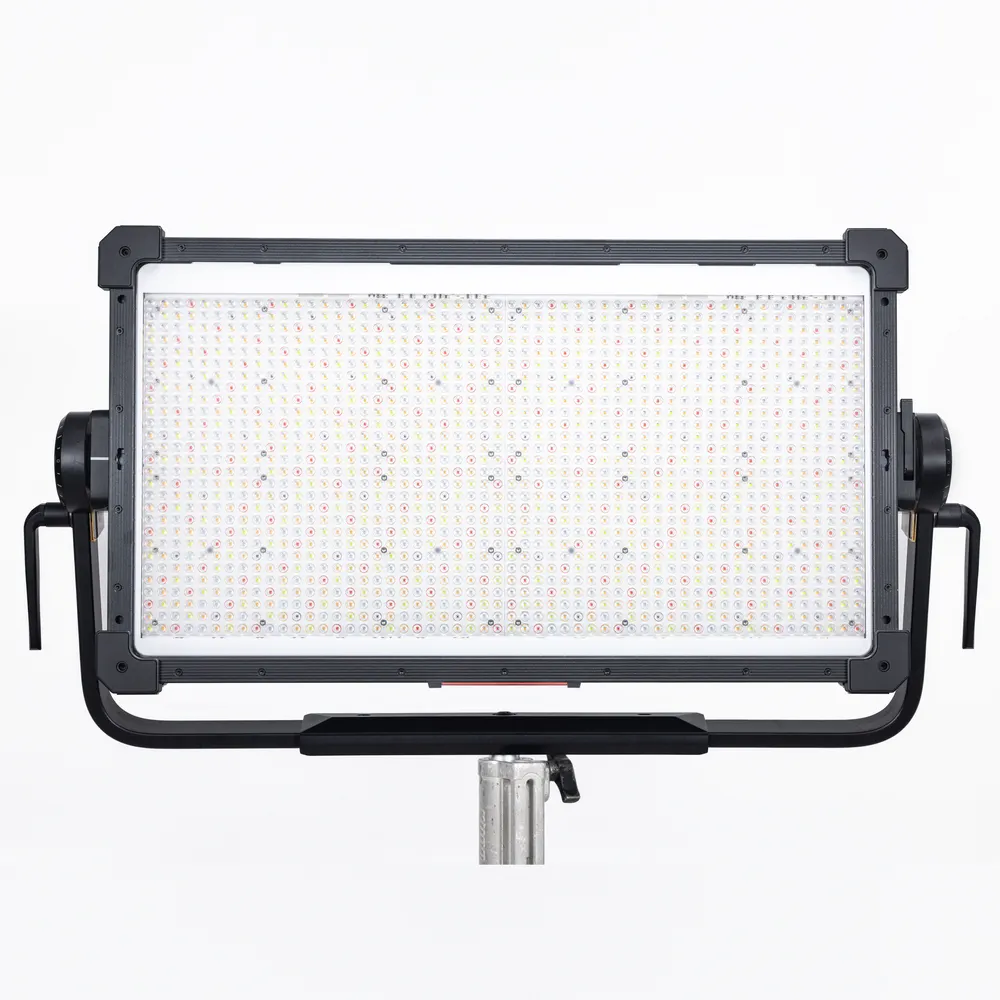
Conversely, LED panels consist of hundreds of individual diodes spread across a flat surface. They naturally deliver a wide, diffuse flood of light – often exceeding a 60° spread. Instead of one hard shadow, panels produce softer, multi-source shadows that naturally wrap around your subject.
| Feature | LED Panels | Fresnel & Point-Source Lights |
|---|---|---|
| Beam Spread | Broad, diffuse flood (>60°) | Adjustable spot-to-flood (10°-60°) |
| Focus Control | Minimal (relies on external grids/diffusion) | Precise mechanical adjustment |
| Shadow Quality | Soft, multi-source, forgiving | Defined, single-source, dramatic |
| Peak Intensity | Lower center brightness, consistent spread | High peak intensity, concentrated beam |
| Form Factor | Slim, lightweight, often silent | Typically bulkier to house lenses/cooling |
When to Choose LED Panels
For corporate interviews, livestreaming, and smaller studio spaces, LED panels are usually the most efficient choice. When you need to light a subject for video with a flattering, even key light, the broad surface area of a panel smooths out skin textures and reduces harsh contrast lines on the face.
Because they naturally spread light, panels require less distance to achieve a soft wrap compared to bouncing a spotlight. Space is your primary adversary in tight home offices or modest studios. A slim panel mounted on a basic stand provides immediate, high-quality illumination without taking up your entire floor plan. Furthermore, high-end RGBWW panels offer immense versatility. If you want to leverage colored light in video production to separate your talent from the background, dialing in a saturated hue on a panel takes seconds.
From our experience outfitting rapid-deployment documentary crews, the modern LED panel’s low heat output and silent operation are critical when shooting in enclosed, sound-sensitive environments. Since many panels operate without internal fans, they ensure clean audio recording while keeping your talent comfortable.
-
 LED panels
NANLITE PavoSlim 120C RGBWW LED Panel
€ 631.92€ 783.58 (incl. VAT) -
 LED panels
NANLITE PavoSlim 60B LED Panel
€ 371.92€ 461.18 (incl. VAT) -
 LED panels
APUTURE Nova II 2×1 (no case)
€ 3 490.00€ 4 327.60 (incl. VAT) -
-26%LED panels
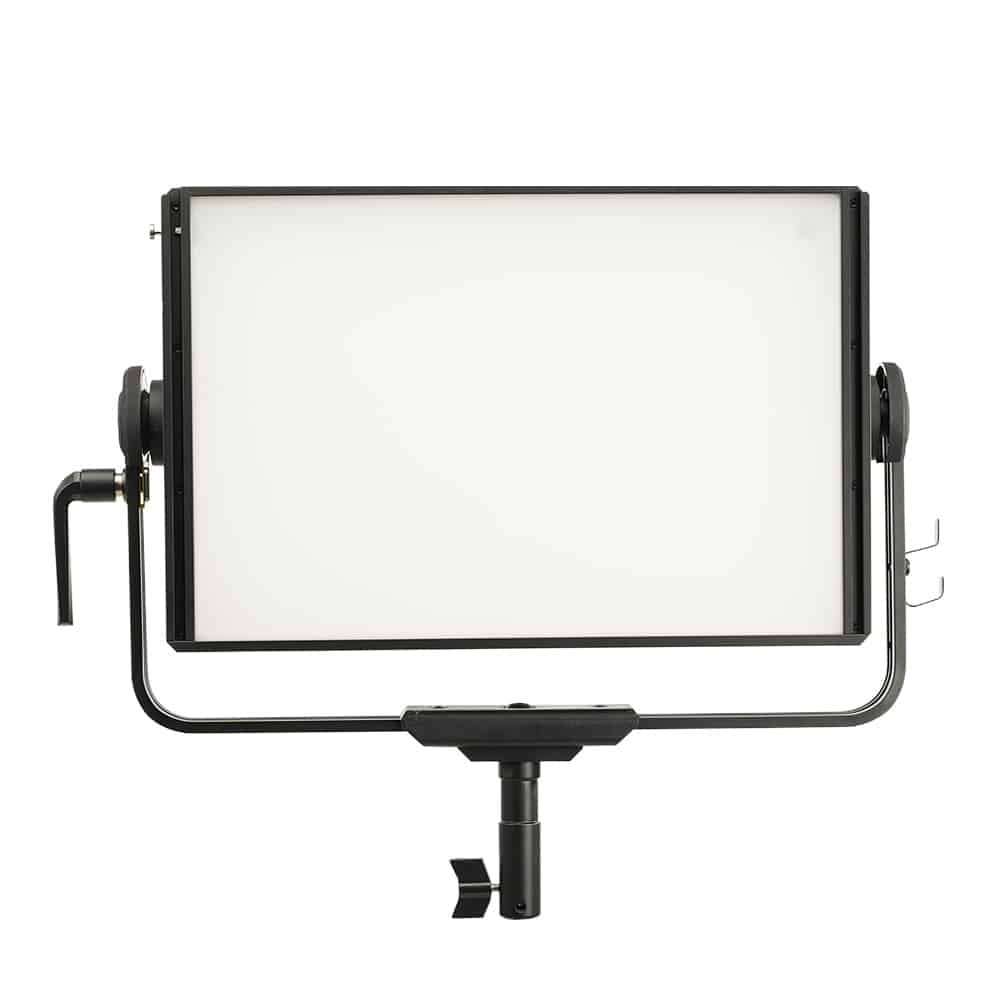
APUTURE Nova P300c
Original price was: € 1 599.00.€ 1 190.00Current price is: € 1 190.00.€ 1 475.60 (incl. VAT)
When to Choose Fresnels and Point-Source Lights
While panels excel at foundational softness, narrative filmmaking and dynamic commercial shoots demand control and punch. Spot lights and Fresnels provide the intensity required to dictate the contrast in your frame.
If your objective involves simulating natural light, you need a hard, single-point source. Sunlight is inherently directional. Punching a high-wattage Fresnel through a window or bouncing it off a ceiling effectively mimics the physics of the sun in a way that a diffused panel simply cannot match. The concentrated beam creates the necessary contrast ratios to give your two-dimensional footage a three-dimensional depth.
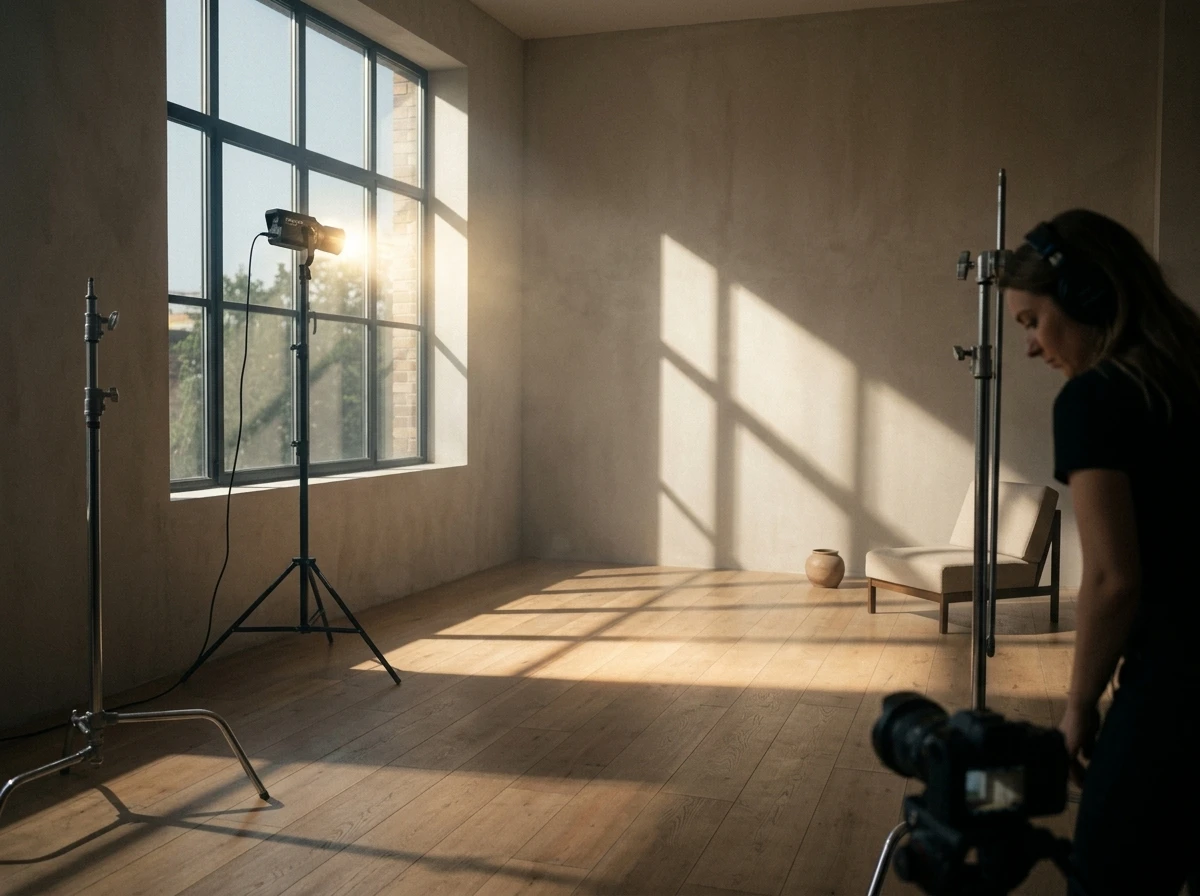
Traditional tungsten Fresnels generated significant heat and required heavy power draw. However, the industry has shifted toward high-output LED point-source fixtures equipped with Fresnel attachments. This modern approach delivers the classic mechanical beam control and single-shadow characteristics of a legacy Fresnel while keeping power consumption low and color temperatures highly tunable.
-
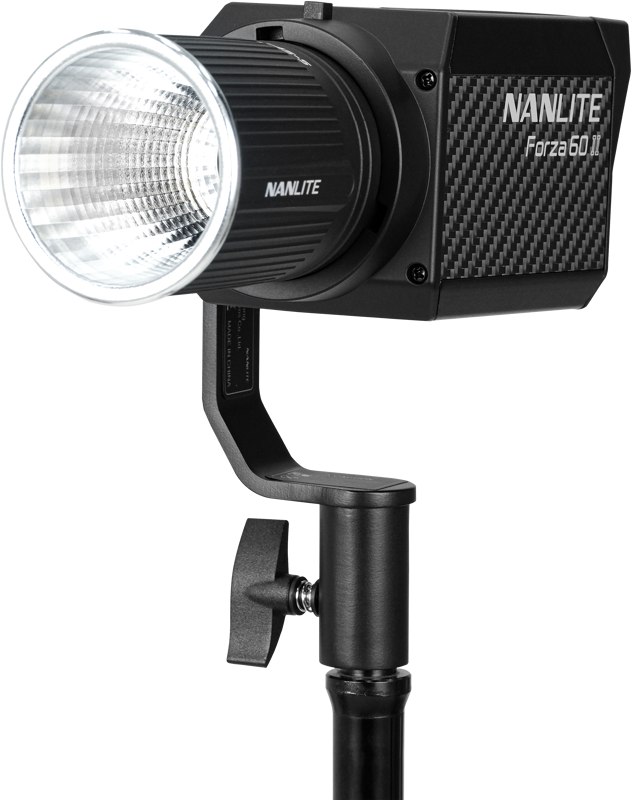
 Spot lights
NANLITE Forza 60 II LED Spot Light
€ 255.12€ 316.35 (incl. VAT) -
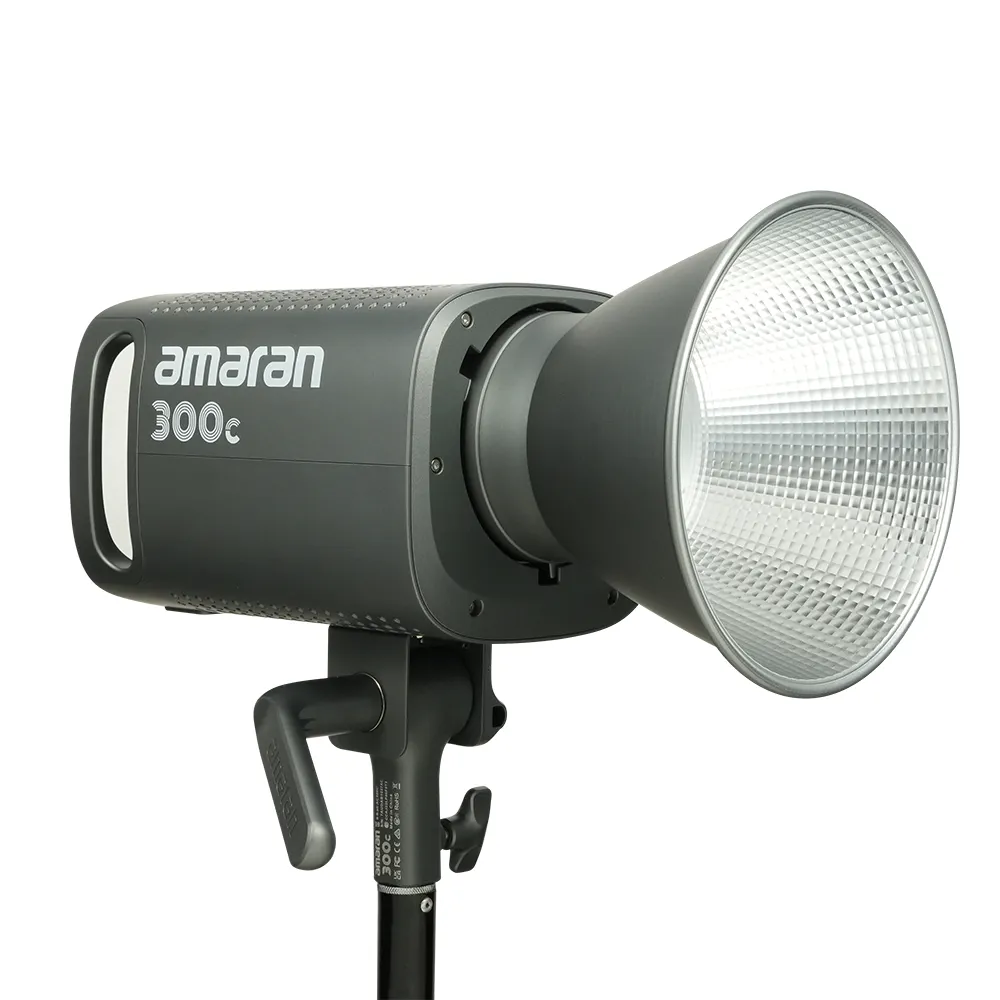
-21%Spot lights
AMARAN 300c full-color Bowens-mount point-source LED light, GREY
Original price was: € 569.00.€ 450.00Current price is: € 450.00.€ 558.00 (incl. VAT)IN STOCK -
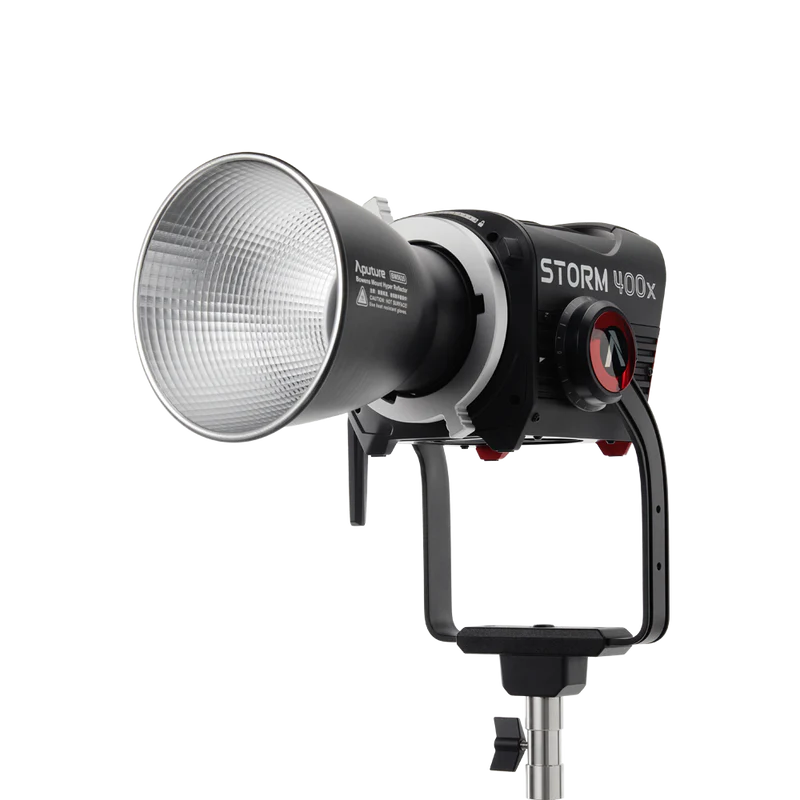
 Spot lights
APUTURE Storm 400x
€ 1 050.00€ 1 302.00 (incl. VAT)IN STOCK -
-23%Spot lights
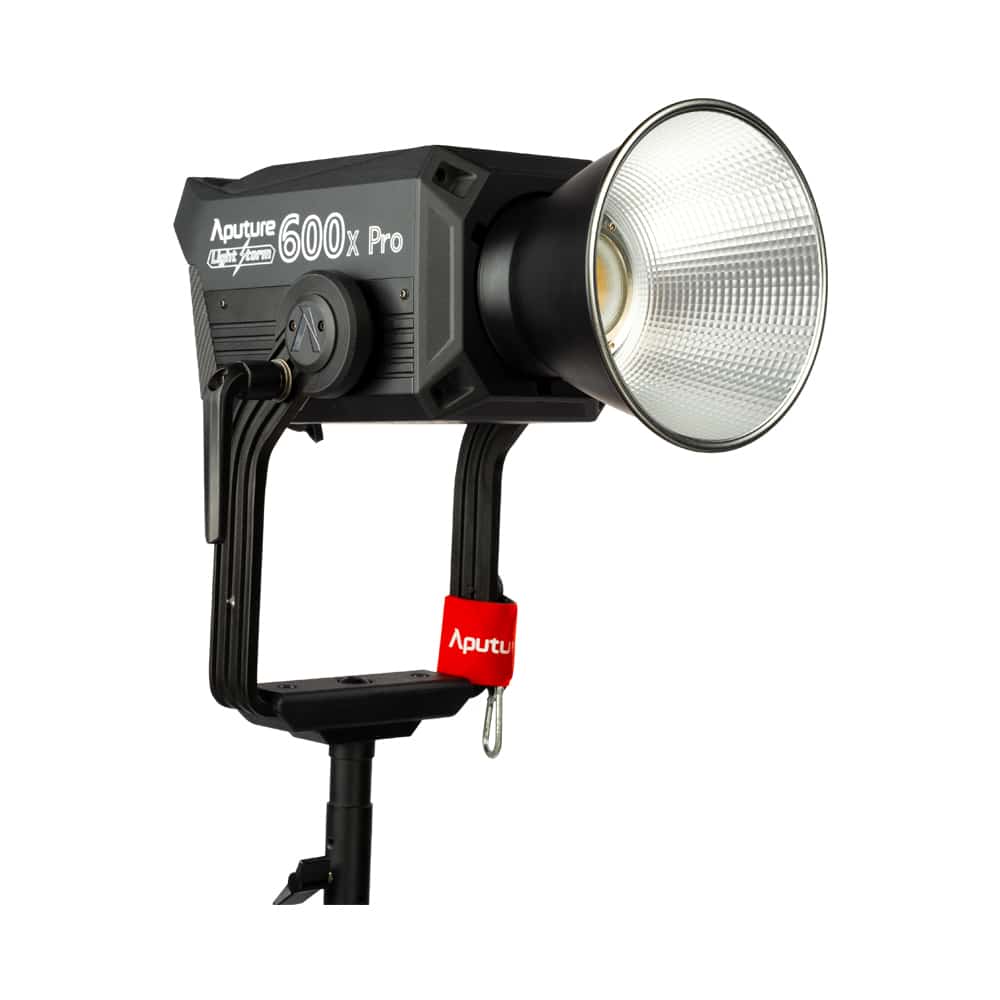
APUTURE Light Storm 600X PRO 600W bi-color point-source LED
Original price was: € 1 900.00.€ 1 455.00Current price is: € 1 455.00.€ 1 804.20 (incl. VAT)
Performance Trade-Offs and Total Cost of Ownership
When evaluating your lighting budget, look beyond the upfront purchase price and consider the Total Cost of Ownership (TCO) and daily operational friction. Power and maintenance create the most immediate operational differences. Legacy tungsten Fresnels draw heavy wattage and burn through expensive bulbs. In contrast, modern LED configurations – both panels and point-source lights – boast lifespans exceeding 50,000 hours with minimal power draw, easily running on standard household circuits or V-mount batteries.
Rigging demands also dictate which fixture fits your workflow. Because panels are generally lightweight, you can safely mount them on standard light stands. High-output spot lights, especially those carrying heavy glass Fresnel lenses and advanced cooling systems, require sturdy C-stands and sandbags to secure properly. Furthermore, you must account for the acoustic footprint on set. High-intensity point-source lights require internal fans to cool their dense LED arrays. While professional brands engineer these to be whisper-quiet, it is a factor to weigh against the entirely passive, silent cooling found on many flat panels.
If you are just building out your kit, reviewing foundational video lighting for beginners will remind you that the fixture itself is only half the equation. You must also budget for light modifiers. A spot light can be softened beautifully with a deep dome softbox, but an LED panel can never be fully focused into a hard, punchy beam. According to technical experts at Vello, a Fresnel’s ability to focus an intense beam simply cannot be replicated by a flat array, making it ideal for front washes and controlled highlights.
Building a Cohesive Strategy
You rarely need to choose exclusively between these two technologies. The most robust professional setups utilize both, leveraging the unique physical properties of each fixture to build dynamic, dimensional scenes. Instead of seeking a single universal light, evaluate the specific architectural limitations and creative goals of your set.
When determining how many lights for video production you actually need, consider assigning specific functional roles based on light spread. You might use a large, diffused LED panel as your primary key light to establish a soft, flattering wrap on your talent. Then, you can deploy a focused Fresnel or point-source LED as a backlight to carve your subject out of the background with a crisp edge.
Key Takeaways
- Determine your beam requirements: LED panels deliver a wide, soft, multi-source flood ideal for general coverage, while Fresnels offer a precise, focusable beam that creates dramatic, single-source shadows.
- Match the light to the genre: Corporate interviews, livestreaming, and tight spaces benefit from the flattering wrap and slim profile of LED panels. Narrative and commercial projects rely on Fresnels to mimic sunlight and command depth.
- Factor in rigging and space: Panels are lighter and easier to deploy on location. Point-source lights and Fresnels require heavier grip gear and dedicated space for mounting modifiers.
- Consider versatility: A high-output point-source LED can be softened with a dome, but an inherently soft LED panel cannot be sharpened into a hard spot.
Ready to upgrade your studio’s capabilities? Explore our full range of professional lighting fixtures, or contact our technical installation team to design a customized lighting grid for your specific production environment.