V-Mount Batteries for Video: Compare 50Wh to 300Wh Options
Power loss mid-take is a fast way to derail a production schedule. You need a reliable power source that handles high continuous draw without adding unnecessary bulk to your camera rig.
A standard V-mount Li-ion battery delivers high energy density and secure physical locking. This design makes it the industry standard for powering cinema cameras, wireless transmitters, and professional LED lighting. In our experience, standardizing your power ecosystem around reliable V-mounts saves time on set. It also reduces the number of power accessories you need to pack for a shoot.
Choosing the right battery means balancing runtime, output versatility, and travel restrictions. Here is how to select the right capacity and features for your next production.
Navigating Capacity and Flight Regulations
If your crew travels by air, aviation rules strictly dictate your power inventory. Standard spare lithium-ion batteries are prohibited in checked baggage to prevent fire hazards. You must carry them in the passenger cabin.
When packing for a flight, the watt-hour (Wh) rating determines exactly what you can bring:
| Battery Capacity | Flight Permitted | Best Use Case |
|---|---|---|
| Under 100Wh | Yes (Carry-on only, unlimited quantity) | Handheld rigs, gimbals, travel shoots |
| 101Wh – 160Wh | Yes (Carry-on only, limit of 2) | Medium lighting, extended camera runtimes |
| Over 160Wh | No (Forbidden on passenger flights) | Studio lighting, heavy cine-camera setups |
Note: Unlimited quantities of under-100Wh batteries are still subject to personal use definitions by individual air carriers.
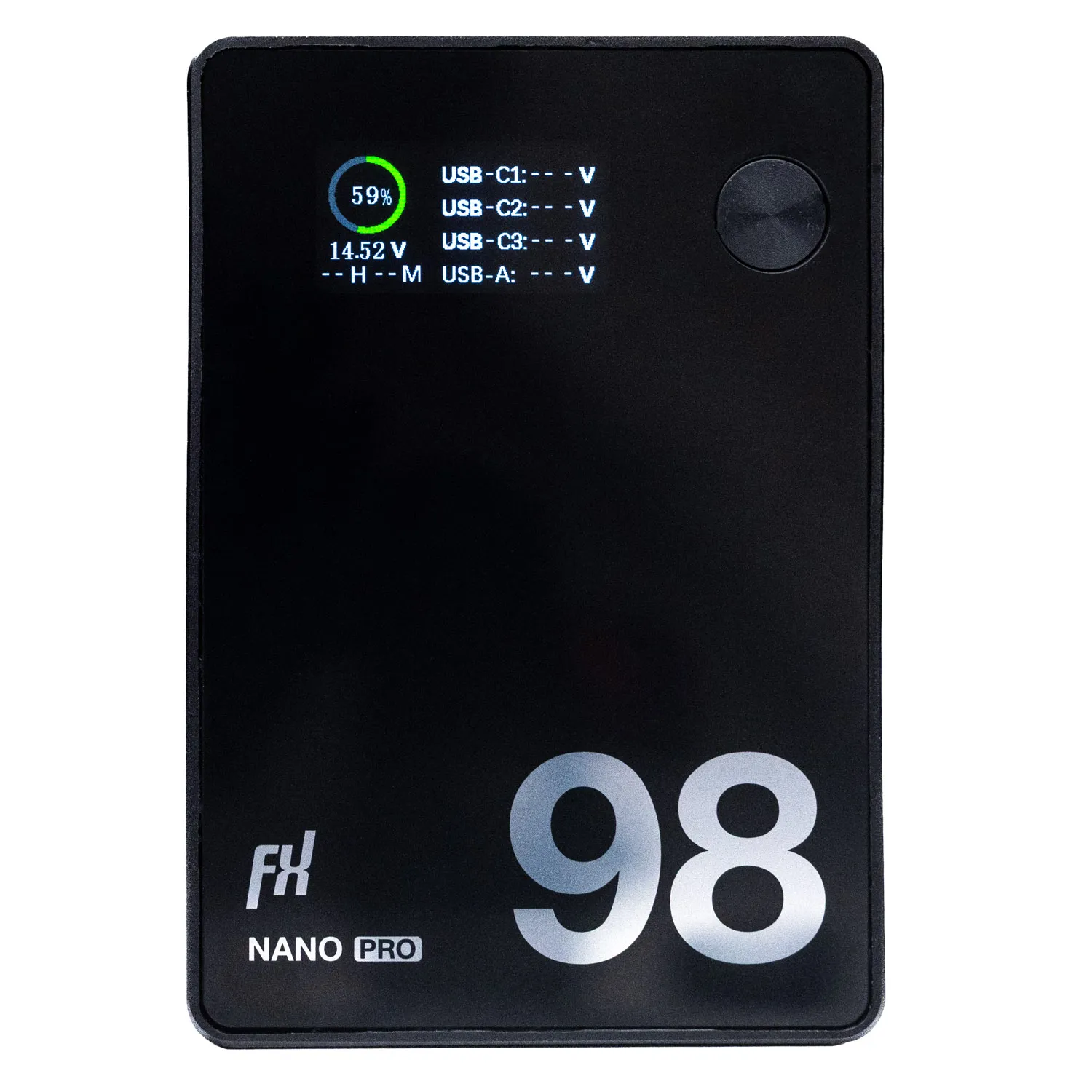
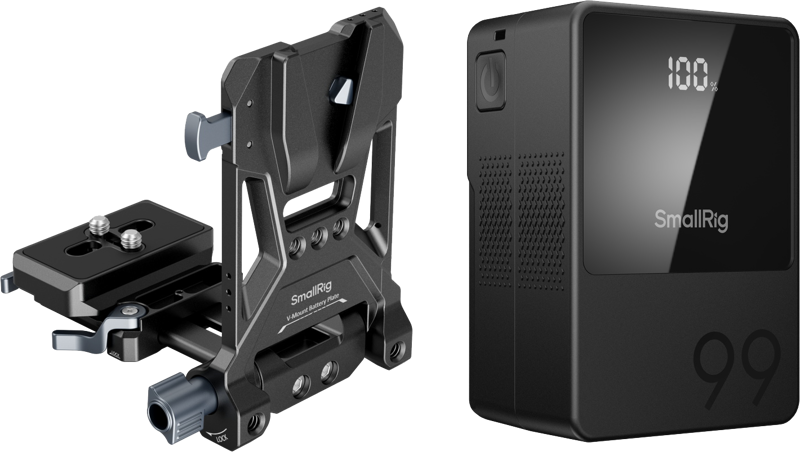
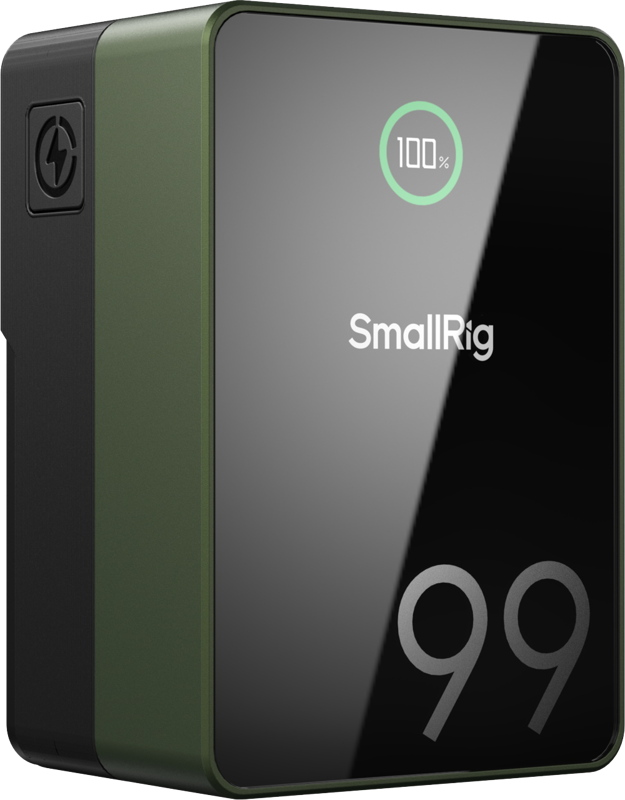
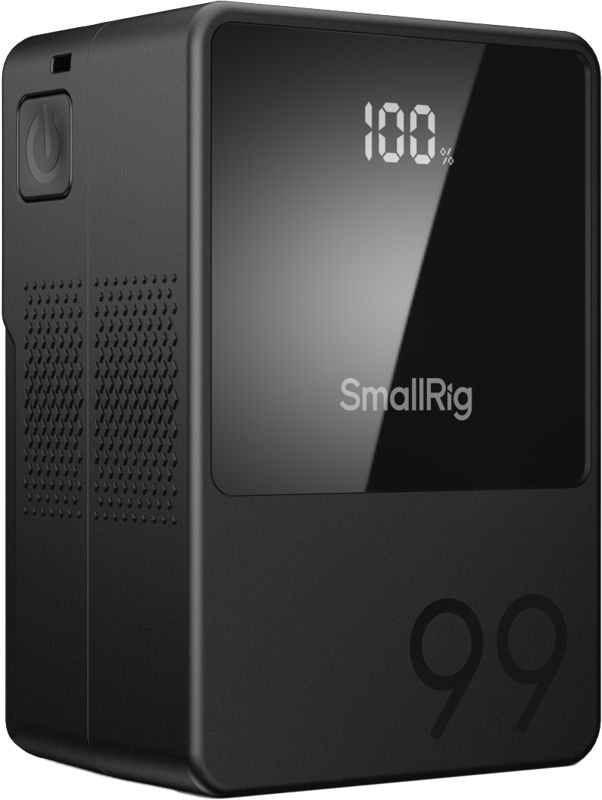
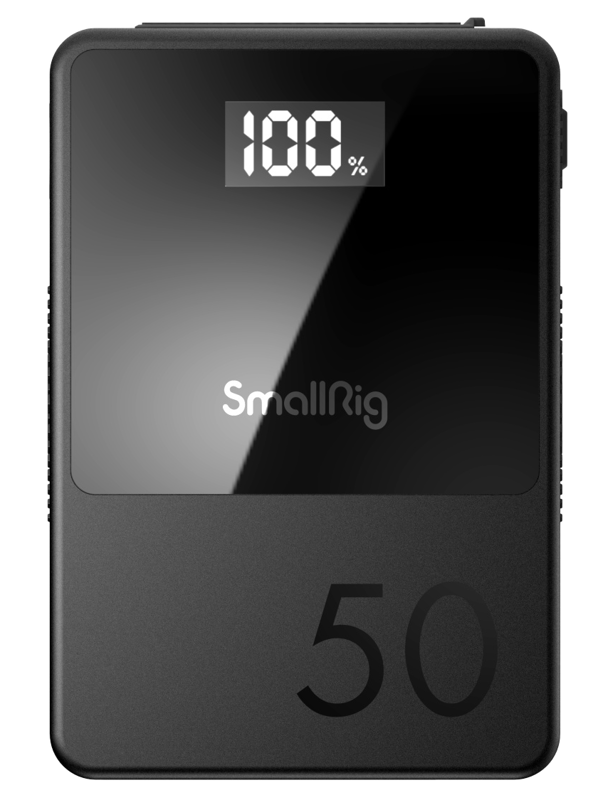
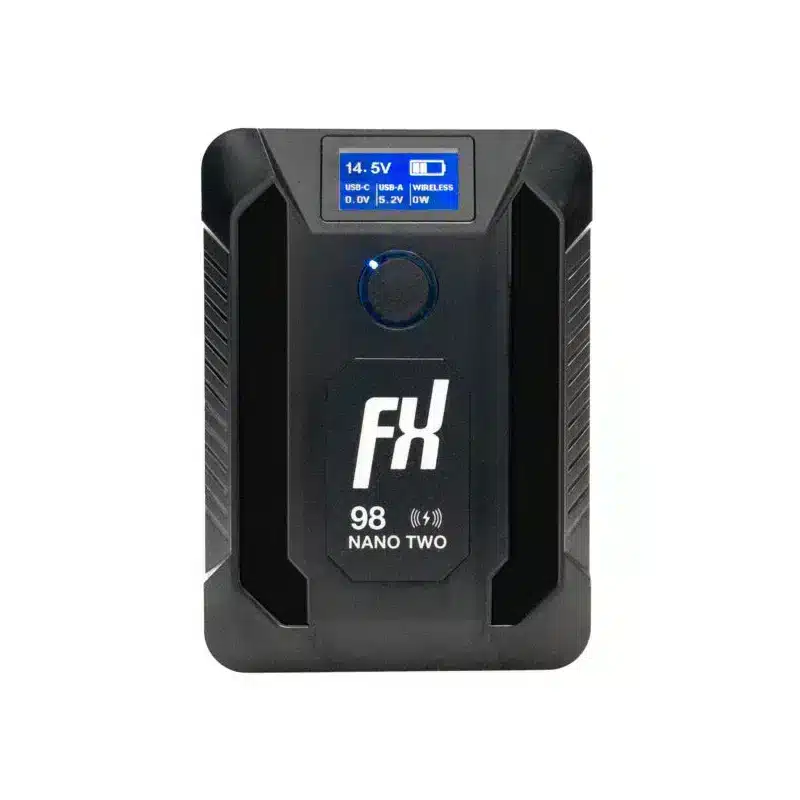
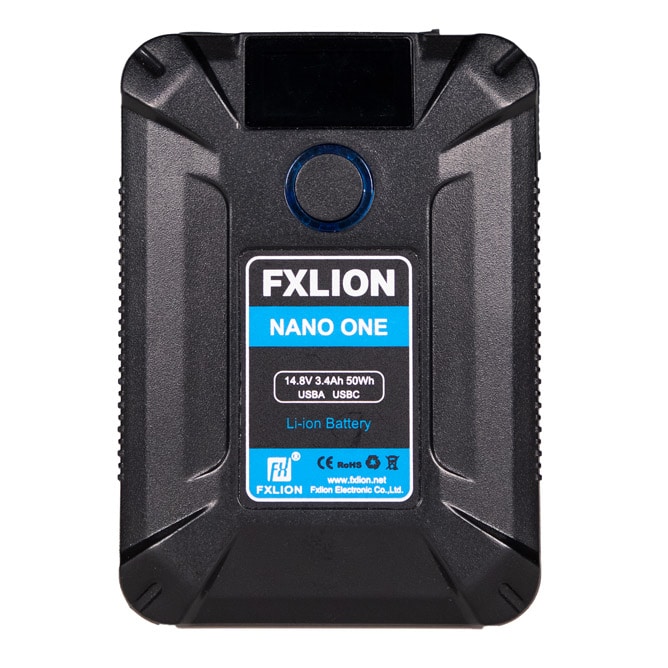
For mobile setups, mini 50Wh to 99Wh V-mounts pack serious output into a travel-friendly footprint. The FXLION Nano series and SmallRig VB series take up roughly 70% of the space of a traditional battery. This compactness keeps your gimbal or handheld rig balanced while keeping your gear fully compliant with aviation rules.
-
 -10%Batteries V-mount
FXLION Nano Pro 98Wh V-mount battery with PD 100W
Original price was: € 199.00.€ 179.10Current price is: € 179.10.€ 222.08 (incl. VAT)IN STOCK -
 Batteries V-mount
SMALLRIG 5048 VB99 mini V Mount Battery Kit (3580 + 4064)
€ 262.32€ 325.28 (incl. VAT) -
 Batteries V-mount
SMALLRIG 4974 VB99 Pro mini V Mount Battery Green
€ 243.12€ 301.47 (incl. VAT) -
 Batteries V-mount
SMALLRIG 3580 V-Mount Battery Mini VB99
€ 178.32€ 221.12 (incl. VAT) -
 Batteries V-mount
SMALLRIG 3579 V-Mount Battery Mini VB50
€ 115.92€ 143.74 (incl. VAT)IN STOCK -
 -30%Batteries V-mount
FXLION Nano Two Wireless 98Wh V-mount battery
Original price was: € 199.00.€ 139.00Current price is: € 139.00.€ 172.36 (incl. VAT) -
 -17%Batteries V-mount
FXLION Nano One V-mount 50Wh battery
Original price was: € 119.00.€ 99.00Current price is: € 99.00.€ 122.76 (incl. VAT)IN STOCK
High-Capacity Workhorses for Studio and Lighting
When you shoot in controlled environments, continuous draw becomes your primary metric. A compact battery drains rapidly when powering demanding setups. If you need to light an interview with heavy fixtures or run a 24V cinema camera all day, you need higher sustained wattage.
Batteries between 100Wh and 160Wh offer a reliable middle ground for longer camera runtimes. If you build a complex studio set and need to power heavy LED panels or fresnel lights, step up to 200Wh or 300Wh capacities. These larger packs provide the sustained energy required to keep high-output lights running at maximum brightness without unexpected color shifts or power shutoffs.
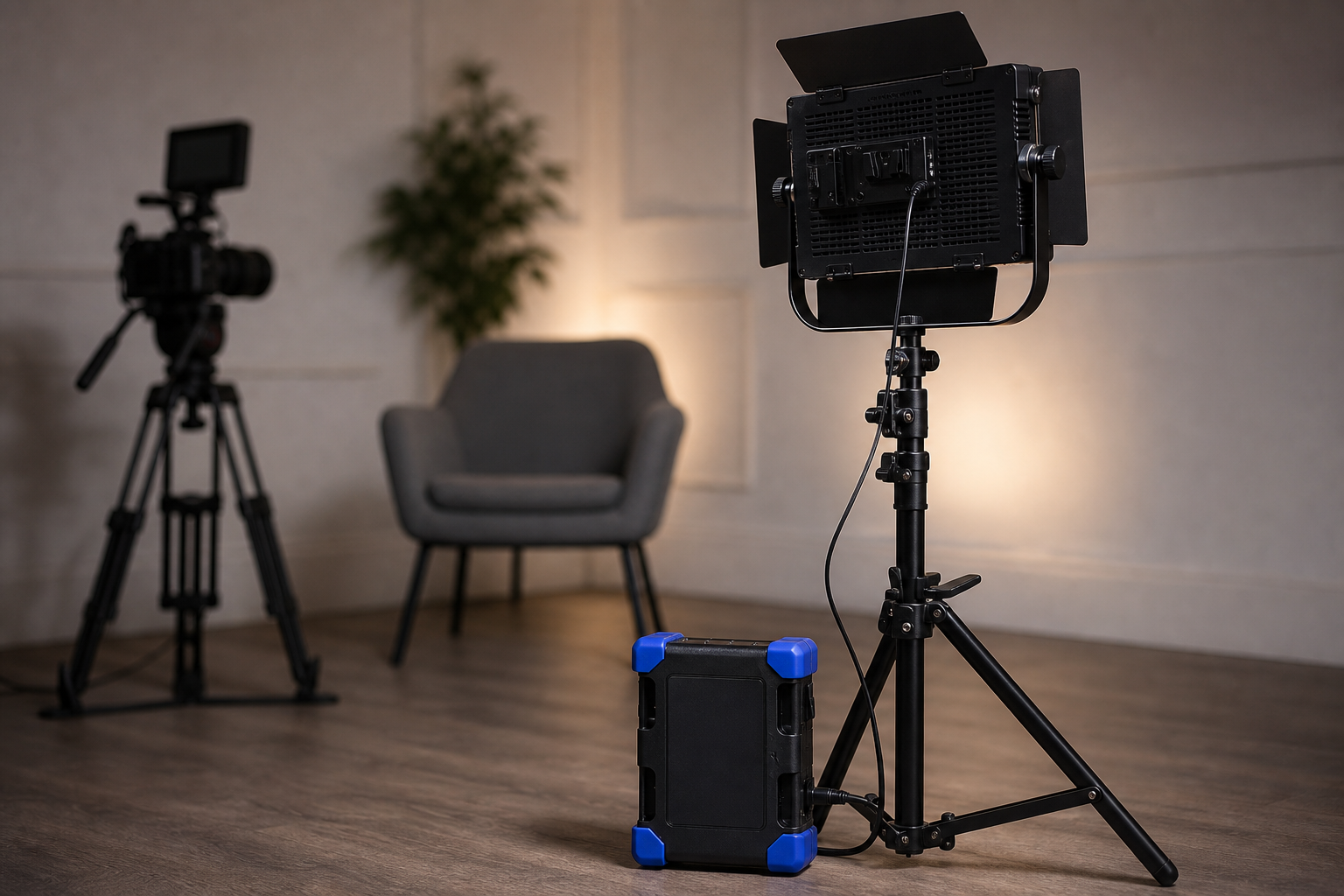
We have seen productions suffer from too many battery swaps disrupting the flow of an interview. Larger capacities mean fewer interruptions. This allows your crew to stay focused on the talent rather than constantly monitoring power levels.
-
 Batteries V-mount
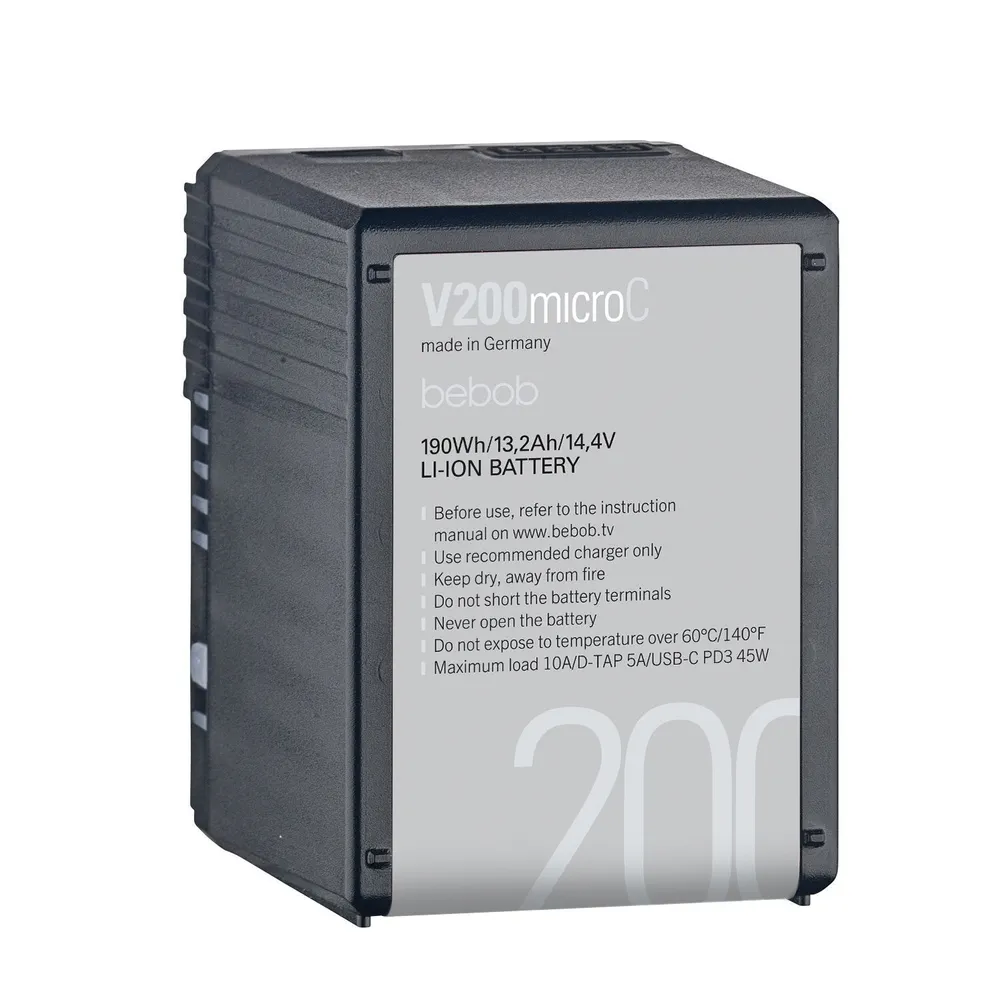
BEBOB Vmicro USB-C PD3 Li-Ion battery 14,4V / 13,2Ah / 190Wh
€ 469.00€ 581.56 (incl. VAT) -
 Batteries V-mount
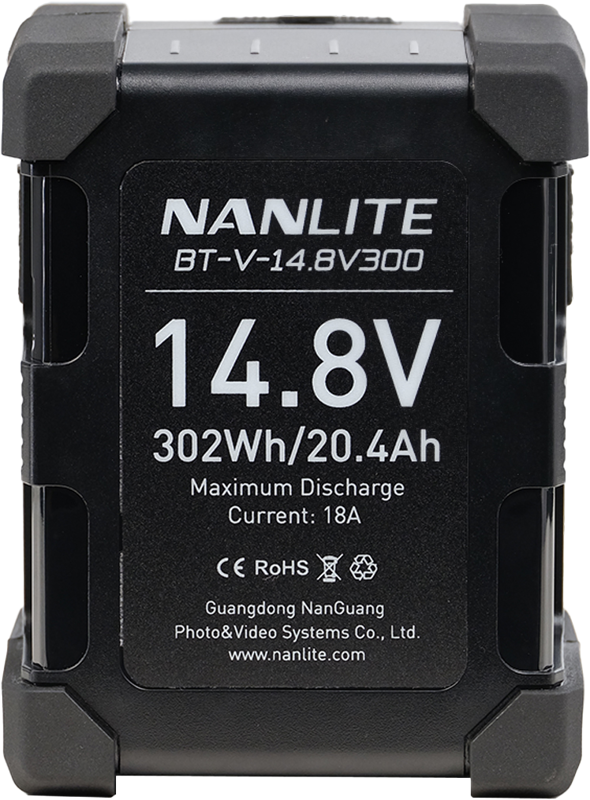
NANLITE battery V-mount 14.8V 300WH
€ 487.92€ 605.02 (incl. VAT) -
 Batteries V-mount
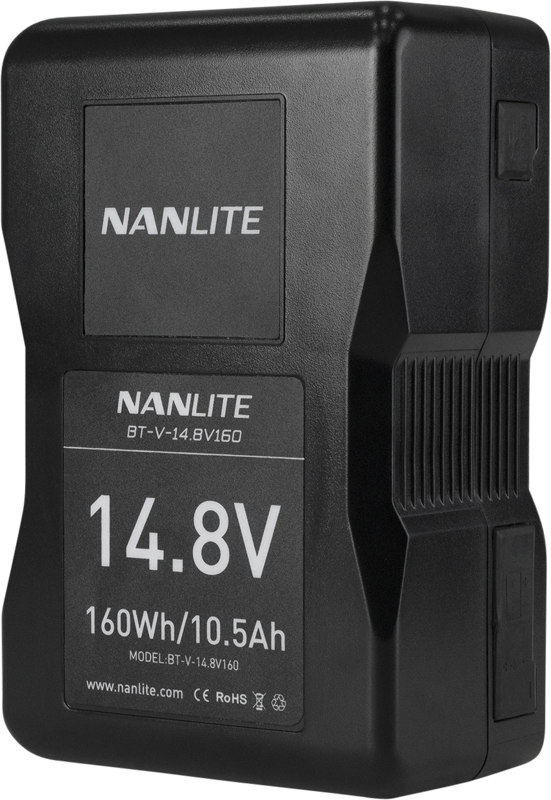
NANLITE Battery V-Mount 14.8V 160Wh
€ 284.72€ 353.05 (incl. VAT) -
 Batteries V-mount
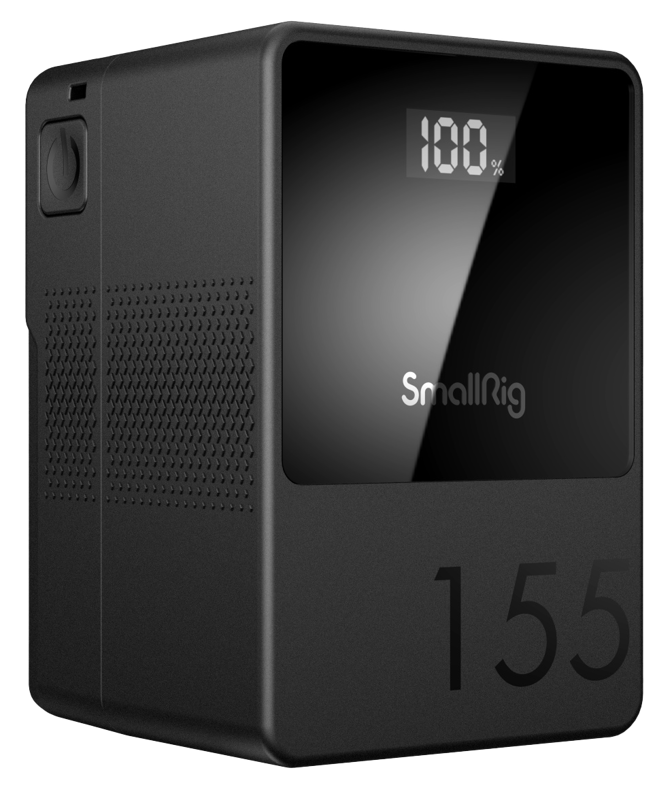
SMALLRIG 3581 V-Mount Battery Mini VB155
€ 302.32€ 374.88 (incl. VAT) -
 -10%Batteries V-mount
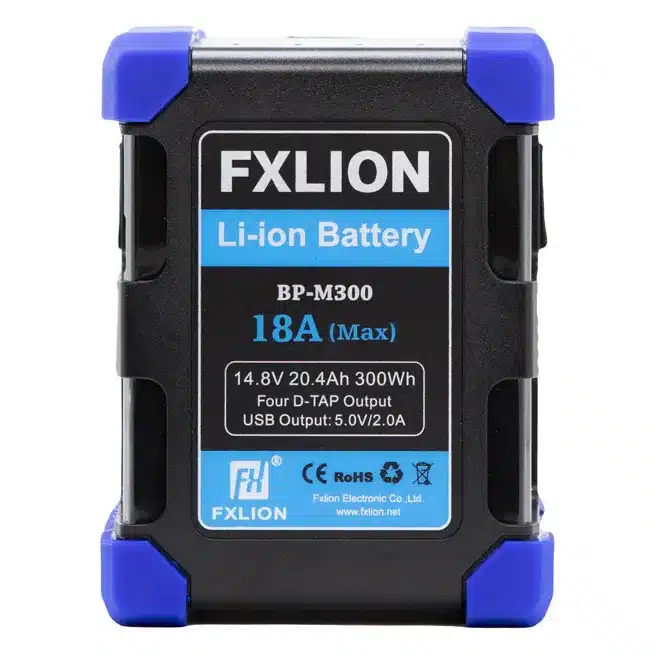
FXLION 300Wh High Power Square Battery with impact-proof rubber corners
Original price was: € 470.00.€ 423.00Current price is: € 423.00.€ 524.52 (incl. VAT)IN STOCK -
-10%Batteries V-mount
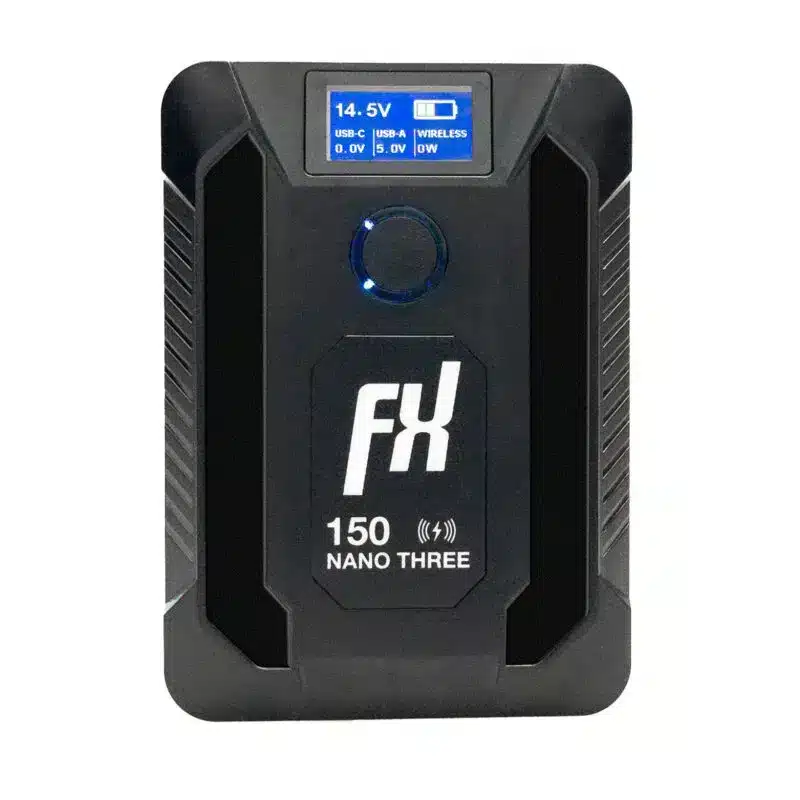
FXLION Nano Three Wireless 150Wh V-mount battery
Original price was: € 279.00.€ 251.10Current price is: € 251.10.€ 311.36 (incl. VAT)IN STOCK -
 -10%Batteries V-mount
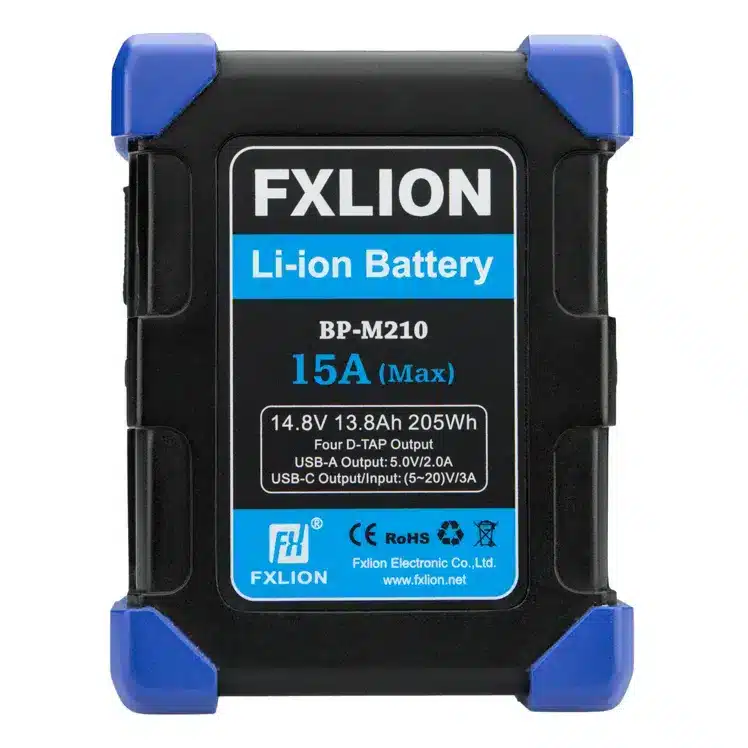
FXLION 205Wh High Power Square Battery with impact-proof rubber corners
Original price was: € 335.00.€ 301.50Current price is: € 301.50.€ 373.86 (incl. VAT)IN STOCK -
-10%Batteries V-mount
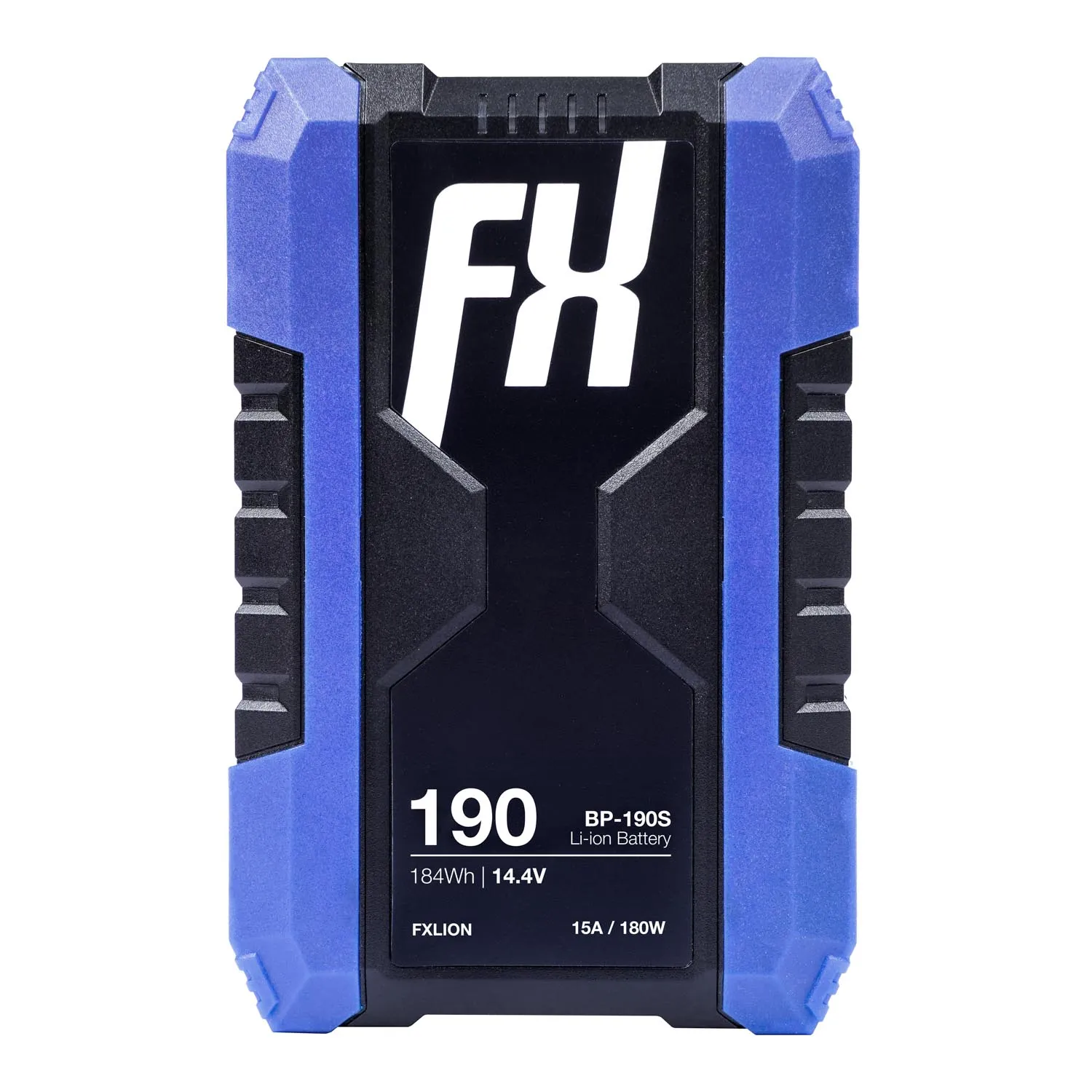
FXLION Cool Black V-Mount Battery, 184Wh, with USB, D-Tap
Original price was: € 275.00.€ 247.50Current price is: € 247.50.€ 306.90 (incl. VAT)IN STOCK -
 -10%Batteries V-mount
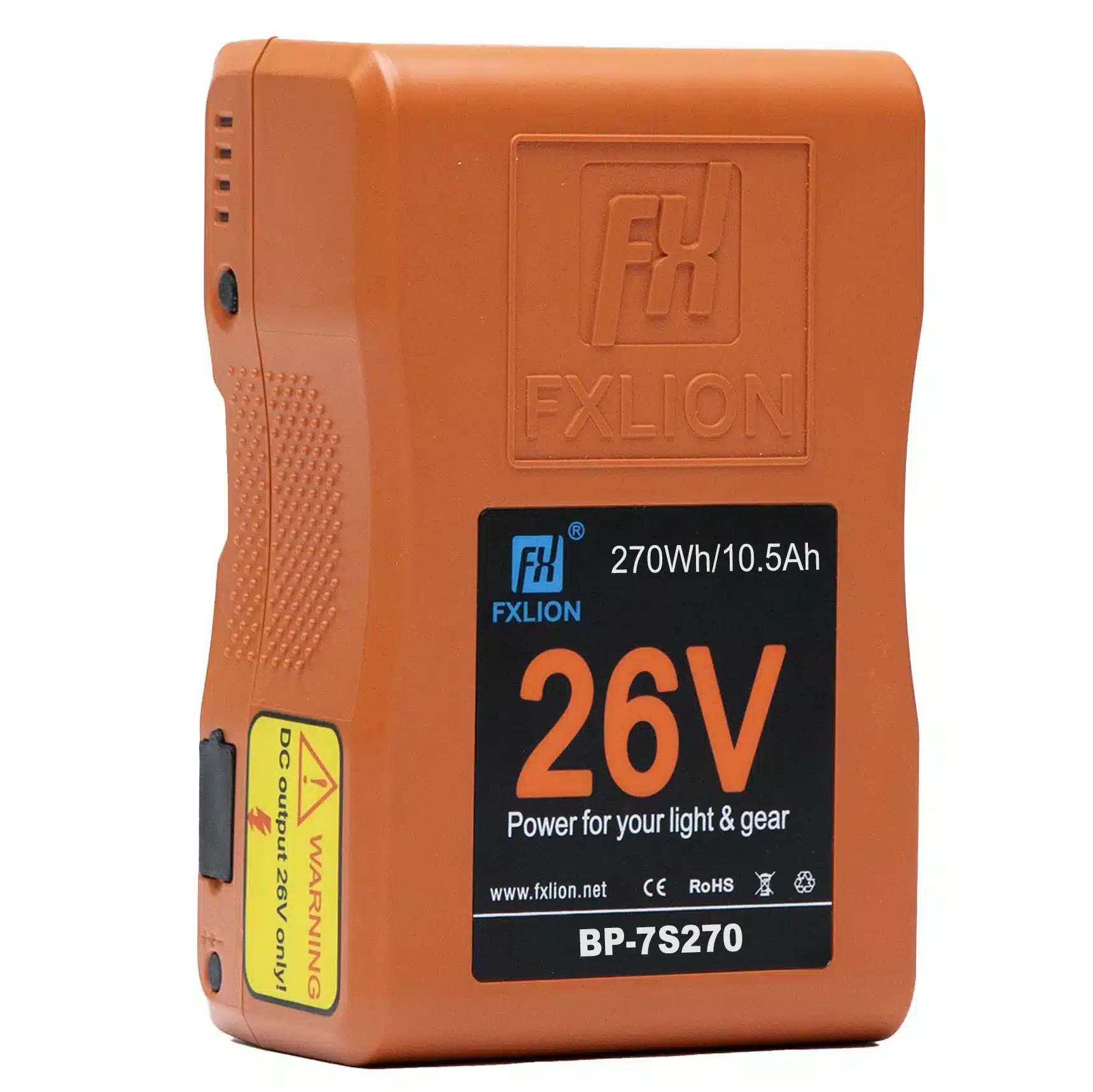
FXLION 26V V-mount battery, 270Wh, 15A
Original price was: € 450.00.€ 405.00Current price is: € 405.00.€ 502.20 (incl. VAT)IN STOCK
Consolidating Cables with Multi-Port Outputs
Modern video setups rarely rely on a single device. Your battery often acts as a central hub. It simultaneously powers the camera, a director’s monitor, and a wireless video transmitter.
When evaluating V-mount batteries, always check the port configuration. A standard 14.4V D-Tap output is mandatory for legacy cinema accessories. However, newer models incorporate 65W to 100W USB-C Power Delivery (PD) outputs for maximum versatility.
USB-C PD solves two problems at once. First, it allows you to power laptops and modern mirrorless cameras directly. Second, it lets you fast-charge the battery via USB-C. This means you can often leave heavy, dedicated V-mount chargers at the studio. Furthermore, dedicated 8V and 12V DC barrel outputs eliminate the need for extra dummy regulators. This approach allows for shorter power cables and a cleaner camera rig.
-
Batteries V-mount
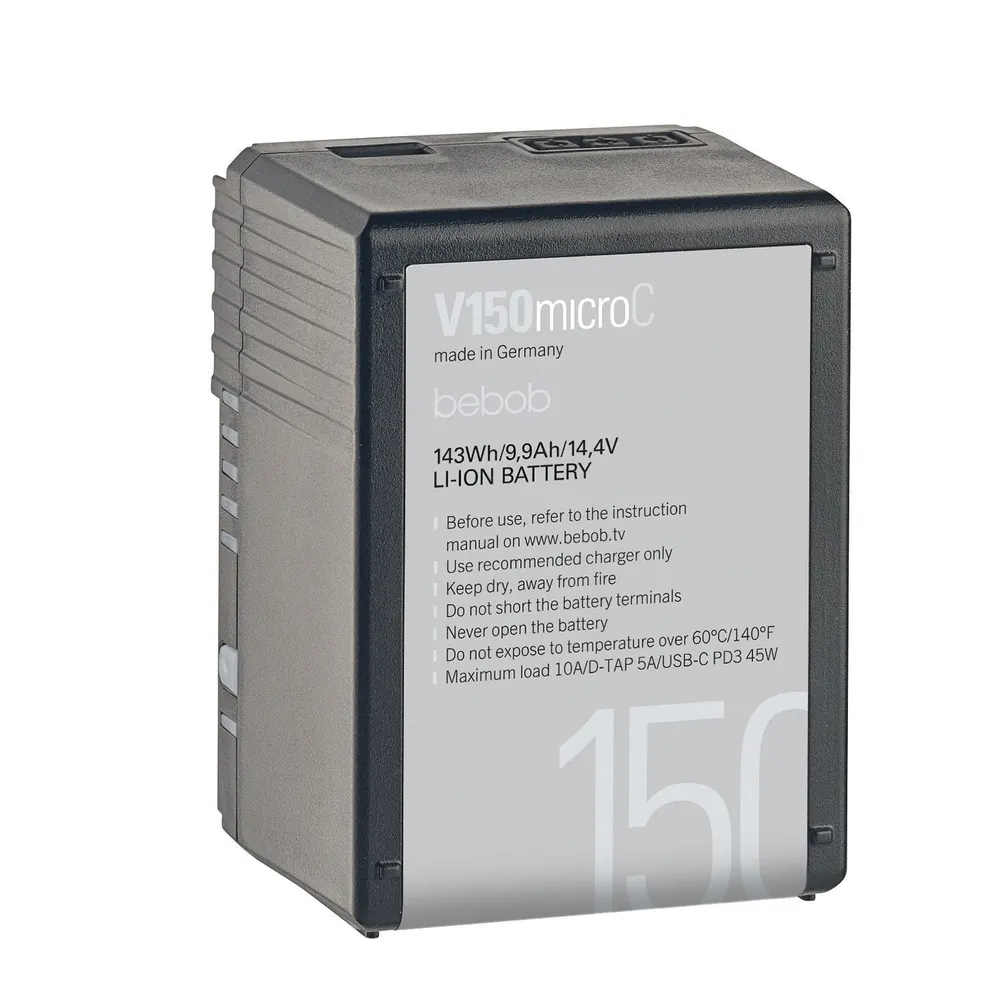
BEBOB Vmicro USB-C PD3 Li-Ion battery 14,4V / 9,9Ah / 143Wh
€ 348.00€ 431.52 (incl. VAT) -
Batteries V-mount
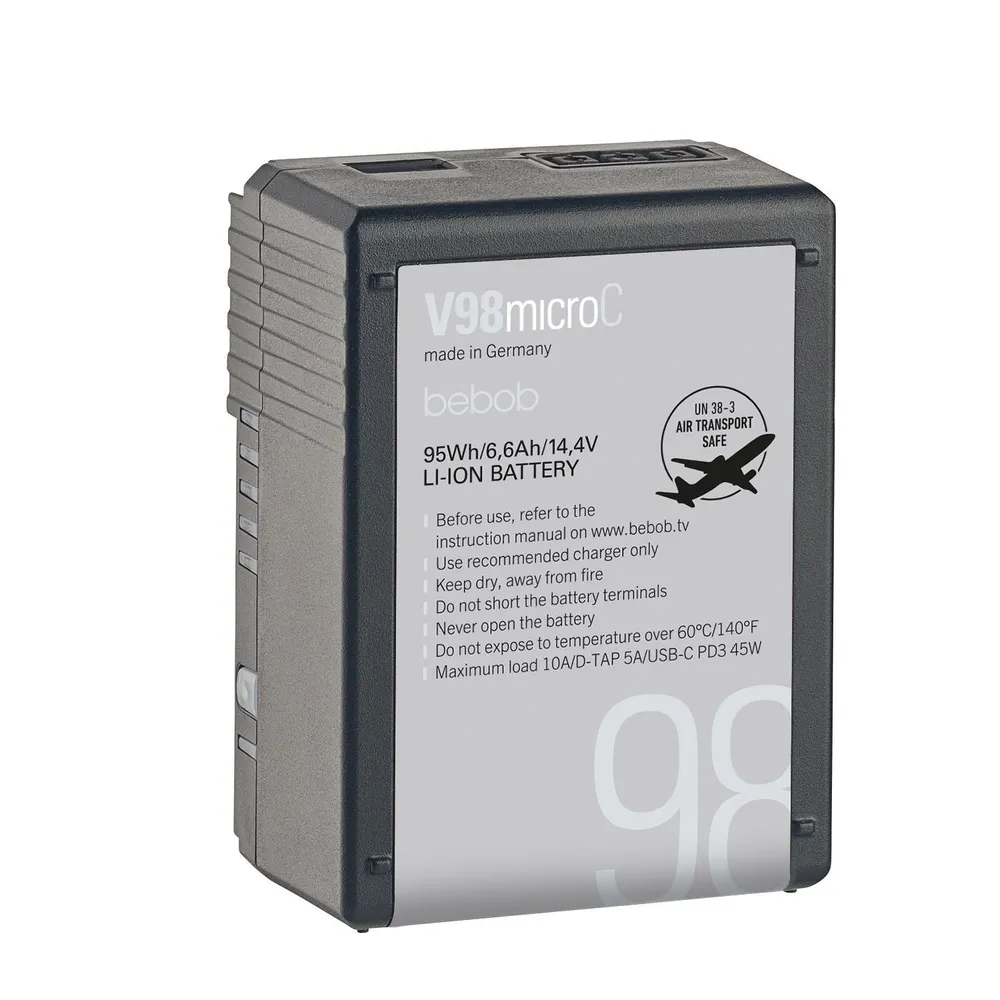
BEBOB Vmicro USB-C PD3 Li-Ion battery 14,4V / 6,6Ah / 95Wh
€ 298.00€ 369.52 (incl. VAT) -
 Batteries V-mount
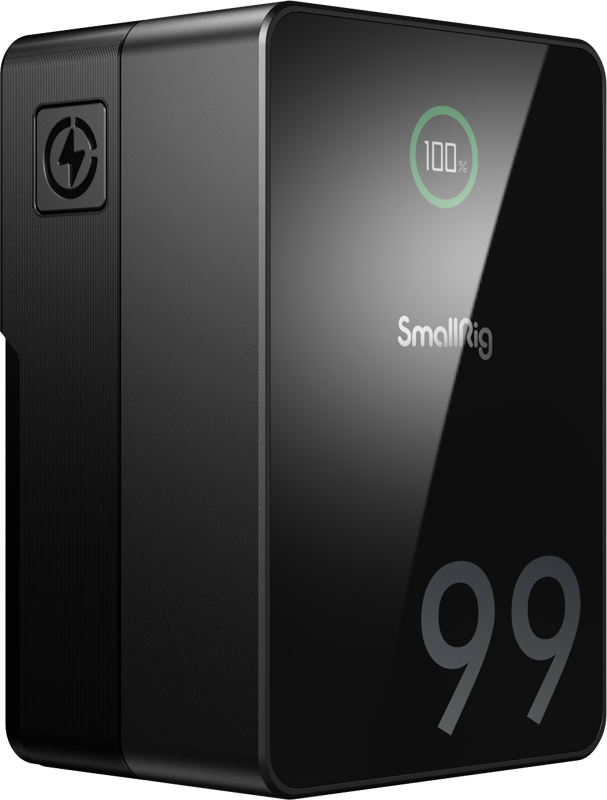
SMALLRIG 4292 V-Mount Battery Mini VB99 Pro
€ 222.32€ 275.68 (incl. VAT)IN STOCK
Smart Chips and Extreme Durability
Film sets present hazardous conditions for electronics. Gear drops, temperatures fluctuate, and weather changes without warning. Investing in rugged power sources protects your equipment and secures your footage.
Look for models built with high-rate lithium cells and advanced Battery Management System (BMS) chips. These smart chips actively monitor the electrical load. They prevent overcharge, over-discharge, short circuits, and overheating.
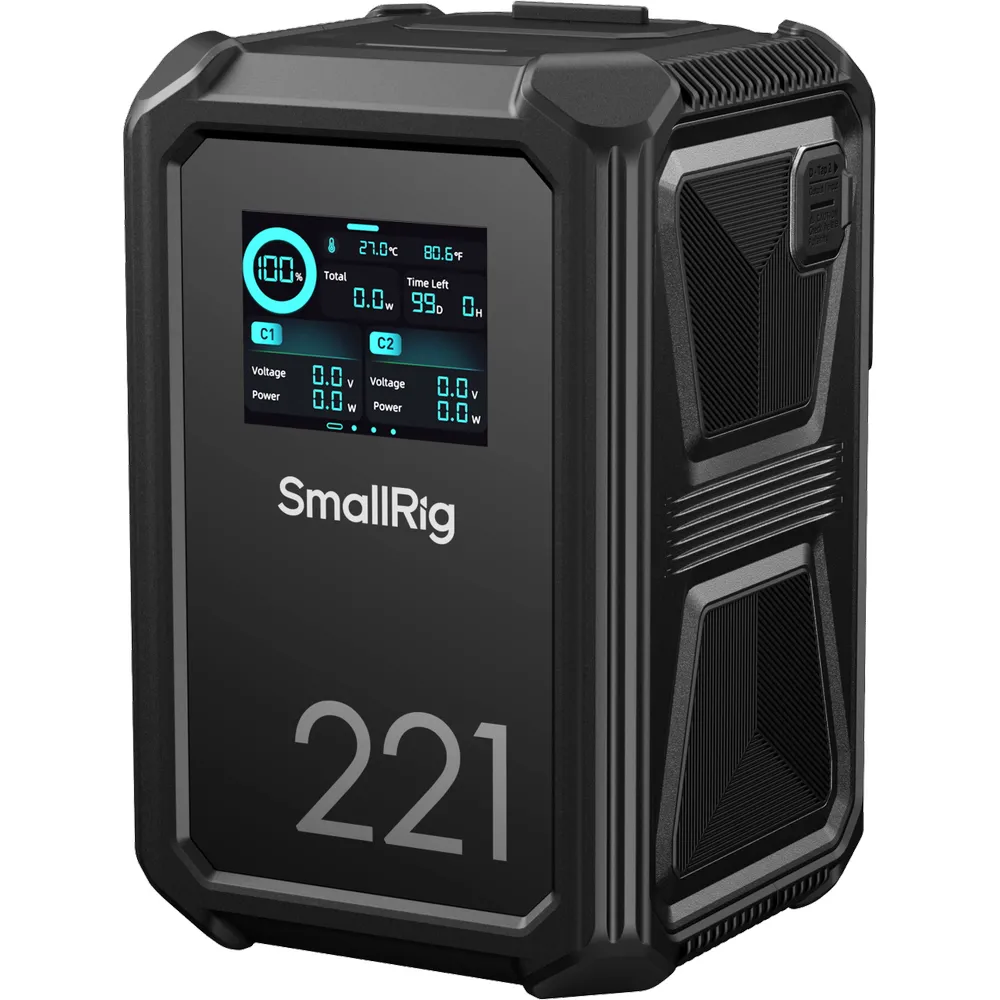
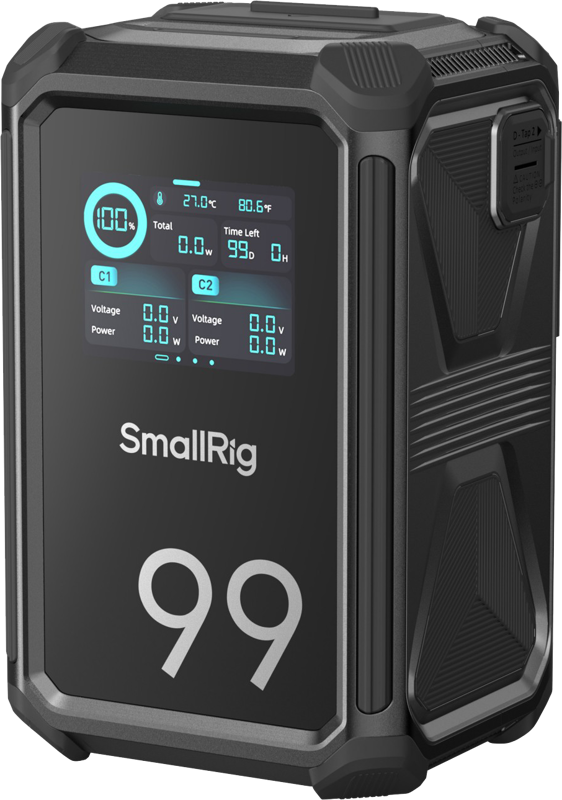
For demanding outdoor locations, triple-proof durability features are crucial. Batteries with impact-proof rubber corners, drop resistance up to 1.5 meters, and IP54 ratings ensure power flows even in rough weather. Additionally, smart OLED screens now display remaining runtime and battery health down to the percentage. This data lets your camera assistant call for a swap exactly when needed. It completely eliminates the guesswork of standard four-LED indicators.
Key Takeaways
- Under 100Wh is mandatory for unrestricted air travel: Build your travel kits around 50Wh to 99Wh mini V-mounts to avoid airport confiscations.
- Match capacity to the draw: Use 150Wh or larger batteries to support heavy cinema cameras. Adjust based on how you determine your lighting power needs for large LED fixtures.
- Prioritize multi-port functionality: Select batteries with built-in D-Tap, USB-C PD, and DC barrel outputs to power your entire rig without external splitters.
- Protect your investment: Choose batteries with integrated BMS chips and physical drop protection if you shoot outdoors or in fast-paced environments.
To build a reliable power ecosystem for your next production, browse our complete selection of V-mount batteries and high-speed chargers. Keep your cameras rolling and your lights bright, no matter where your shoot takes you.