C-Stands for Video: Secure Your Heavy Lighting Gear
Securing your camera and lighting gear is critical. If your key light bows on a flimsy stand, you lose time and risk crew safety. Video production demands reliable support for high-output fixtures, large modifiers, and heavy rigging.
Century stands, commonly known as C-stands, have been the industry standard for grip equipment for decades. They hold your gear securely and allow you to work faster. We supply a carefully curated selection of high-capacity models tailored for film, broadcast, and professional studios.
You can browse our full range of rigging and grip gear to build a solid support system for your next set.
Why Standard Light Stands Fail Heavy Loads
Standard lightweight aluminum stands are great for travel. However, they struggle with high-output COB lights paired with large softboxes. The center columns bow under the weight. Their wide, tripod-style legs also take up far too much floor space in tight interior setups.
In our experience, trying to mount a 10 kg payload on a lightweight stand usually ends with damaged gear or compromised safety. C-stands solve this problem using heavy-duty chrome-plated steel construction.
Their signature feature is a staggered leg design. This geometry allows the legs to be nested together. You can place multiple heavy-duty light stands extremely close to each other on a crowded set, saving valuable floor space.
Turtle Base vs. Sliding Leg Models
When you select a C-stand, your primary decision is the base design. Both styles handle heavy loads securely, but they serve entirely different production environments.
Turtle Base C-Stands
These models feature a detachable base. The legs fold flat quickly, which saves space during transport. You can also remove the main column entirely. With an adapter, you can mount a light directly to the low-profile turtle base. This makes it very easy to hide practical and background lighting behind desks or set pieces.
Sliding Leg C-Stands
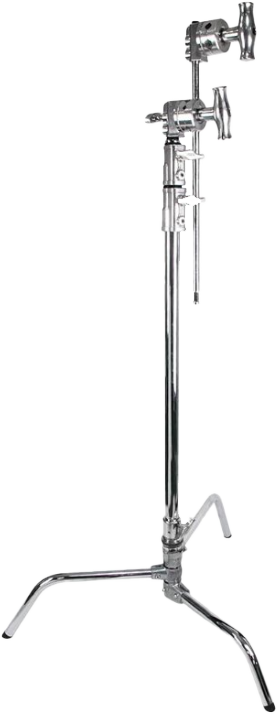
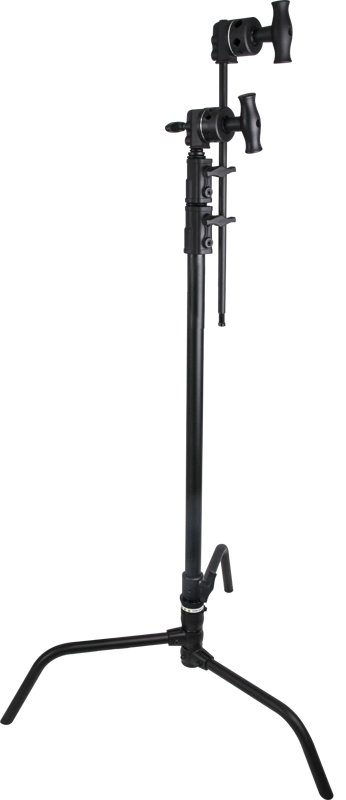
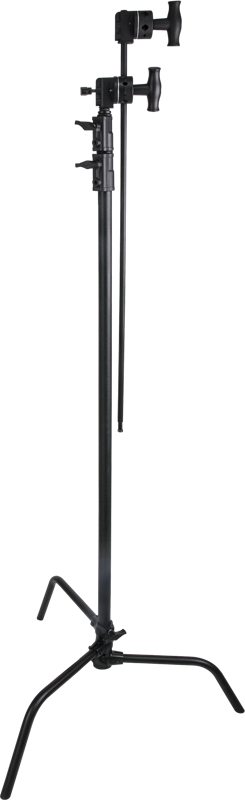
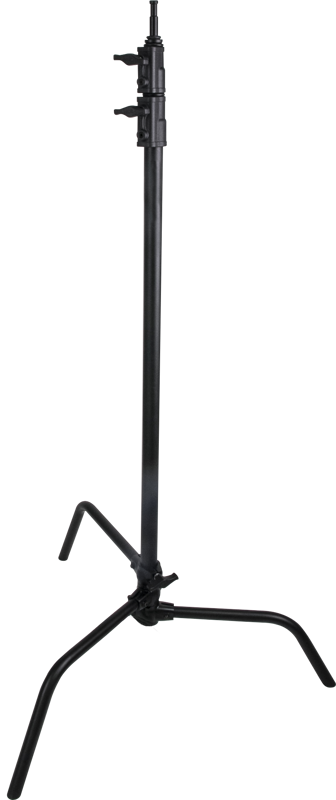
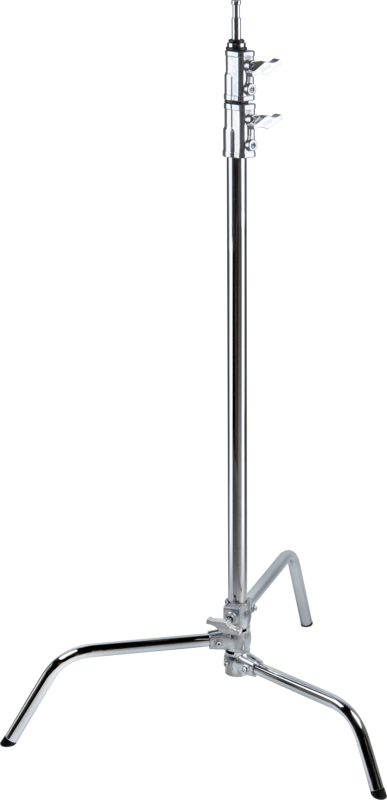
Also known as a “Rocky Mountain leg” design, this base includes an independently adjustable top leg. If you shoot on uneven terrain, stairs, or curbs, you can slide this leg up the main column to level the stand perfectly. The low-profile base also slides easily under furniture on tight sets.
-
 Light stands
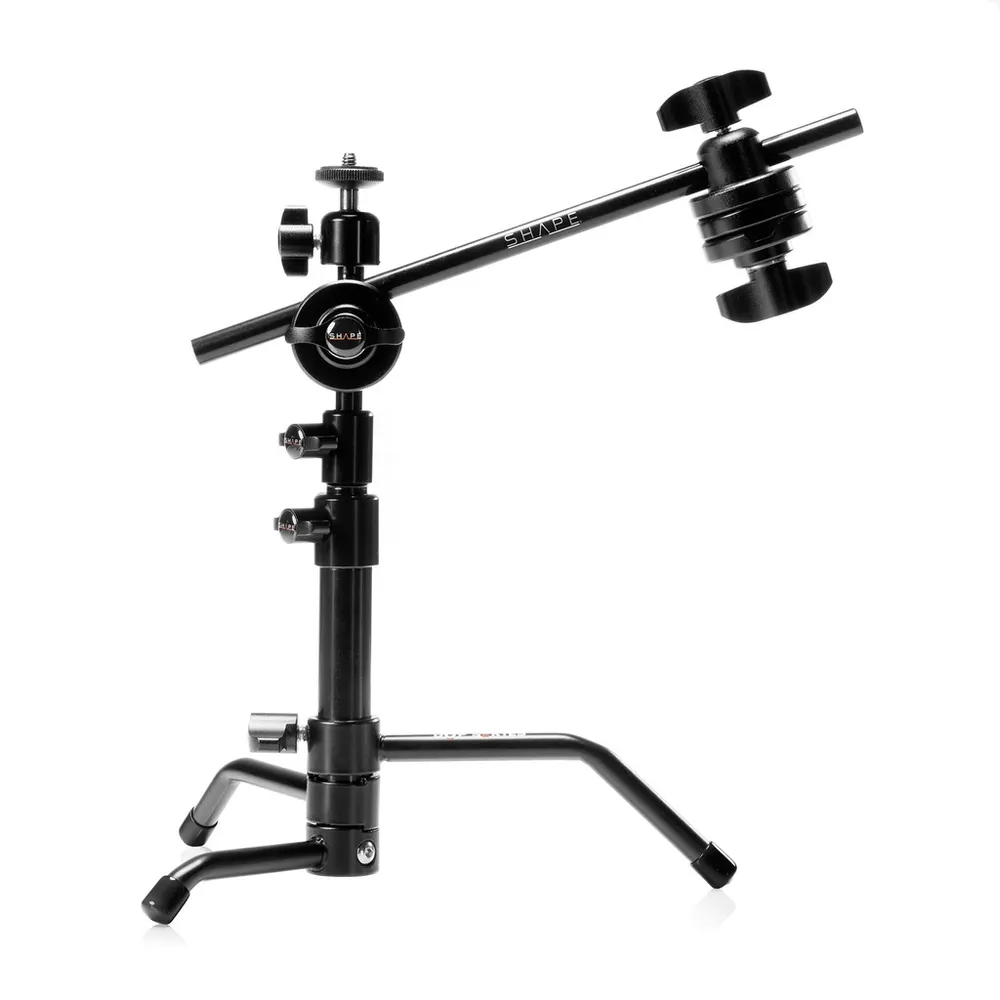
SHAPE 40’’ C-Stand Sliding Leg Black 10.5’
€ 169.00€ 209.56 (incl. VAT) -
 Light stands
KUPO CS-40MB 40″ Master C-Stand with Sliding Leg – Black
€ 132.72€ 164.57 (incl. VAT)IN STOCK -
 Light stands
KUPO CL-40M 40″ Master C-Stand With Sliding Leg & Quick-Release System – Silver
€ 149.52€ 185.40 (incl. VAT)
Matching Stand Size to Your Production Needs
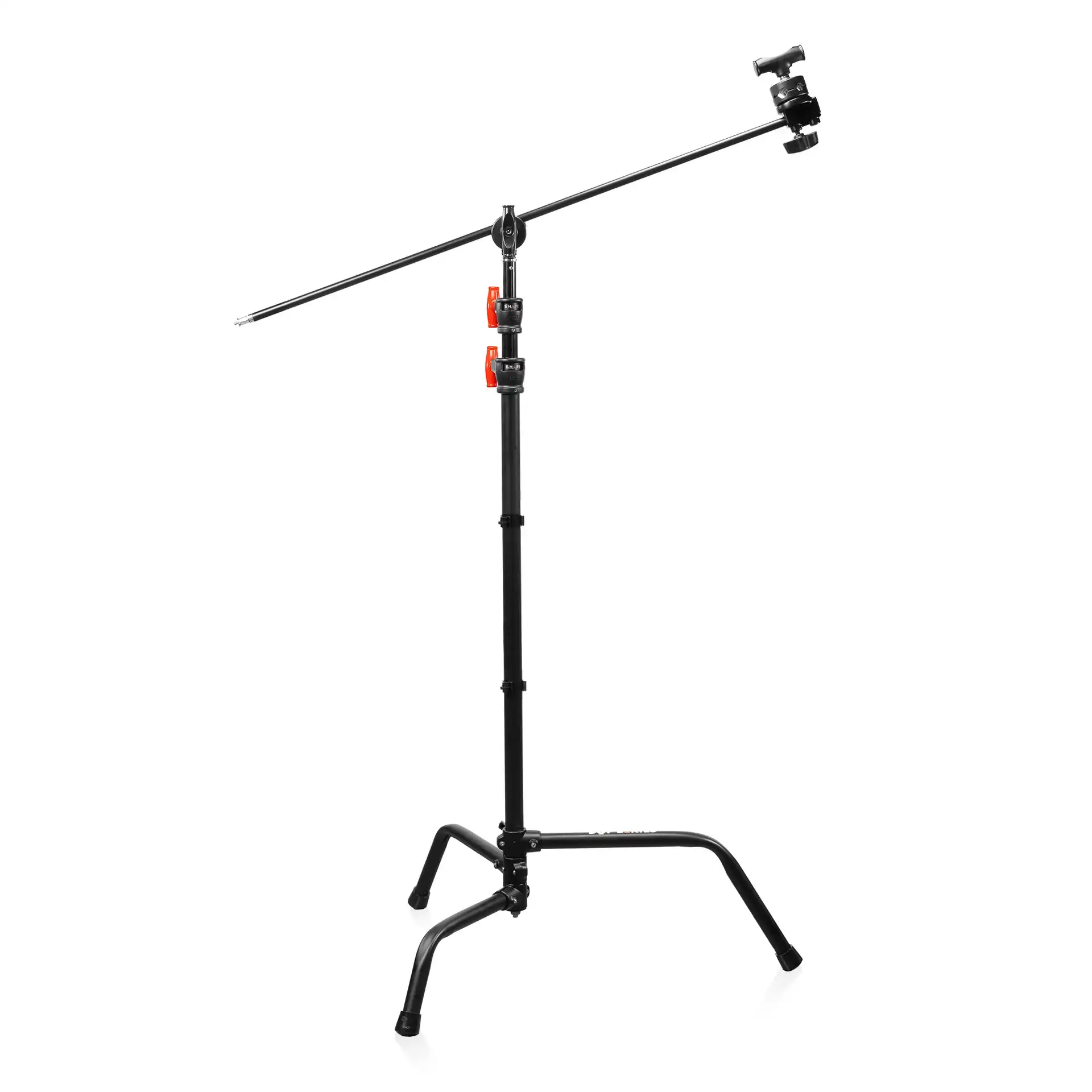
C-stands generally come in three standard sizes: 20-inch, 30-inch, and 40-inch. You should match the stand’s height and payload capacity to your specific fixtures.
- 40-inch stands: The 40-inch model is the standard workhorse for video production. Models with a 40-inch column reach nearly 300 cm in maximum height and safely support a 10 kg payload. Use these for your main key lights and overhead boom mics.
- 20-inch and 30-inch stands: These are built for low-angle applications. A 20-inch stand typically sits at a minimum height of just under 94 cm. They are perfect for placing hair lights or fill lights below the camera frame.
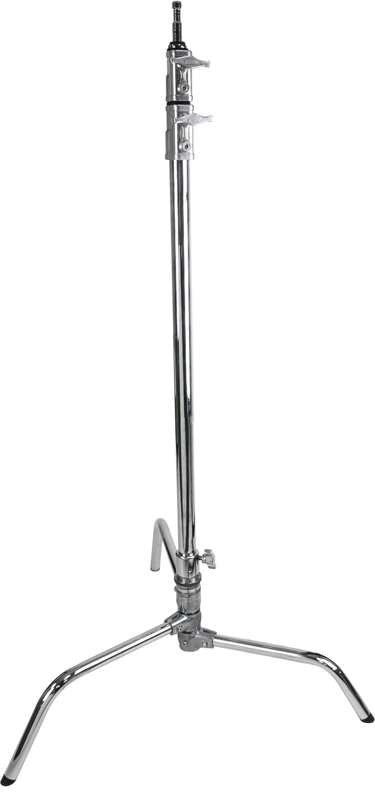
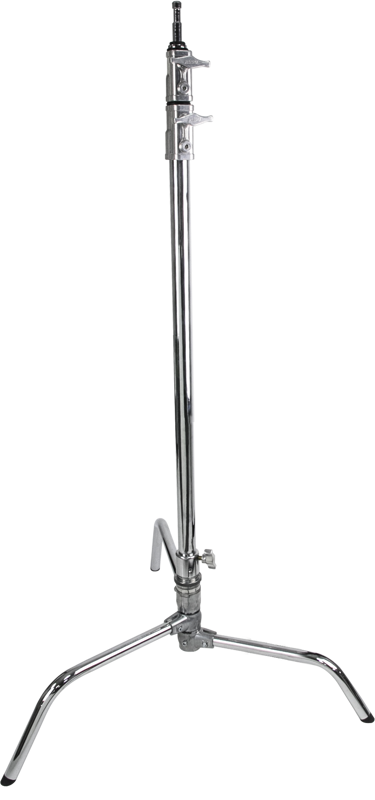
For tabletop shoots, product videography, or miniature applications, you can even deploy specialized mini stands to hold small dots and flags.
Grip Arms, Heads, and Mobility
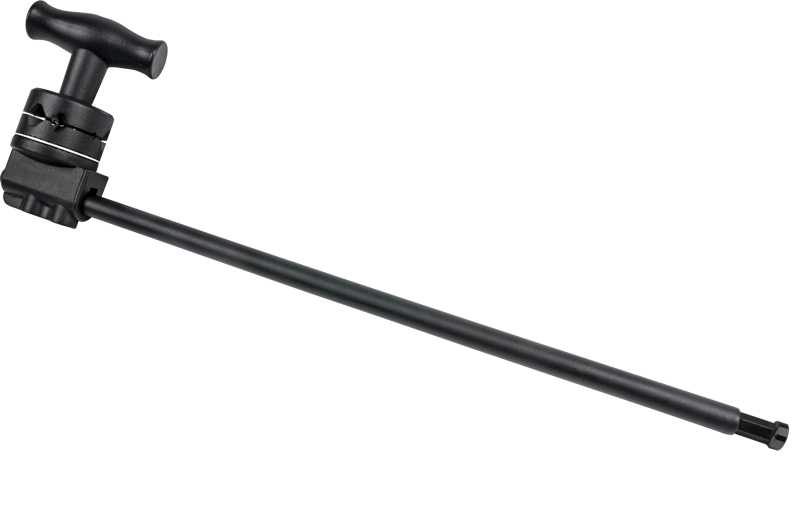
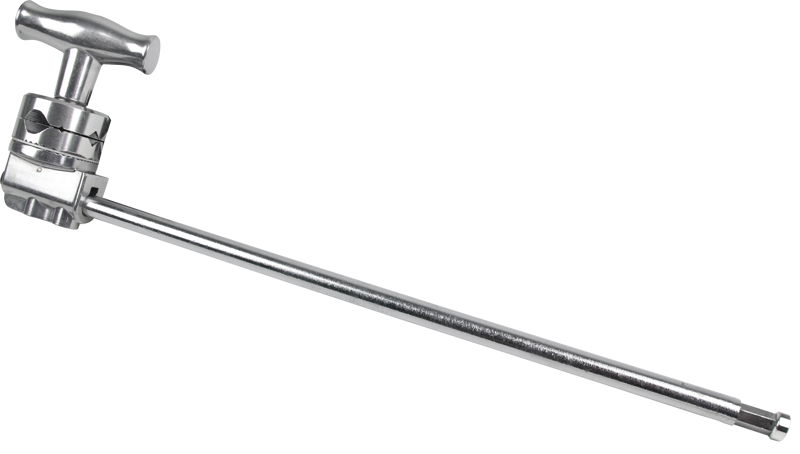
Buying a bare column limits your rigging options. We usually recommend purchasing a complete kit instead. A standard kit includes a 2.5-inch grip head and an extension grip arm.
Grip arms let you boom out diffusion frames, flags, or lightweight modifiers to control spill. However, you must remember that a grip arm rod has no relief cut. You should never use a bare grip arm as a 5/8-inch mounting point for heavy lights. The fixture can slide off the smooth metal and cause serious injury.
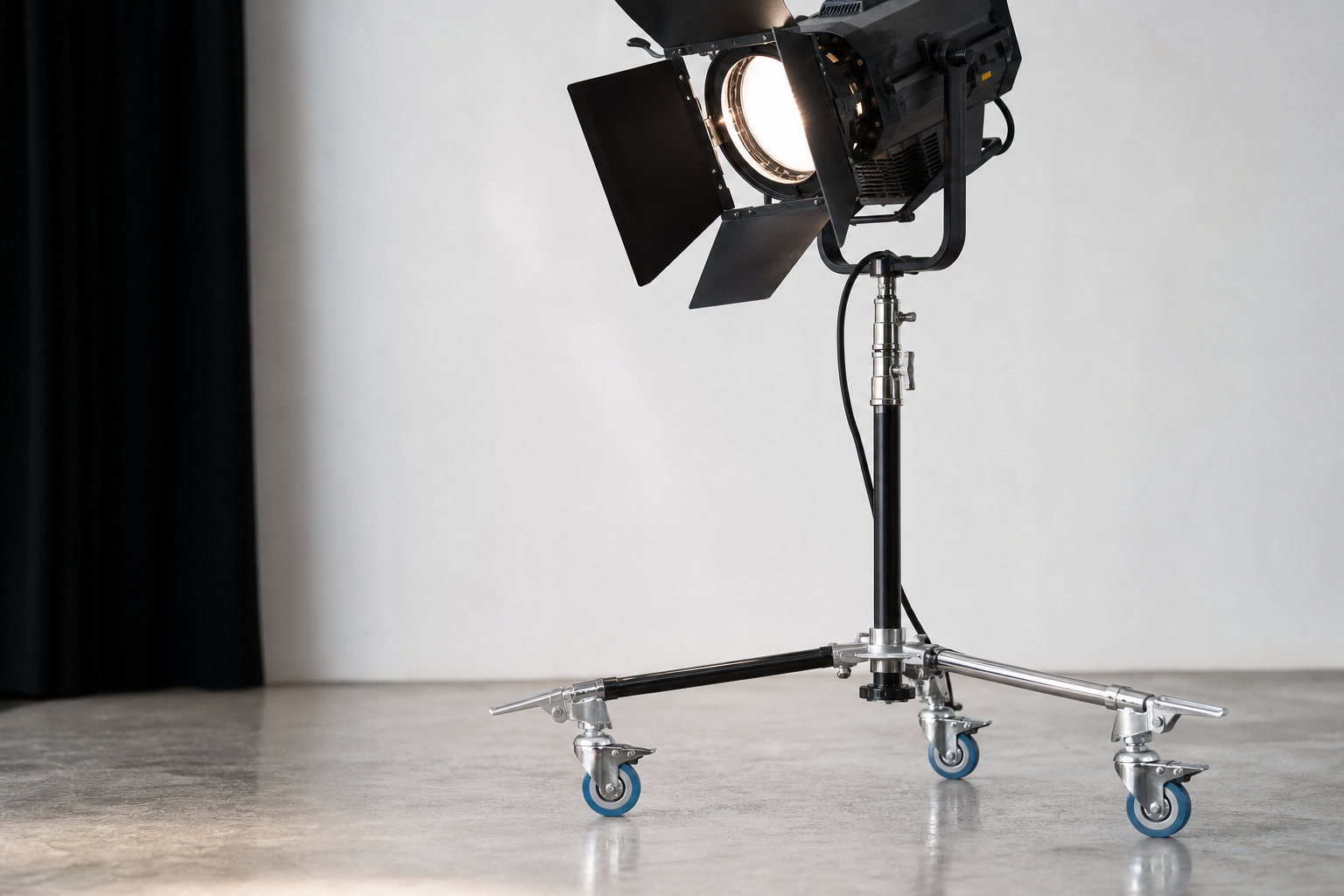
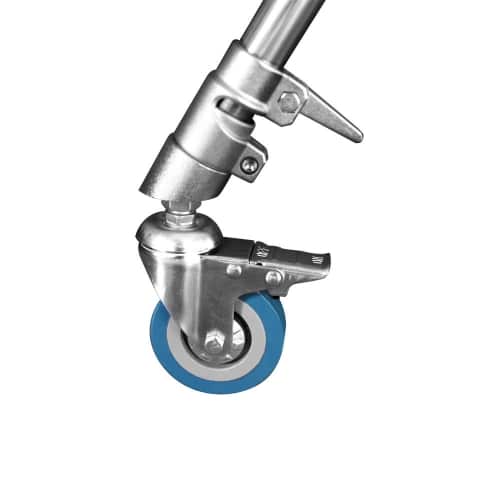
If you move heavy rigs across flat studio floors, adding a locking wheel set saves your crew time and energy. Wheels lock securely onto the 25mm tubular legs. This allows you to reposition an entire three-point lighting setup without dismantling your gear.
Safe C-Stand Operation on Busy Sets
Using C-stands correctly prevents expensive accidents. Standardizing your safety habits protects your crew and your equipment. The American Society of Cinematographers (ASC) and other industry organizations continually reinforce basic grip safety rules.
| Safety Rule | Practical Application |
|---|---|
| The Right-Hand Rule | Always line up the gobo heads or knuckles on the right side of the stand. When gravity pulls down on the grip arm, the weight must cause the head to tighten. If mounted backward, the weight loosens the grip. |
| Tallest Leg Forward | Point the tallest leg toward your load. If your grip arm extends forward, the tallest leg must point forward. This creates maximum resistance against tipping. |
| Sandbag Placement | Place sandbags directly on the tallest leg. Ensure the full weight of the bag rests entirely on the stand, not the floor. |
| Load Limits | Start with one sandbag. Add a second for larger light modifiers. If you need a fourth sandbag to keep the stand upright, you are using the wrong tool. Switch to a heavy combo stand. |
| Transport Safety | Always fold the grip arm down against the main column before moving the stand. This prevents the arm from striking someone at head height while you walk. |
You can find additional clamps and safety tethers in our fixing accessories collection.
Key Takeaways
- C-stands feature a staggered leg design that lets you nest multiple stands close together, saving essential floor space in tight sets.
- Choose a turtle base if you need quick transport and low-angle mounting options. Select a sliding leg design if you frequently shoot on stairs or uneven terrain.
- Always point the tallest leg toward the weight of your load, and secure the stand with properly placed sandbags that do not touch the floor.
- Use the right-hand rule when attaching grip arms so the payload naturally tightens the locking knuckle.
- Ready to stabilize your set? Browse our complete selection of rigging and grip equipment or contact our technical team to find the exact support gear for your next shoot.