Selecting Cinema Lenses for Video Production
Your camera sensor captures the data. Your lens defines the entire image. In professional broadcast, film, and commercial productions, selecting the right cinema lens determines your shooting speed and your lighting requirements.
We have equipped hundreds of European production stages over the years. We regularly see how mismatched glass causes costly delays on set. A lens with heavy focus breathing or inconsistent color rendering adds hours to post-production.
This guide evaluates focal lengths, mounts, and optical designs so you can confidently select the exact lenses your production requires.
Matching Lens Mounts to Your Camera System
The physical connection between your lens and camera body is your first technical constraint. Adapters exist to solve compatibility issues. However, native mounts always provide the most secure connection for heavy cinema glass.
The ARRI PL mount remains the industry standard for professional cinema environments. It uses a positive lock mechanism that handles the weight of large zoom lenses without flexing. For modern large-format digital capture, ARRI also introduced the LPL mount. It features a wider diameter and a shorter flange distance to accommodate larger sensors.
For productions using Canon or Sony systems, EF and E-mounts are highly prevalent. The EF mount provides a reliable bayonet-style lock. Sony’s E-mount features a very short 18.0mm flange focal depth. This short distance makes E-mount cameras highly adaptable. They easily accept PL or EF lenses via simple mechanical adapters.
| Mount Standard | Locking Mechanism | Flange Focal Distance | Common Application |
|---|---|---|---|
| ARRI PL | Positive Lock (54mm diameter) | 52mm | Standard professional cinema |
| ARRI LPL | Positive Lock (62mm diameter) | 44mm | Large-format digital cinema |
| Canon EF | Bayonet Lock | 44mm | Independent film and commercial |
| Sony E | Bayonet Lock | 18.0mm | Highly adaptable mirrorless video |
Prime Lenses vs. Zoom Lenses
Production requirements dictate your lens choice. You must choose between the speed of a prime lens or the versatility of a zoom. Most professional shoots utilize a deliberate combination of both.
Cinema Prime Lenses
Fixed lenses offer very wide maximum apertures. They often reach T1.5 or T1.9. This high light transmission lets you shoot in low-light environments. It also creates an exceptionally shallow depth of field. Prime lenses have fewer moving glass elements inside the barrel. This generally results in sharper images and less optical distortion.
Manufacturers design prime lenses to deliver distinct visual characteristics for narrative work. The DZOFILM Arles FF/VV series covers full-frame and VistaVision sensors. They provide high-resolution details with smooth focus fall-off. The NiSi Athena series delivers precise image quality with ultra-low chromatic aberration. If you require vivid color transitions, the DZOFILM Vespid Cyber series offers excellent data passthrough and a bright T2.1 aperture.
Cinema Zoom Lenses
Documentaries, live events, and fast-paced commercial shoots require zoom lenses. A single zoom lens replaces multiple primes. This saves critical time normally spent changing lenses and rebalancing gimbals on set.
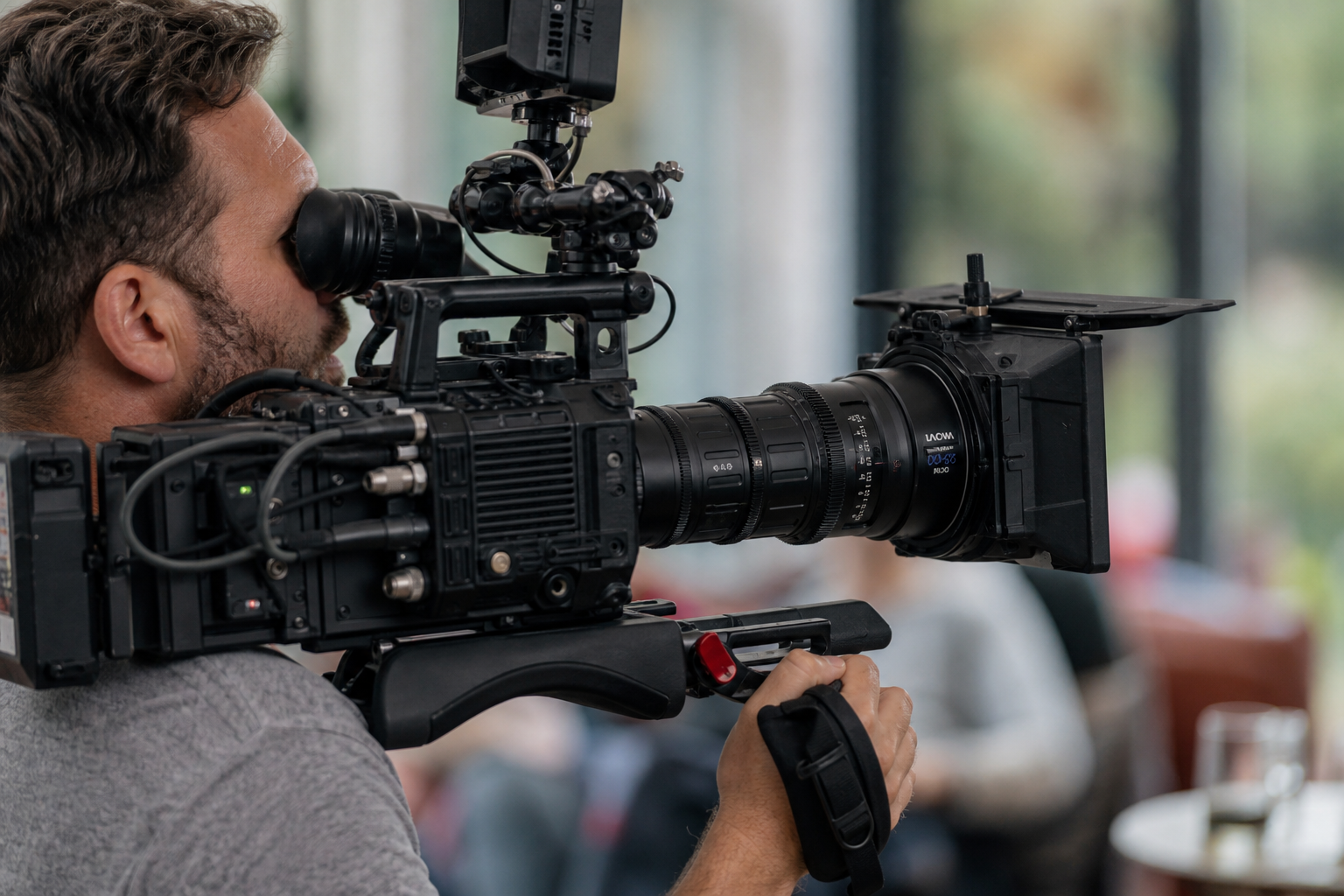
True cinema zooms feature a parfocal design. The subject remains in sharp focus throughout the entire zoom range. When you zoom in to grab a close-up, you do not need to pull focus again.
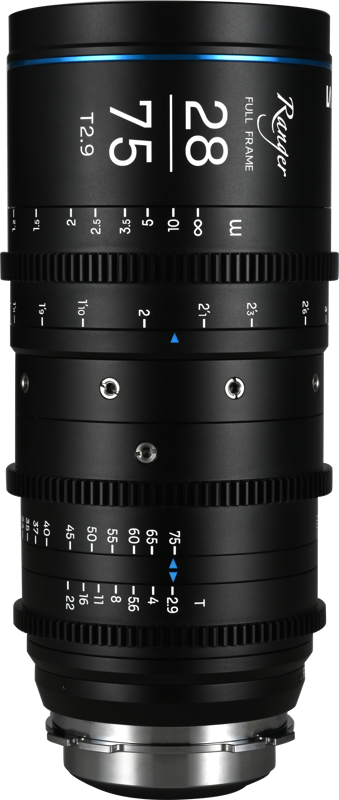
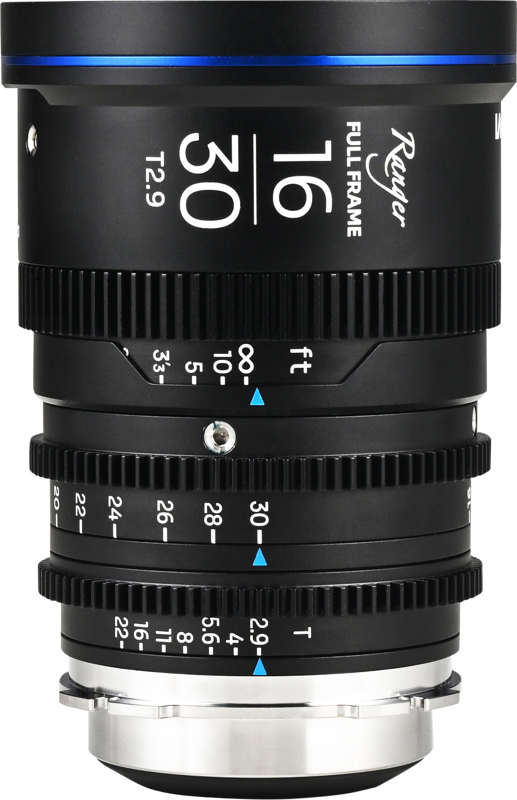
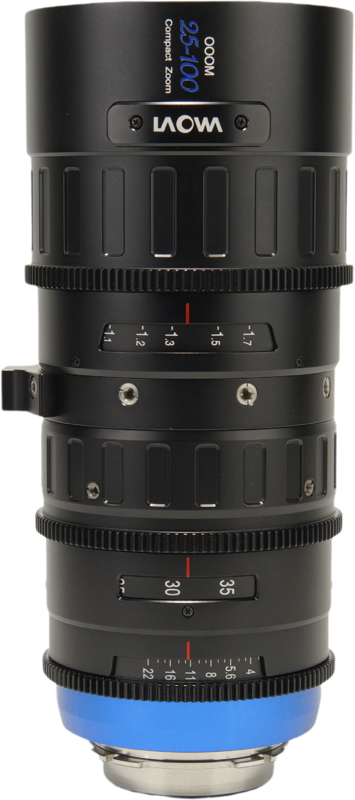
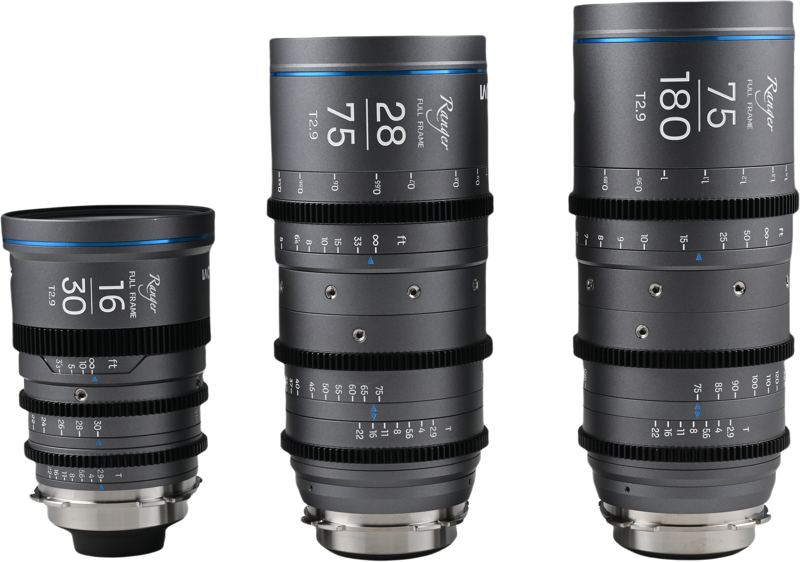
The Laowa OOOM 25-100mm T2.9 provides a versatile 4x zoom range specifically for Super35 sensors. For full-frame coverage, the Laowa Ranger FF series delivers a constant T2.9 aperture in a compact housing. For standard setups, we recommend the 16-30mm and 28-75mm options. If your production requires a much longer reach, the DZOFILM Tango series and Catta Zoom lenses provide extensive focal lengths while maintaining precise manual control.
Specialty Glass: Wide-Angle and Anamorphic Lenses
Certain environments require specialized optics to capture the right perspective.
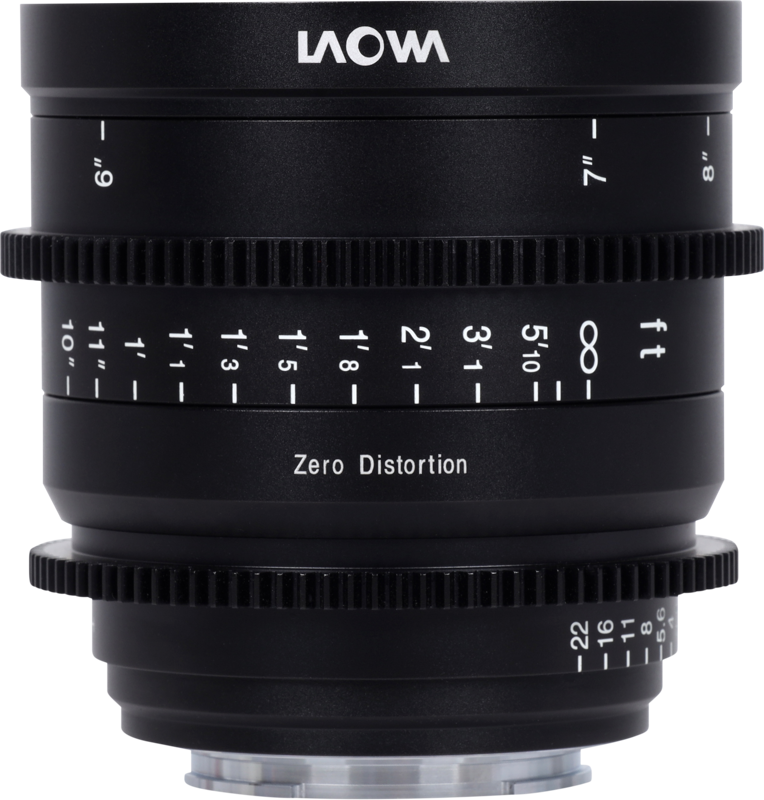
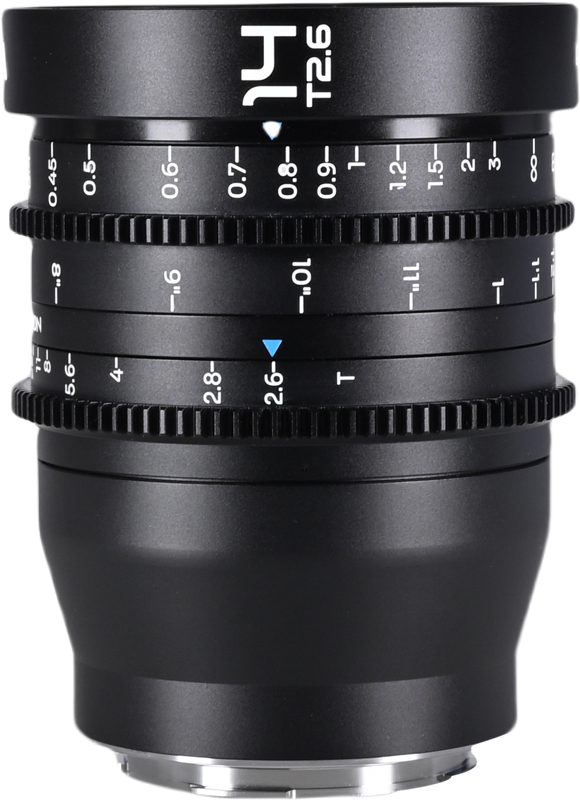
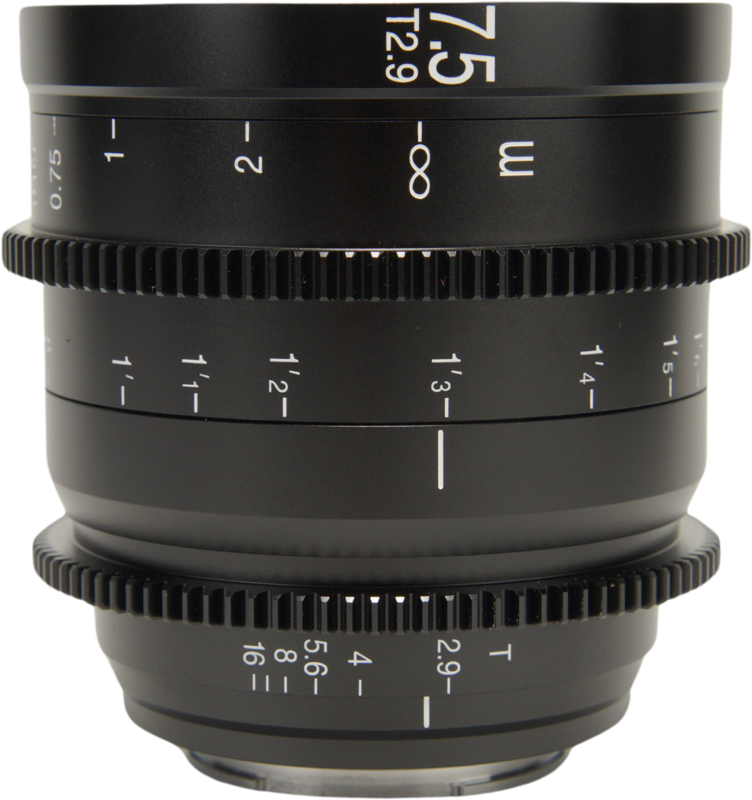
Architectural shoots, real estate video, and sweeping landscape cinematography rely on wide angle lenses. Standard wide lenses often suffer from barrel distortion. This optical flaw causes straight lines to curve near the edges of the frame. Manufacturers like LAOWA solve this with dedicated “Zero-D” (Zero Distortion) engineering. The Laowa 14mm T2.6 VV, the 15mm T2.1 Zero-D, and the 7.5mm T2.9 S35 ensure your establishing shots remain geometrically accurate.
Anamorphic lenses squeeze a wider field of view onto a standard sensor. When desqueezed in post-production, they produce a cinematic widescreen aspect ratio, distinct oval bokeh, and signature horizontal lens flares.
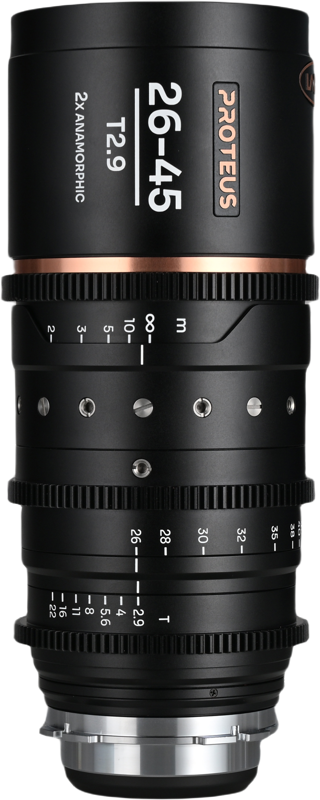
For narrative filmmakers chasing a classic Hollywood look, the DZOFILM Pavo 2x Anamorphic primes and the Laowa Proteus Zoom 2X Anamorphic lenses provide a genuine 2x squeeze. These lenses combine modern housing mechanics with vintage optical characteristics.
-
 Wide angle lenses
LAOWA 15mm T2.1 Zero-D Cine Lens – Sony FE (feet)
€ 1 215.92€ 1 507.74 (incl. VAT) -
 Wide angle lenses
LAOWA 14mm T2.6 Zero-D VV Cine Lens L-mount
€ 1 543.92€ 1 914.46 (incl. VAT) -
 Wide angle lenses
LAOWA 7.5mm T2.9 Zero-D S35 Cine Lens – Sony E
€ 703.92€ 872.86 (incl. VAT) -
 Zoom lenses
LAOWA Proteus Zoom 2X Anamorphic 26-45mm T2.9 – Amber – Arri PL/Canon EF
€ 6 231.92€ 7 727.58 (incl. VAT)
The Advantages of Complete Cinema Lens Kits
Purchasing single lenses stretches your budget initially. However, it often leads to a fragmented gear locker later. We strongly recommend investing in lens kits for professional camera setups.
When you buy a complete set from a single manufacturer like DZOFILM or Samyang, you guarantee optical consistency.
A well-designed kit provides several crucial advantages:
- Color Matching: Lenses from the same production batch share identical coatings. Your skin tones match perfectly across different focal lengths. This prevents hours of tedious color grading.
- Unified Gear Placement: The focus and iris rings sit in the exact same position on every lens. When you swap a 24mm for an 85mm, your follow-focus motors stay perfectly aligned.
- Weight Consistency: Matched weights mean you spend less time rebalancing your Steadicam or motorized gimbal during rapid lens changes.
The DZOFILM Vespid Prime 6-Lens Kit covers every necessary focal length from 18mm to 105mm. For run-and-gun crews looking to minimize payload, the Laowa Ranger FF Lite 3-Lens Bundle reduces housing weight by 10% without sacrificing parfocal performance. For solo operators, the Samyang V-AF Full Kit brings cinematic housing and rapid autofocus convenience to video creators.
Key Takeaways
- Secure your camera connection by choosing PL mounts for heavy setups. Utilize E-mount cameras when you need maximum adaptability to different lens standards.
- Use prime lenses for superior low-light performance and shallow depth of field. Switch to parfocal zoom lenses to save time on fast-moving sets.
- Control image distortion with specialty Zero-D lenses for wide architectural shots. Deploy anamorphic lenses for dramatic, widescreen narrative visuals.
- Buy lenses in matched kits to ensure identical color science, unified follow-focus gear placement, and consistent weight balancing.
Ready to build your professional camera package? Contact our technical team today to discuss the right cinema lenses and mount options for your specific production needs. We offer fast shipping across Europe and expert support to keep your sets running smoothly.