Silent Power Stations for Off-Grid Video Shoots
We’ve seen too many shoots stall because a remote location lacked accessible AC outlets. Relying on loud, exhaust-spewing diesel generators disrupts audio recording and restricts where you can place your lighting fixtures. Modern video production demands silent, clean, and reliable electricity that you can place directly on the set.
Portable power stations solve this problem. They deliver grid-quality AC power right next to your camera and lighting gear. In this guide, you will learn how to calculate your energy needs, match output capacities, and implement the right battery storage systems for your next off-grid production.
Calculating On-Set Power Requirements
To avoid mid-shoot blackouts, you must calculate your energy requirements before arriving on location. Power stations are measured by their capacity in watt-hours (Wh) and their continuous output in watts (W).
You cannot simply divide the battery capacity by the total wattage of your devices. Inverters consume power during the conversion process. A real-world efficiency factor of roughly 0.85 applies to modern lithium portable stations.
Use this industry-standard formula to estimate your actual runtime: Runtime (hours) = (Battery Capacity Wh × 0.85) ÷ Total Device Wattage (W). We always recommend oversizing your battery capacity by 20% to 30% beyond your calculated need to establish a safe margin for error.
Additionally, pay close attention to surge power. Some high-output fixtures, whether you choose an LED panel or Fresnel light, require an initial power spike when turned on. Your station’s maximum surge output must exceed the total startup draw of all connected devices.
Here is a quick reference table for common production lighting draws:
| Fixture Type | Example Model | Approx. Max Power Draw |
|---|---|---|
| High-Output COB | Aputure LS 600d | ~720 W |
| Heavy-Duty Fresnel | ARRI M18 | 1,800 W |
| Compact Bi-Color | amaran 60x | 76 W |
| LED Panel | Nova P300c | 360 W |
Matching Output to Heavy Lighting Packages
When planning how many lights for video production you will use, matching your total continuous load to the power station’s limits is critical. If your combined running wattage exceeds the station’s continuous output rating, the inverter will overload and shut down.
Heavy lighting packages require massive output. For example, an Aputure 600d draws up to 720W at full output according to Aputure photometrics, while an ARRI M18 consumes 1,800W. To run fixtures of this size, you need robust stations built for heavy industrial loads.
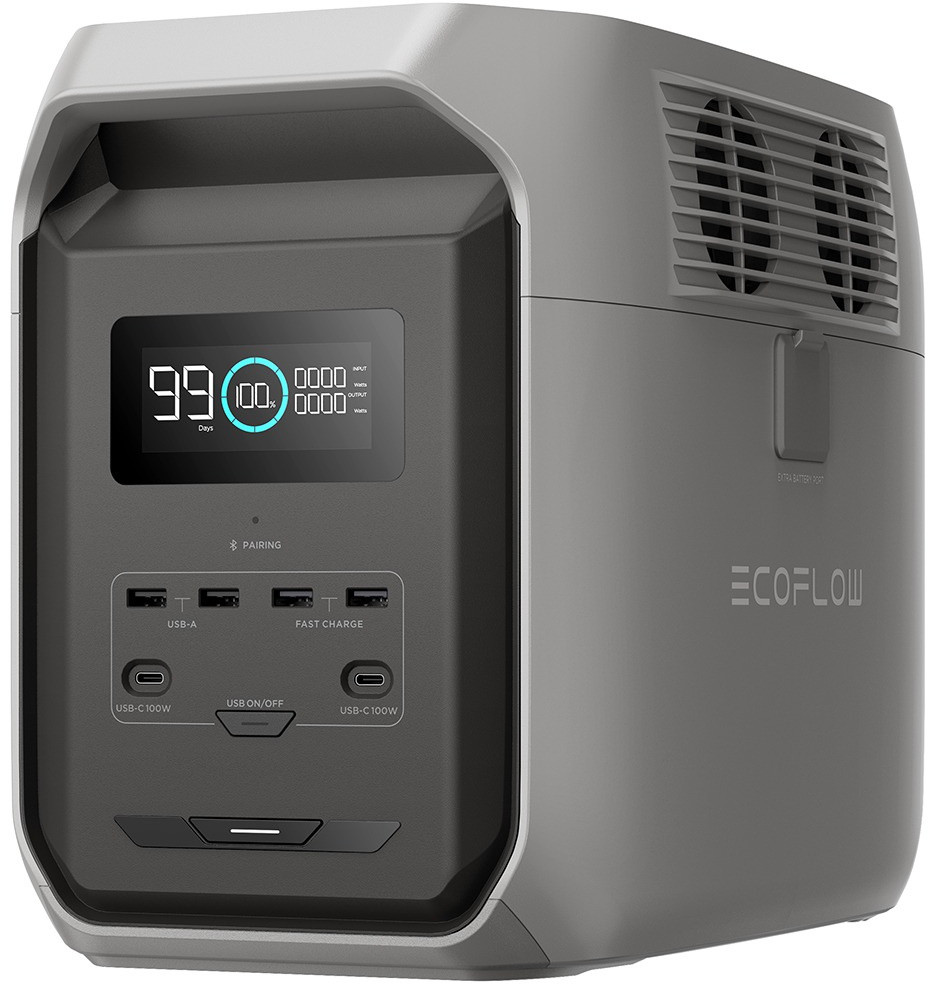
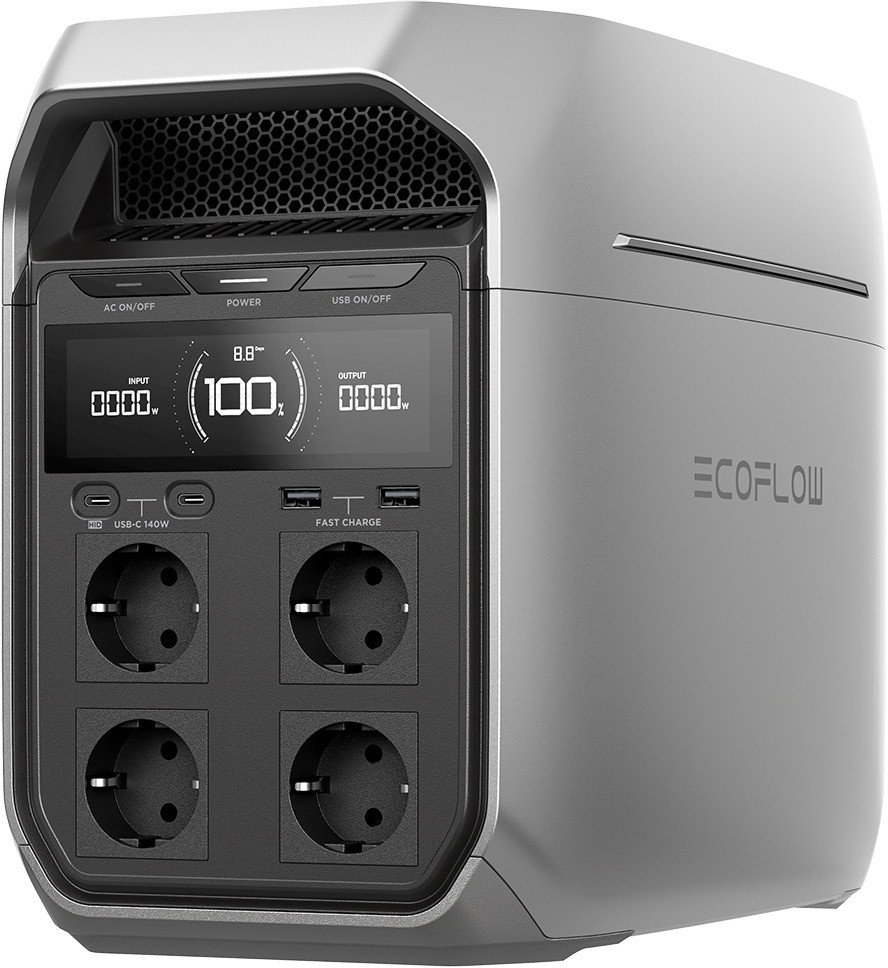
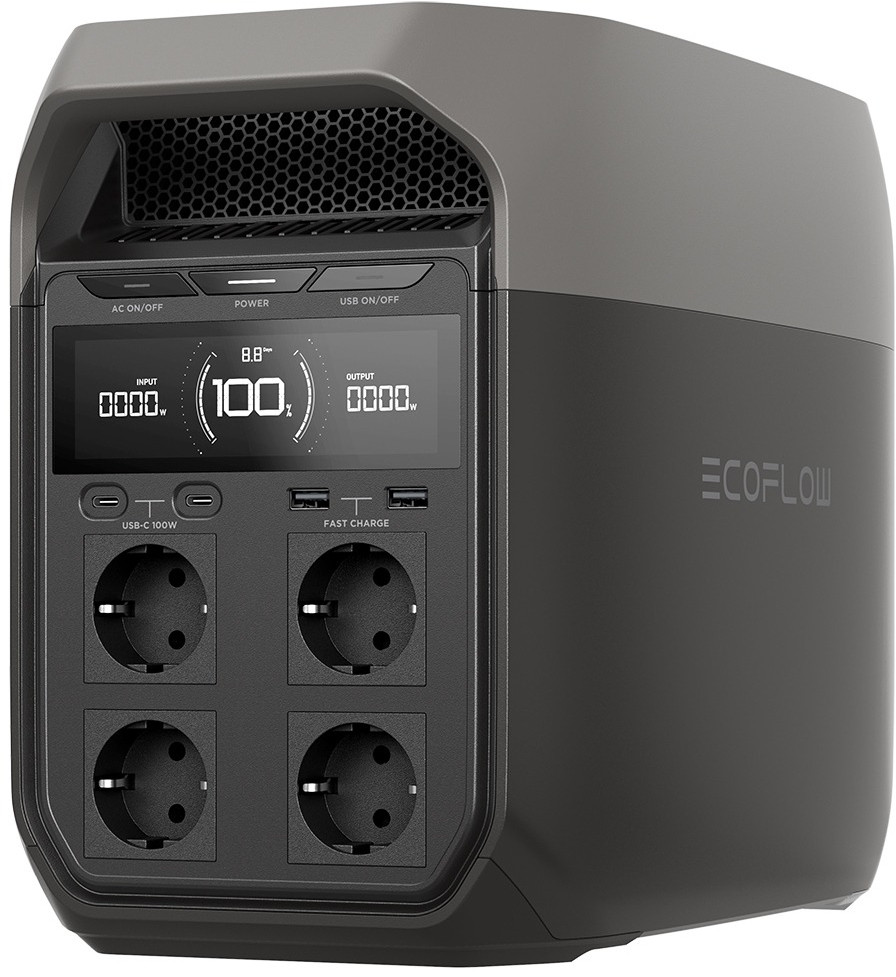
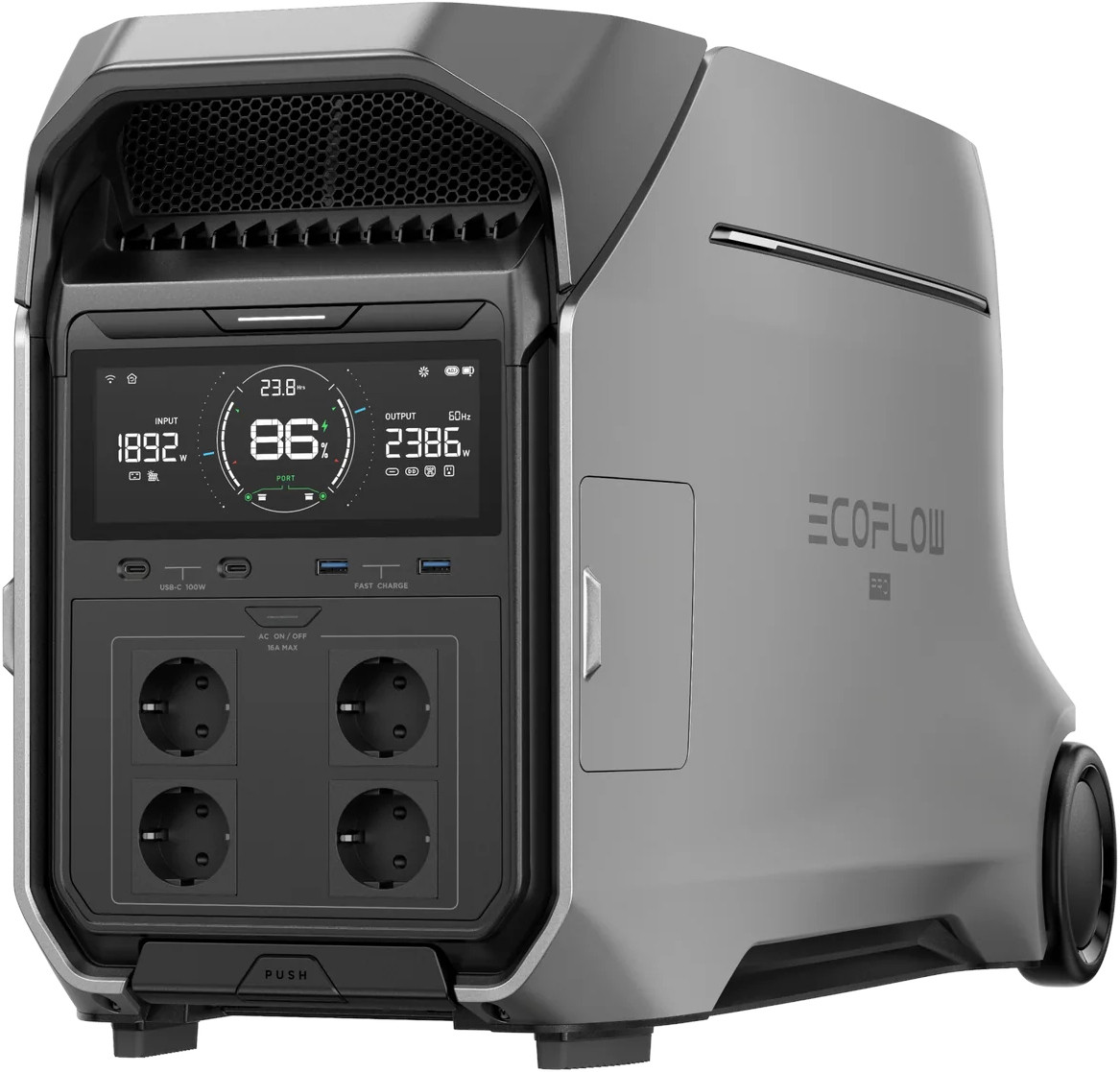
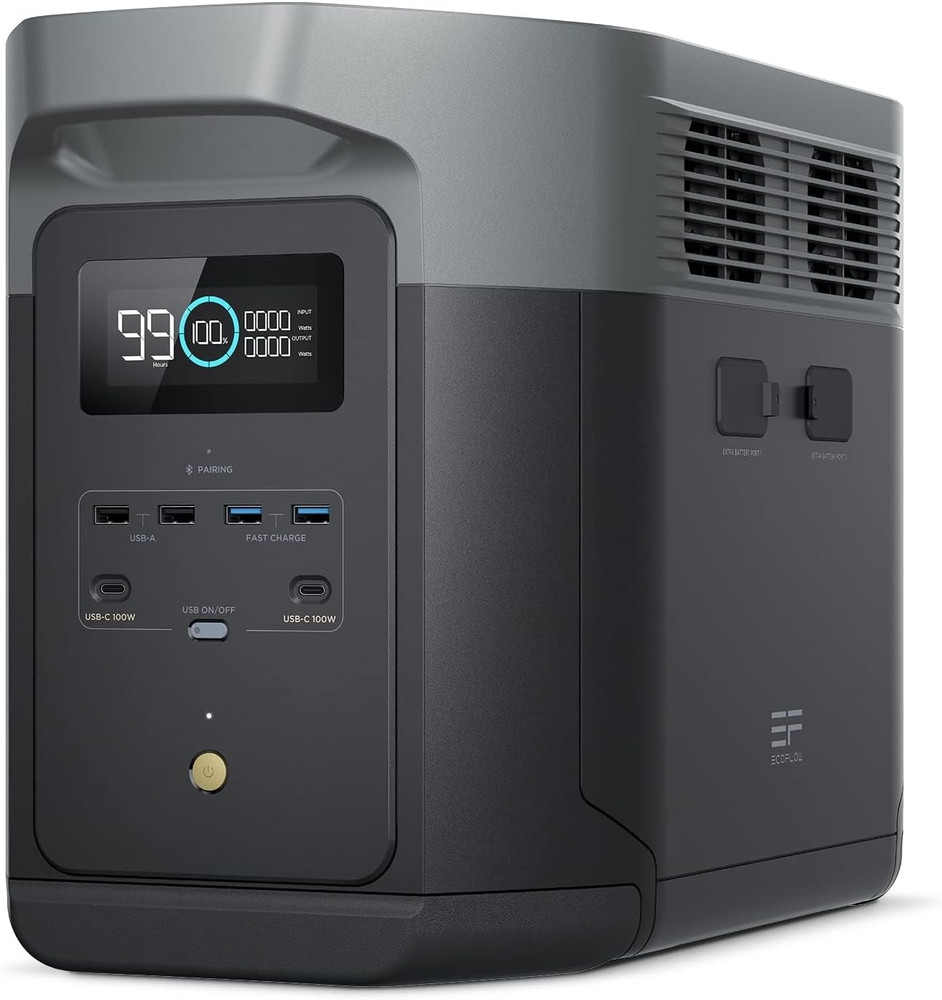
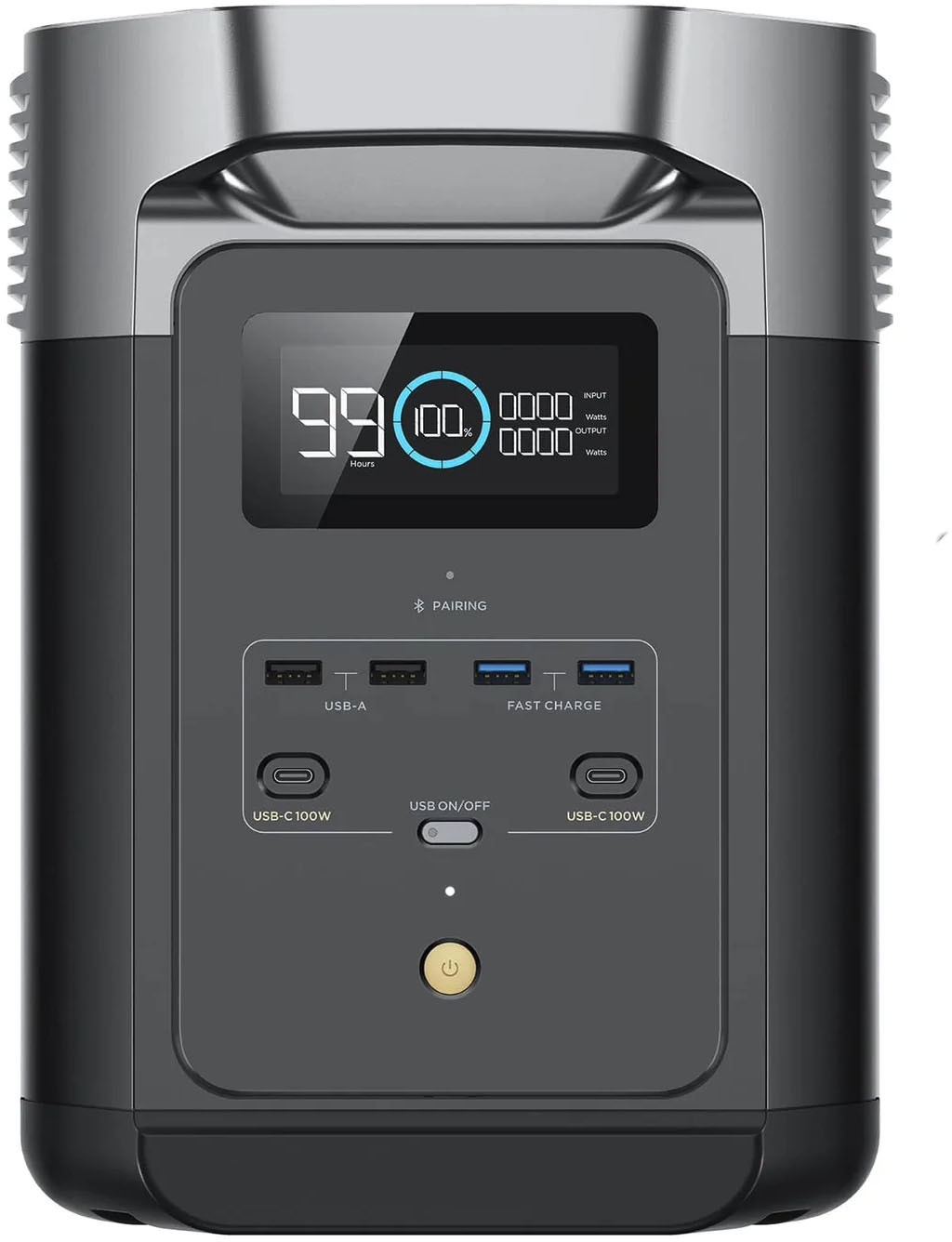
The EcoFlow DELTA series provides immense power and capacity. The DELTA Pro 3 delivers a massive 4,000W continuous output with an 8,000W surge and houses a 4,096Wh battery, as detailed in EcoFlow specifications. If you need to simulate natural light with artificial lighting all day, you can expand these systems with extra batteries up to a 48kWh capacity.
Eliminating Noise for Sync-Sound Shoots
When recording audio for interviews or narrative scenes, silence is mandatory. Portable fuel-powered generators create an unacceptable noise floor. Furthermore, you can never use them indoors. Generator exhaust produces deadly carbon monoxide. Federal organizations state clearly that operating a gas generator indoors can be fatal in minutes.
Battery power stations eliminate these risks entirely. They produce zero local emissions and operate quietly. High-end units operate with noise levels as low as 30 dB. This makes them nearly imperceptible on set.
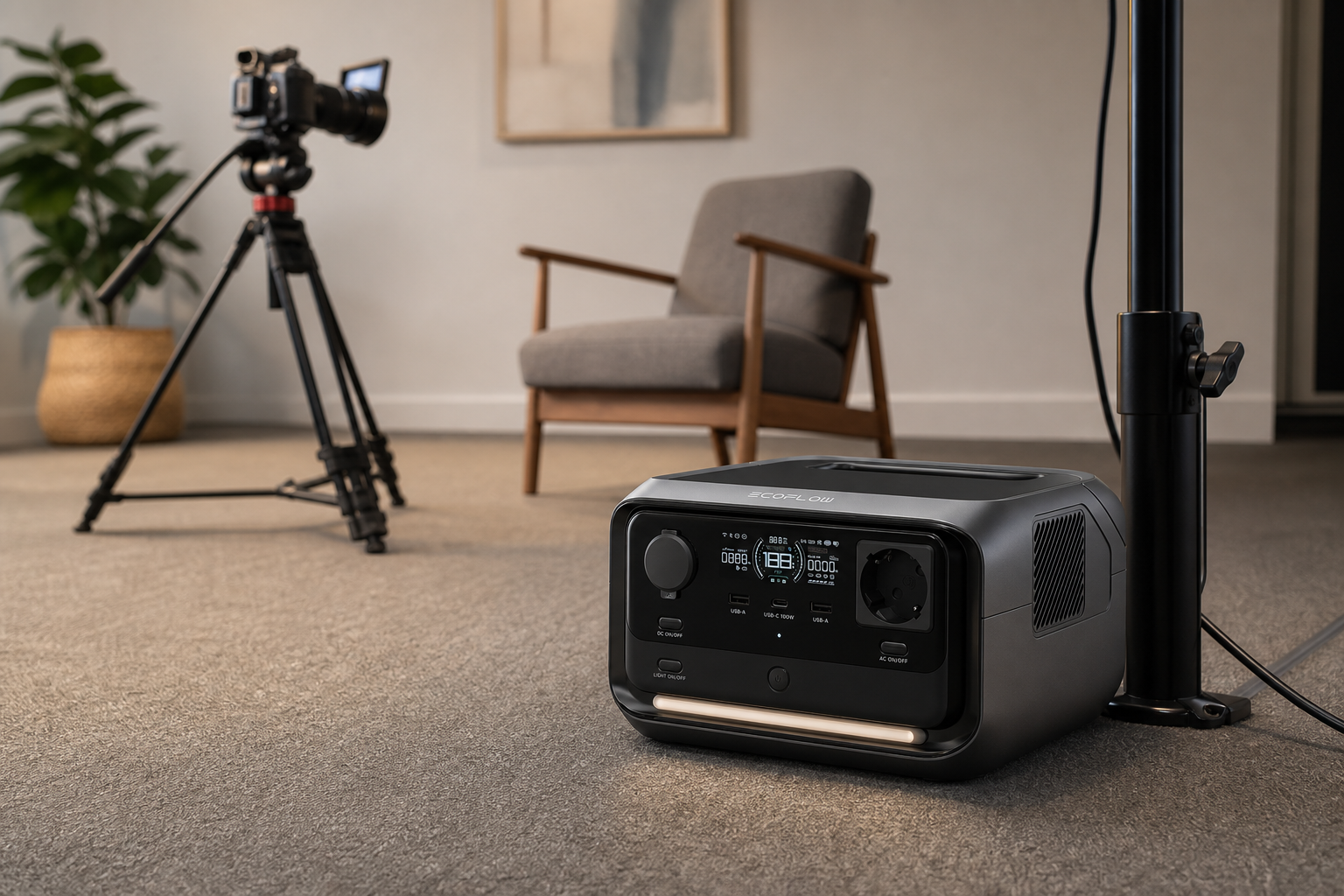
By utilizing silent power stations, you can place your energy source directly next to your subject or light stand. This setup minimizes cable runs and allows you to light an interview indoors safely, even in small, unventilated spaces. Switching to clean mobile power also reduces equivalent CO₂ emissions by over 80% compared to conventional diesel setups, according to Clean Mobile Power Initiative data.
Portability, Fast Setups, and Air Travel
Speed is everything on a film set. Dragging heavy extension cords from a distant generator wastes valuable setup time. Having a compact power source directly at the base of your light stand streamlines your workflow. This convenience is why a lightweight portable lighting kit pairs perfectly with compact charging stations.
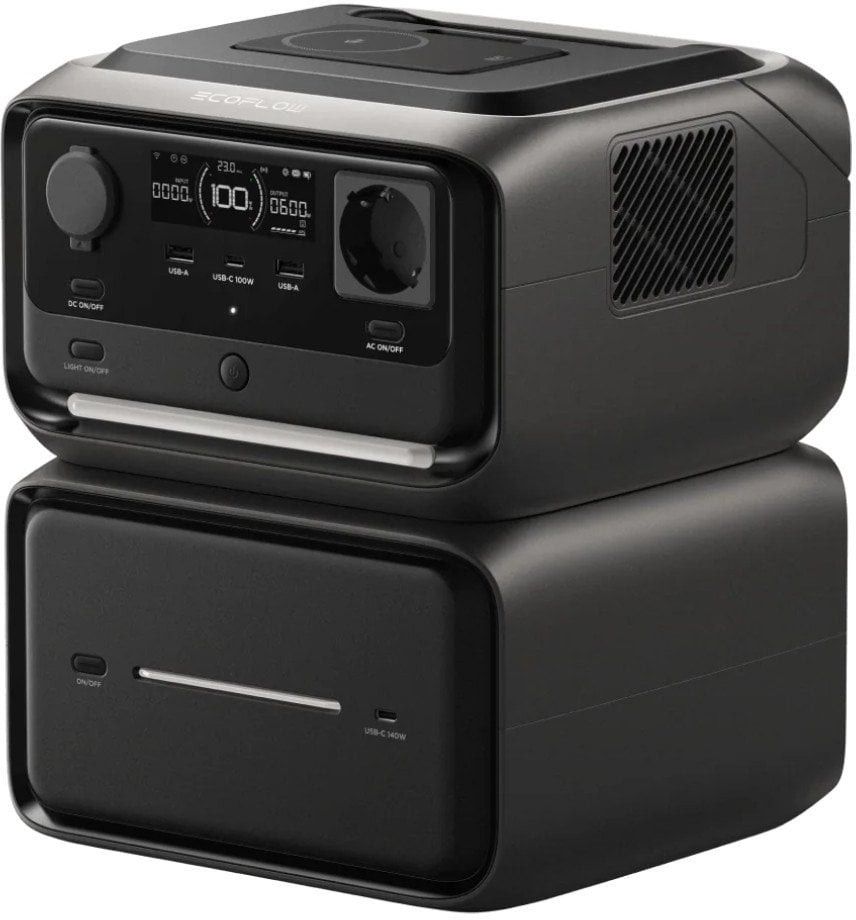
For run-and-gun crews or smaller setups, smaller form-factor stations charge rapidly. Many modern models reach a 100% charge in just one hour.
-
 Power stations
ECOFLOW power station RIVER 3 Max Plus Wireless
€ 543.20€ 673.57 (incl. VAT) -
 Power stations
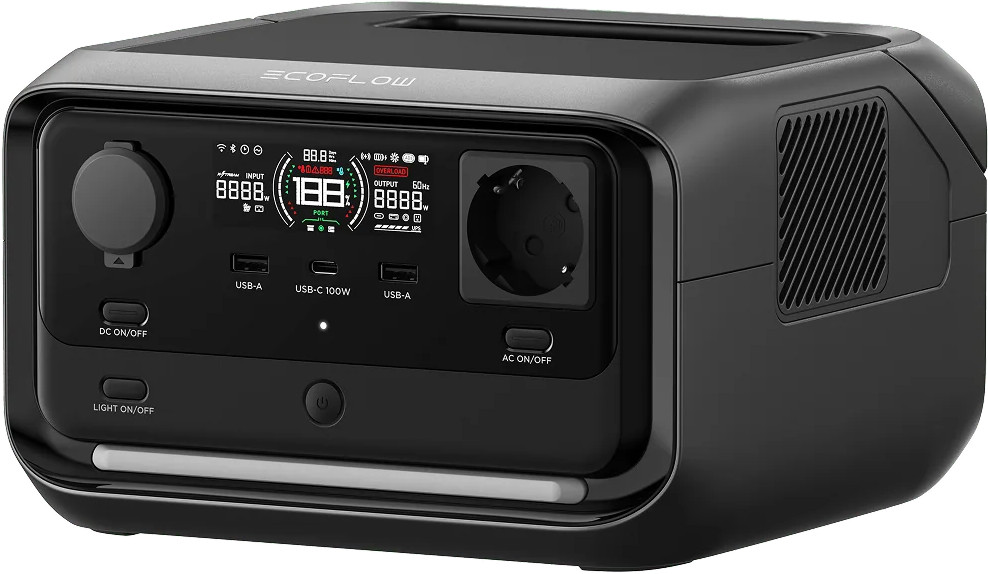
ECOFLOW power station RIVER 3 Plus
€ 239.20€ 296.61 (incl. VAT) -
 Power stations
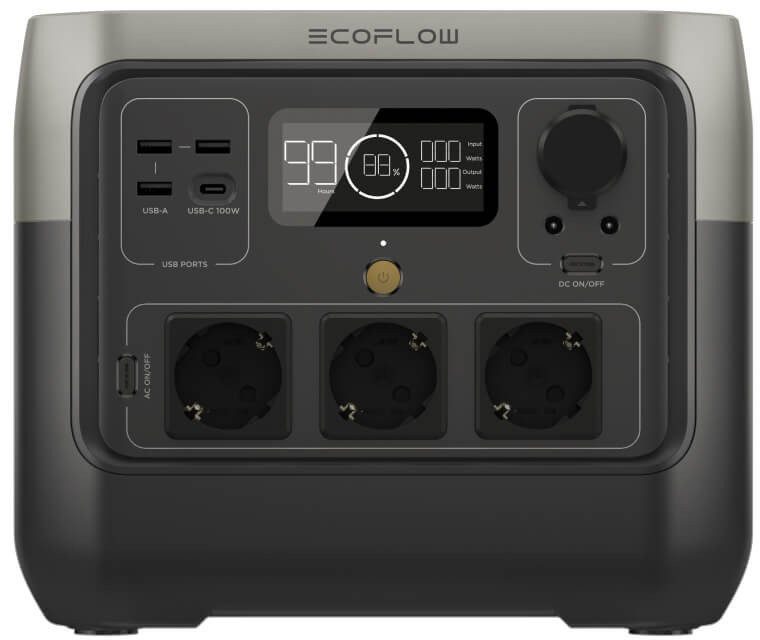
ECOFLOW portable power station RIVER 2 Pro 768Wh
€ 439.20€ 544.61 (incl. VAT) -
 Power stations
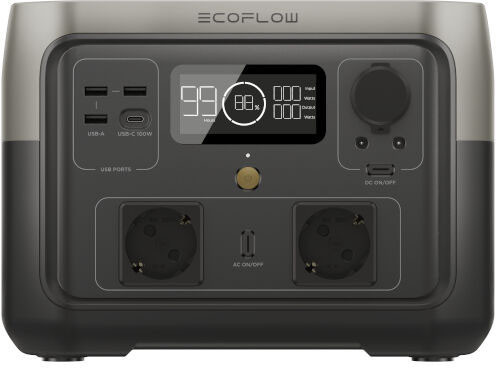
ECOFLOW battery bank-charging station RIVER 2 Max 512Wh
€ 319.20€ 395.81 (incl. VAT)
If your crew frequently travels by air, you must plan your batteries and power strategy carefully. Aviation authorities strictly regulate lithium-ion batteries. Under current FAA PackSafe guidelines, you are limited to 100 watt-hours (Wh) per battery in your carry-on luggage. Larger batteries between 101–160 Wh require airline approval, and large power stations cannot fly commercially at all.
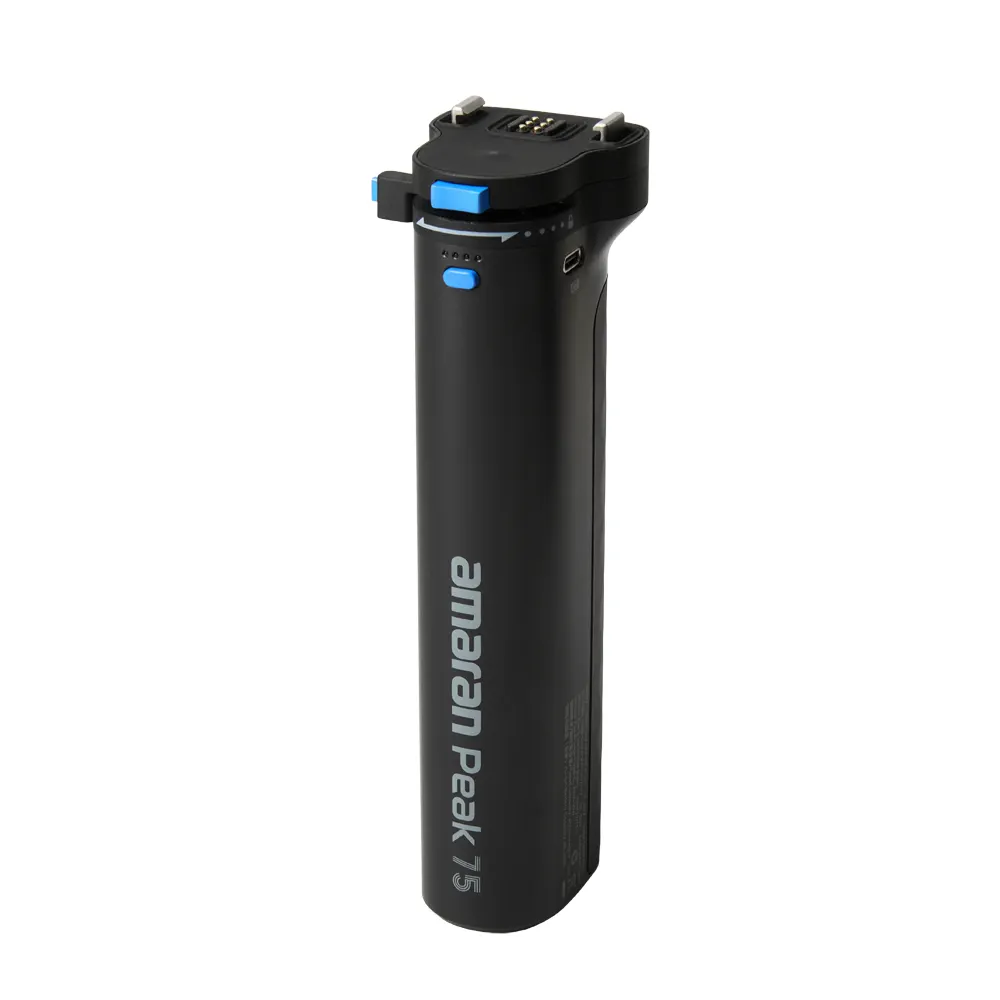
For international travel, rely on smaller V-mount batteries and modular battery grips instead of large floor units.
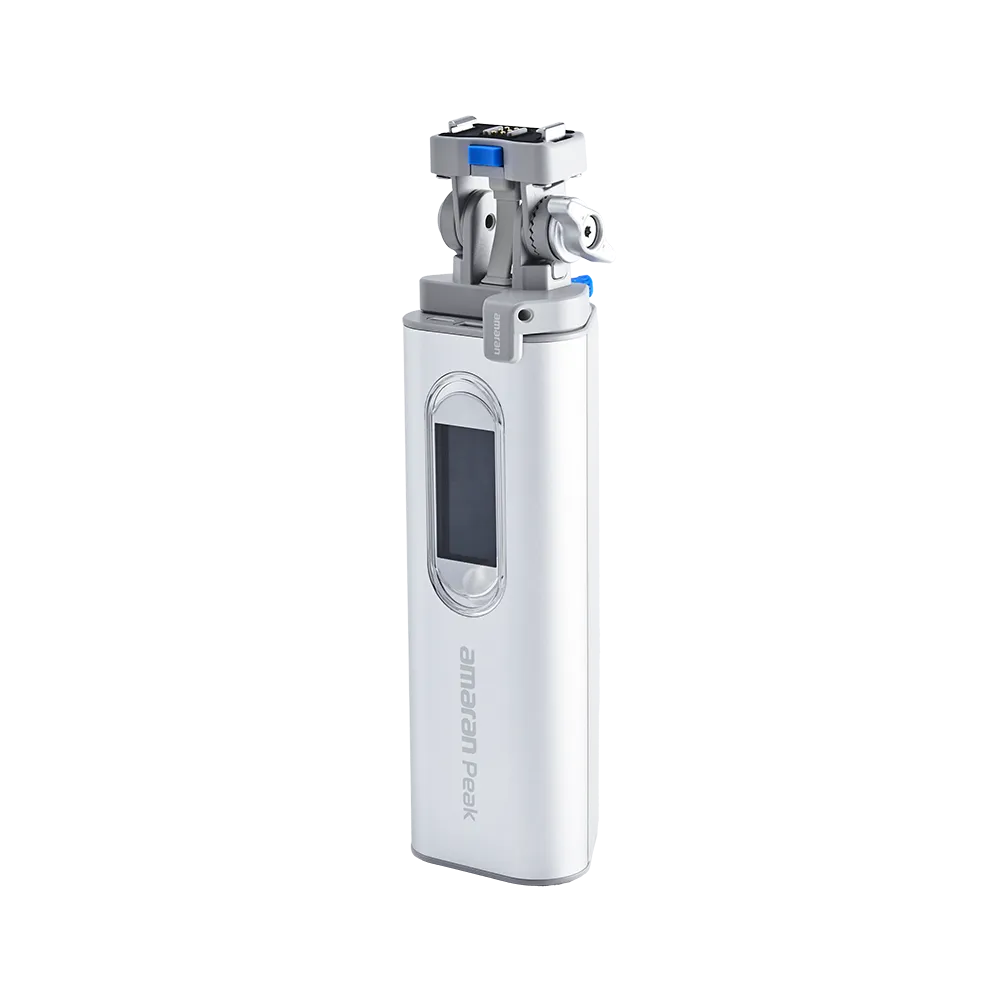
Smart DC Distribution and Accessories
AC power easily handles large lights. However, converting battery power from DC to AC and back wastes energy through inverter losses. To maximize your runtime, power your cameras, monitors, and audio bags directly via DC outputs whenever possible.
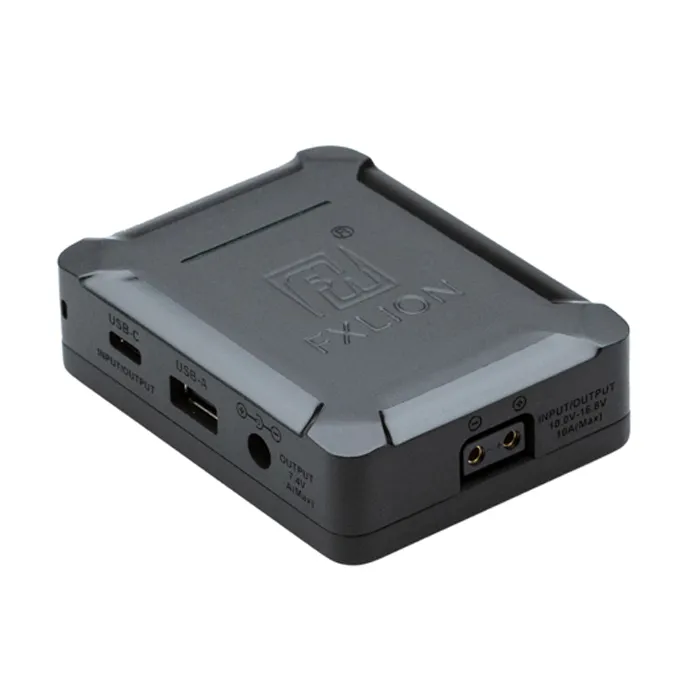
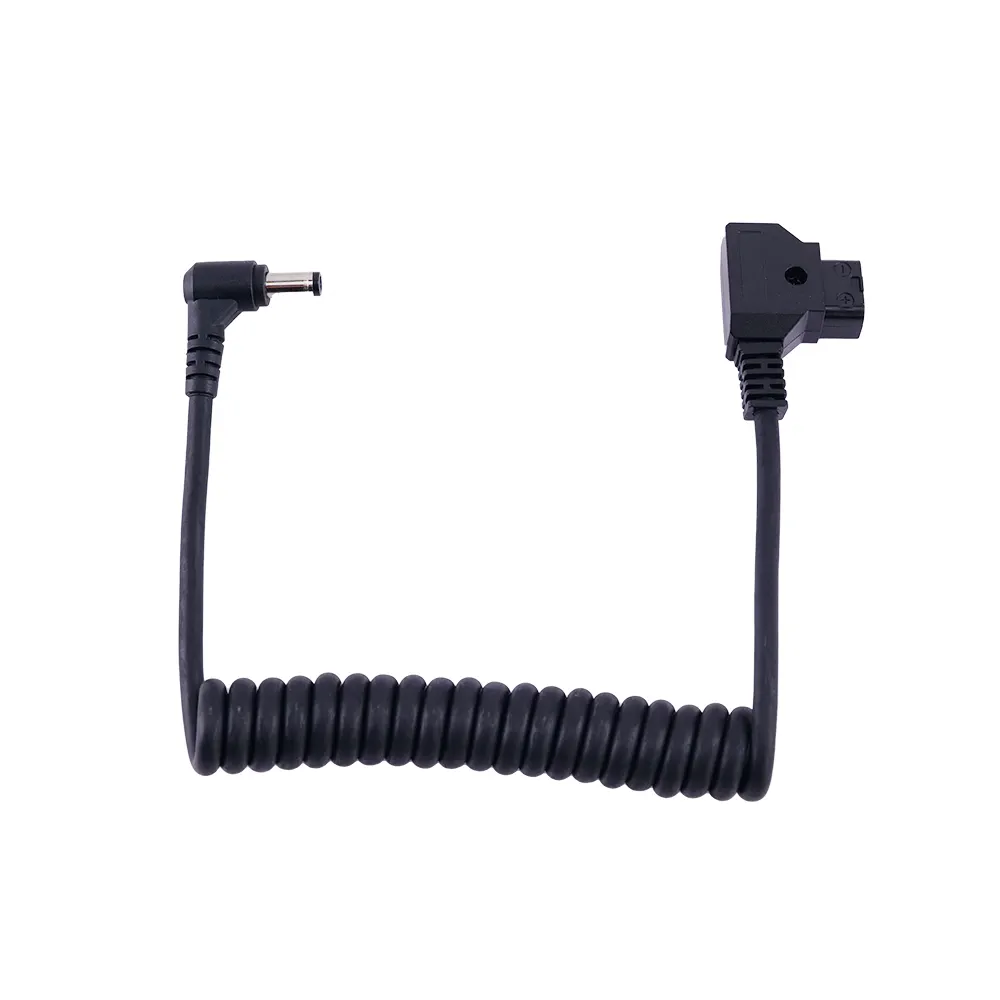
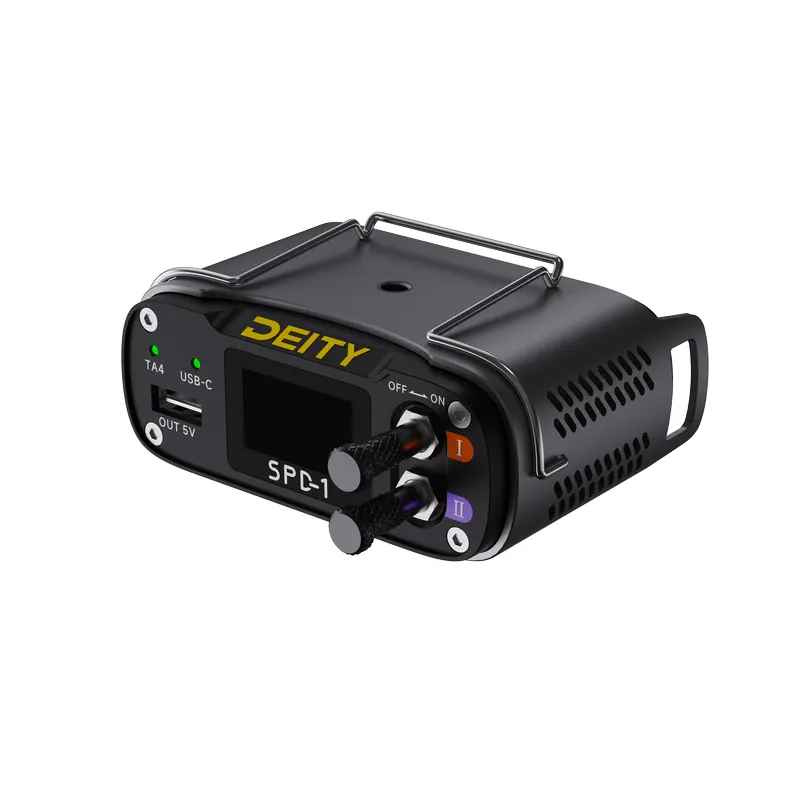
Using proper power accessories ensures a clean distribution of voltage across your rig. Smart distributors route power efficiently to sound mixing bags or complex camera builds. Multi-voltage adapters allow you to cross-patch different outputs. Specialized power cables like D-Tap to DC barrels let you run compact fixtures straight from your existing V-mount blocks.
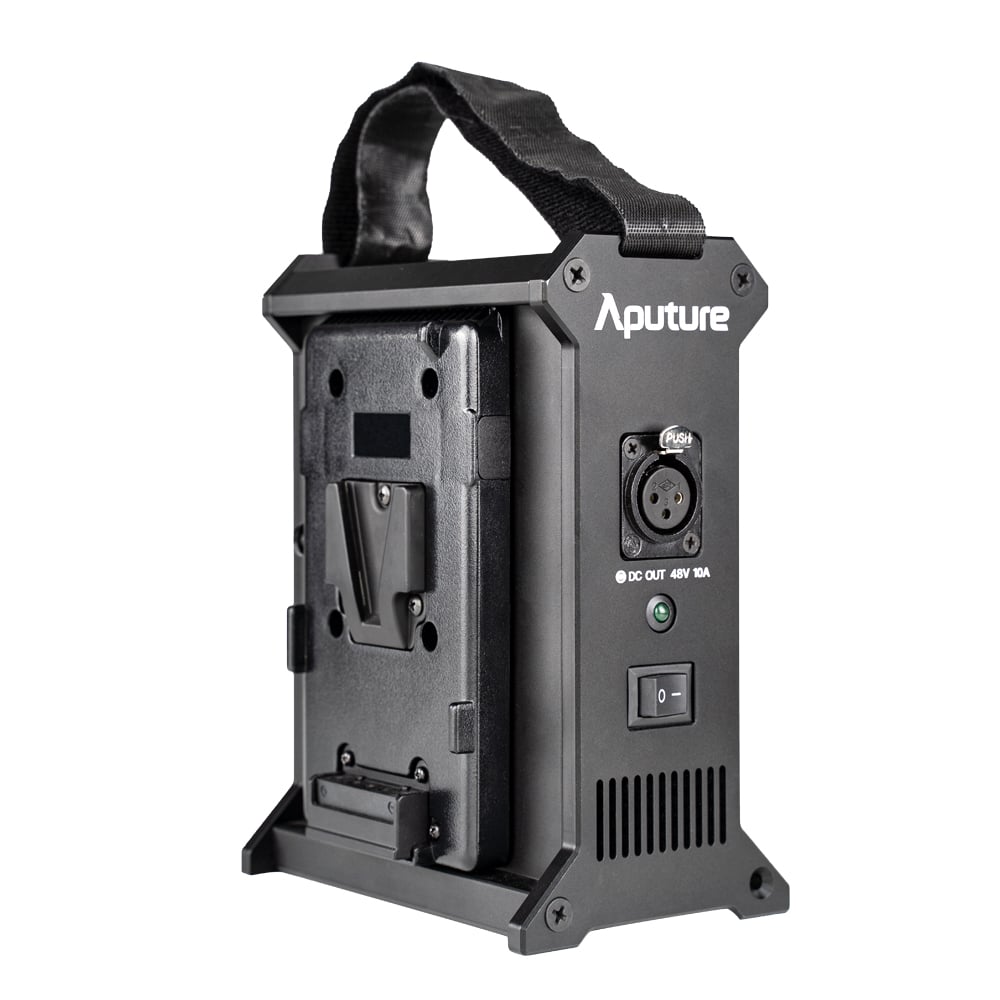
If you have an abundance of broadcast batteries, you can also use 2-bay stations to bridge them together. This process converts standard 14.4V V-mounts into high-voltage 48V DC outputs for larger lights. Make sure to pack the appropriate chargers to keep these smaller blocks cycling throughout the day.
-
 -10%Chargers, Power accessories
FXLION Nano Hub – Multi Voltage Adapter
Original price was: € 99.00.€ 89.10Current price is: € 89.10.€ 110.48 (incl. VAT)IN STOCK -
 Power cables
AMARAN D-Tap to 5.5mm DC barrel power cable
€ 30.00€ 37.20 (incl. VAT)IN STOCK -
 Power accessories, Power stations
DEITY SPD-1 Smart Power Distributor
€ 230.00€ 285.20 (incl. VAT) -
Chargers
APUTURE 2-Bay Battery Power Station (V-mount)
€ 179.00€ 221.96 (incl. VAT)IN STOCK
On-Set Safety and Storage Guidelines
Safety must dictate how you handle high-capacity lithium batteries on set. We’ve seen equipment fail simply due to poor handling. Always follow recognized safety protocols:
- Proper Storage: Do not store power stations in extremely hot or cold locations, direct sunlight, or near emergency exits. Following NFPA storage guidelines prolongs your battery lifespan and keeps your crew safe.
- Certifications: Ensure your equipment holds relevant safety certifications like UL 2743. This standard specifically covers portable power pack testing.
- Ventilation: Never block the cooling fans on a power station. Keep them free from sand, rain, and loose grip tape to prevent overheating.
- Protection: Always protect battery terminals from short circuits during transport. Tape over exposed contacts or use dedicated protective caps.
Key Takeaways
- Factor in an 85% inverter efficiency rate when calculating your total on-set runtime.
- Match your continuous lighting load to the power station’s inverter rating, and oversize your capacity by 20% to 30%.
- Replace indoor generators with battery stations to eliminate carbon monoxide risks and protect audio recording.
- Use DC outputs and smart distributors to power cameras and monitors efficiently without inverter loss.
- Keep individual batteries under 100 Wh to comply with commercial airline travel restrictions.
If you are upgrading your production equipment and need reliable, off-grid electricity, browse our complete inventory of professional power stations. For help calculating the exact load requirements for your lighting package, contact our technical support team for expert advice and setup solutions.