How to Power Multiple AV Devices Safely From One Battery
Managing cables and power on a complex camera rig is a constant challenge. You understand how frustrating it is to run a cinema camera, a field monitor, a wireless video transmitter, and an audio receiver at the same time. Powering all these units from separate batteries adds heavy, unnecessary weight to your setup. It also makes battery swaps terribly slow during a fast-paced shoot.
The smartest solution is distributing power from a single, high-capacity source.
Power distribution is exactly where many rigs fail. A sudden voltage drop or an overloaded circuit can ruin a perfect take. Worse, it can permanently damage expensive equipment. Building a reliable power distribution hub means you must understand voltage matching, current limits, and circuit protection.
Matching Voltage to Your Equipment
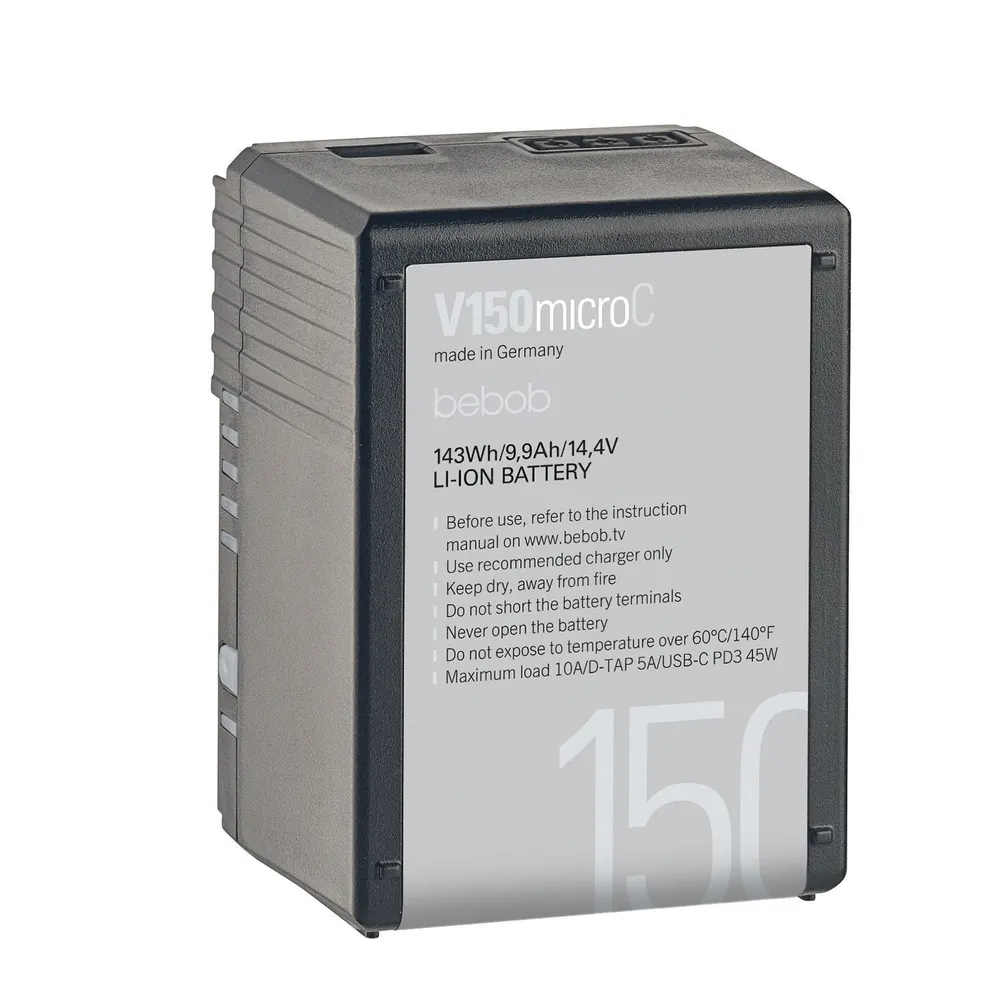
Most professional cameras and accessories run on Direct Current (DC). Standard V-mount batteries and Gold-mount batteries output a nominal 14.4V. This output can peak at 16.8V when the battery is fully charged.
You must match the output voltage of your power source directly to the input requirement of every connected device. A source voltage of 12V or 24V can fall below a device’s minimum input requirement. This mismatch causes the gear to shut down or behave erratically.
Luckily, many modern devices accept a flexible input range. Industrial DC/DC converter specifications often note that a nominal 24VDC input operates safely anywhere from 19V to 36V. Similarly, many standard power supplies can handle broad high-voltage DC input ranges. Always check the accepted voltage range in your equipment manual before you plug anything in.
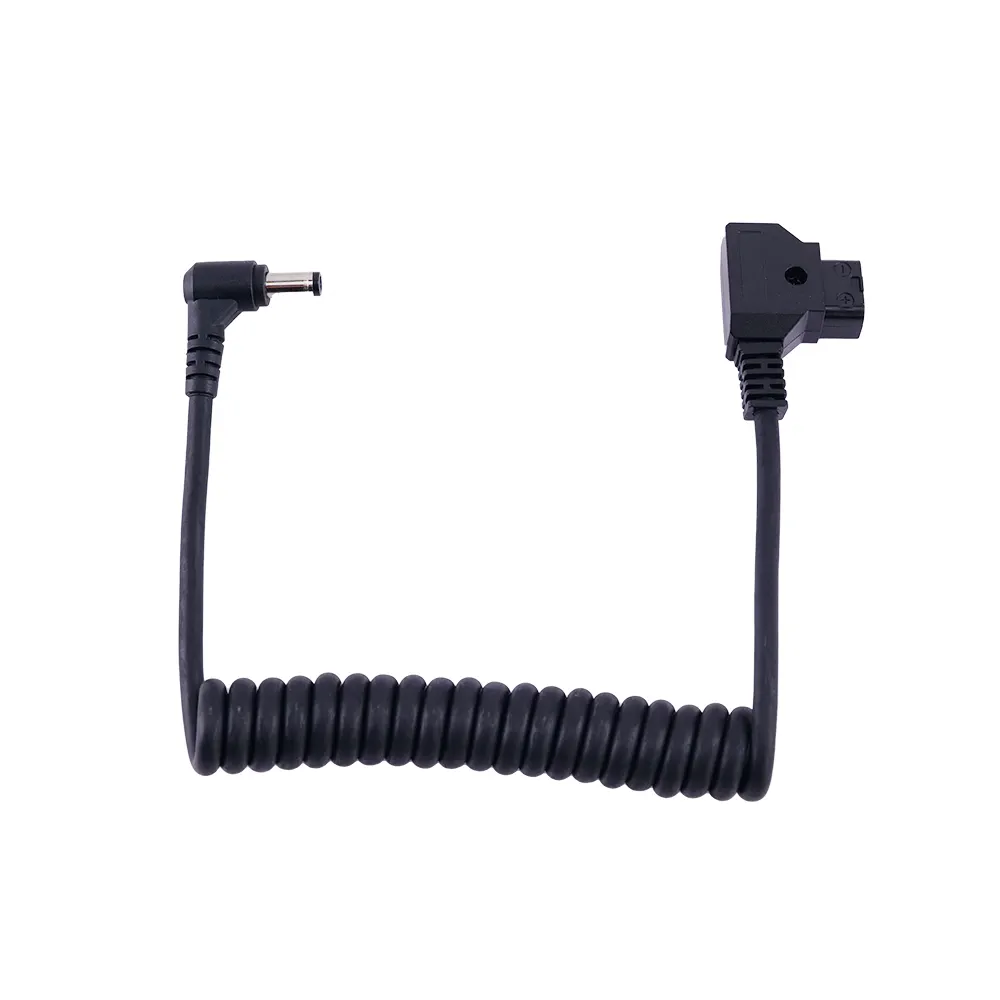
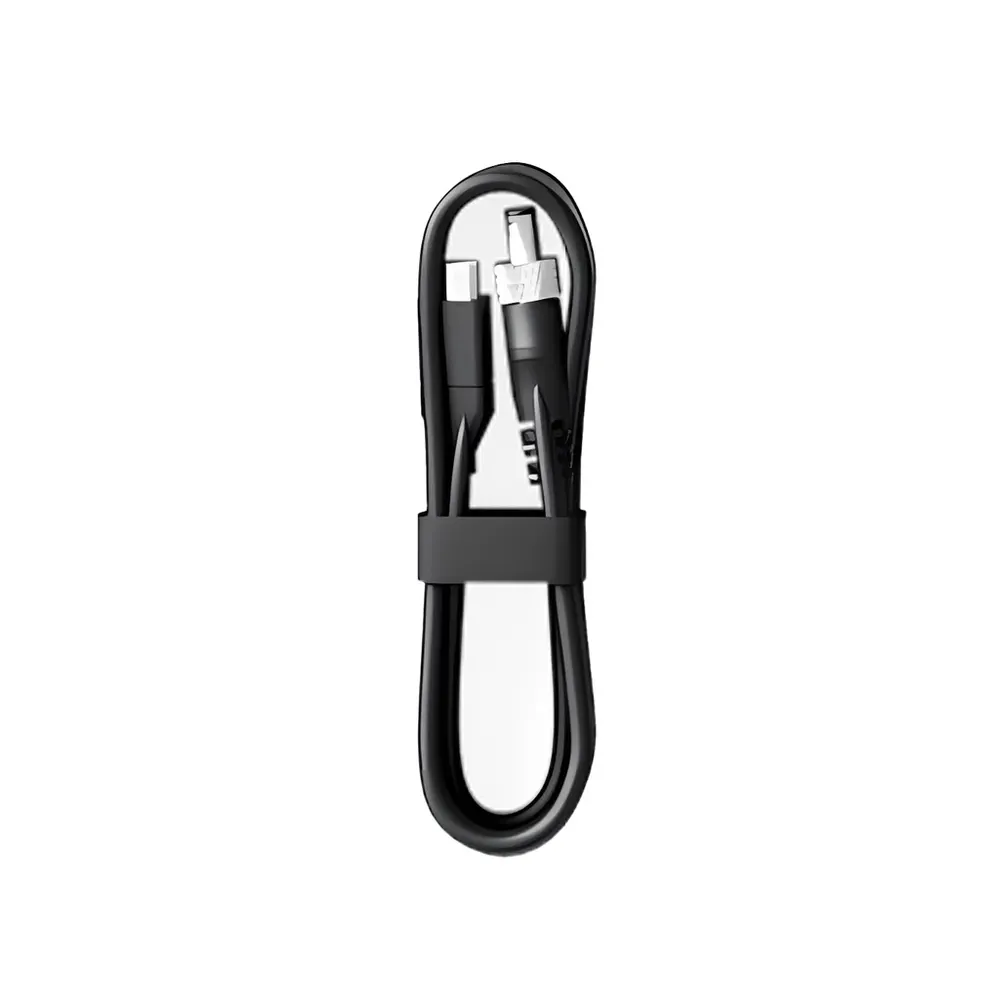
To step down voltage for lower-draw devices – like an 8V camera dummy battery or a 5V USB accessory – you will need regulated power cables. A regulated cable or adapter ensures the device receives the exact voltage it needs, regardless of the battery’s raw output.
Calculating Total Current Draw
When you distribute power from a single source, your battery and distribution plate must handle the combined load of all devices. Camera accessories wire together in parallel. This means the voltage stays constant across your rig, but the current draw adds up quickly.
To calculate your total load, simply add up the maximum wattage of your camera, monitor, and wireless units. Divide that total wattage by the battery voltage to find your total Amp draw. This simple math is critical to avoid overloading your system mid-shoot.
The 70% Rule: Never push your battery or plate to its absolute maximum limit. Keep continuous draw at roughly 70% for safe, long-term reliability.
Major power supply manufacturers suggest operating at about 70% of maximum load to ensure longevity. We apply this exact logic to on-set battery distribution. If your V-mount plate supports a 10A draw, aim to keep your continuous load around 7A. High-capacity batteries with robust internal cells are the best starting point to support these heavy rigs.
Choosing the Right Battery Distribution Plate
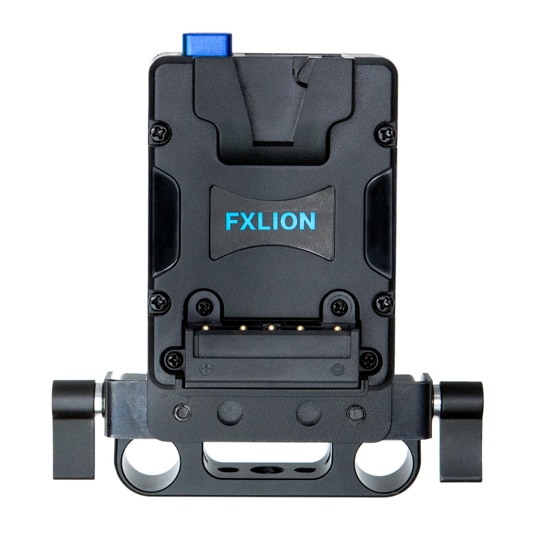
A bare battery typically provides only one or two outputs. To power an entire rig smoothly, you need a dedicated battery mount plate. These plates act as a central power hub for your entire camera setup.
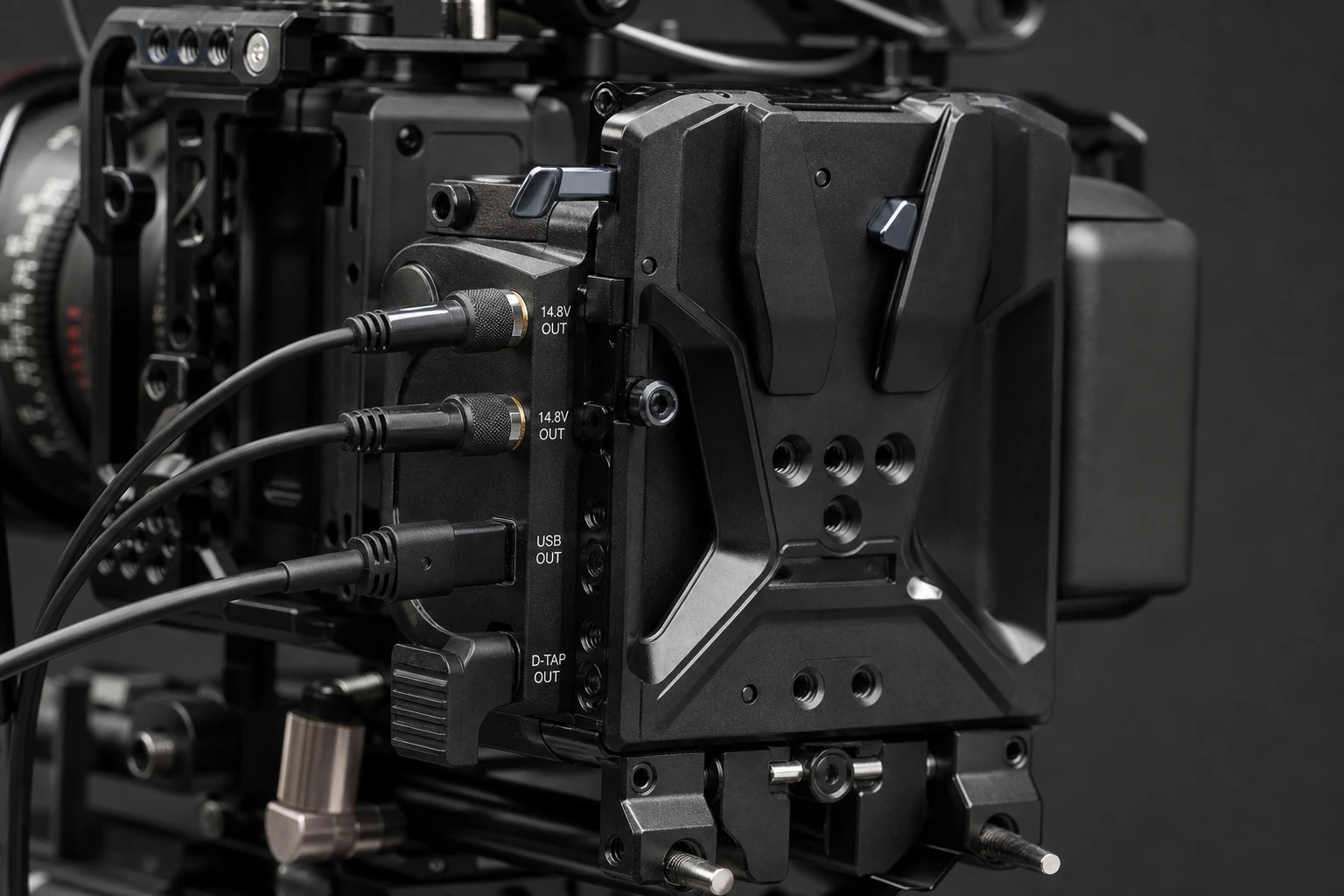
They mount securely to your 15mm rods or camera cage. Once attached, they offer multiple D-Tap, DC barrel, and USB-C connections. High-quality plates provide a complete expansion solution that keeps your camera balanced and your cables beautifully organized.
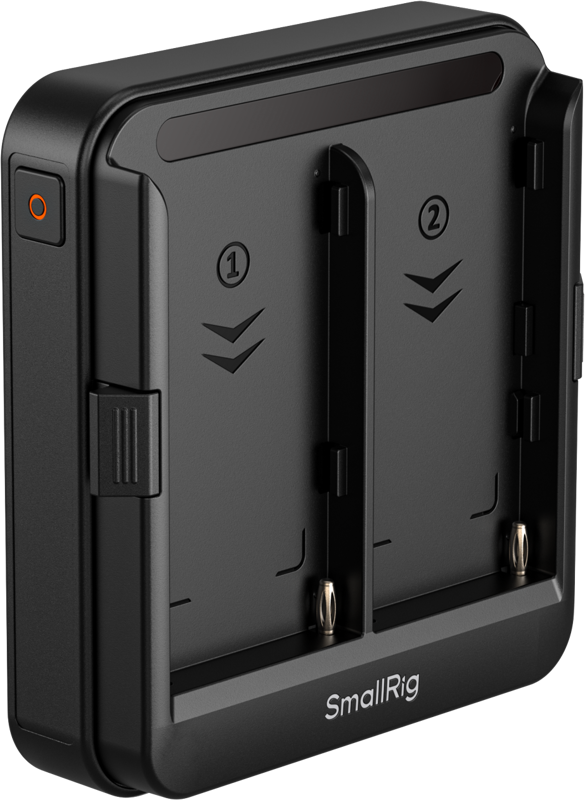
For smaller setups that rely on NP-F batteries, dedicated adapter plates can offer uninterruptible power supply support for continuous operation. This ensures you never lose power during a crucial recording.
-
 Chargers
SMALLRIG 5536 Adapter Plate for NP-F Type Batteries (Supports UPS)
€ 87.12€ 108.03 (incl. VAT) -
 Power accessories
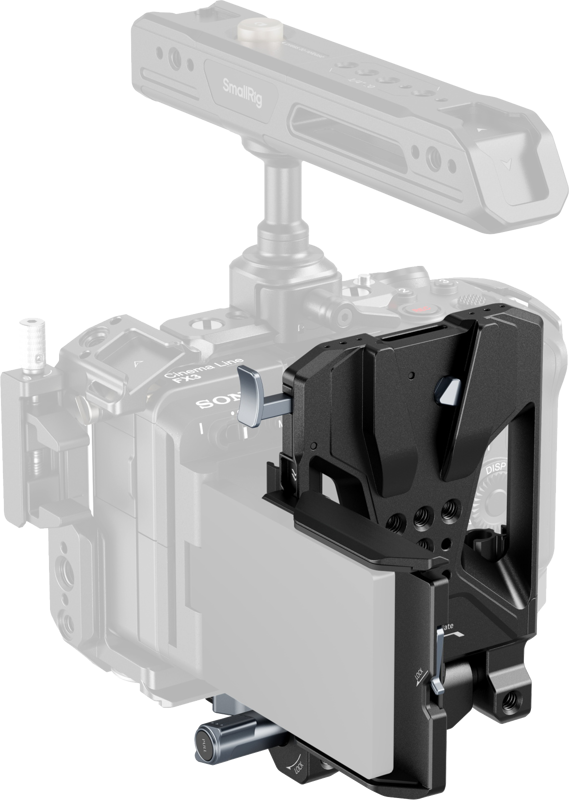
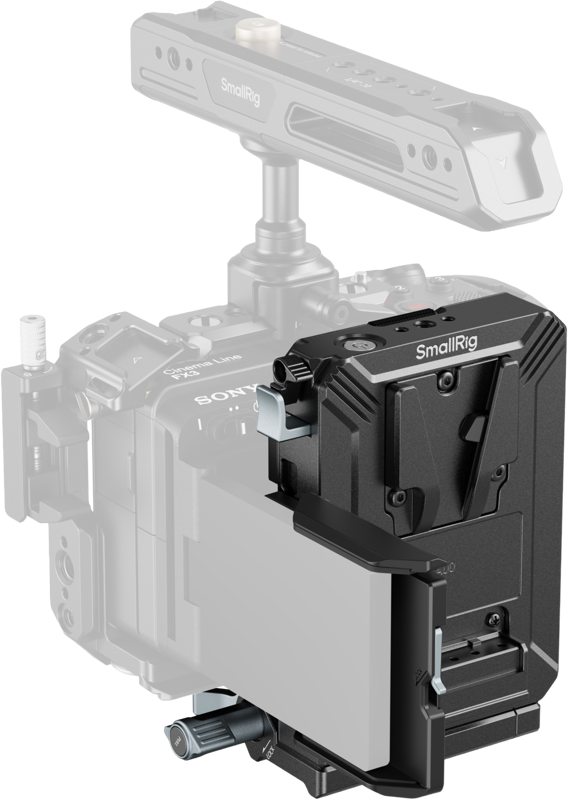
SMALLRIG 5315 V-Mount Battery Mount Plate Kit Pro
€ 124.72€ 154.65 (incl. VAT) -
 Power accessories
SMALLRIG 5227 V-Mount Battery Mount Plate Kit
€ 236.72€ 293.53 (incl. VAT) -
 Power accessories
FXLION NANO V-Mount Plate with Rod Mount
€ 54.00€ 66.96 (incl. VAT)IN STOCK
Handling High-Amperage and Heavy Lighting Rigs
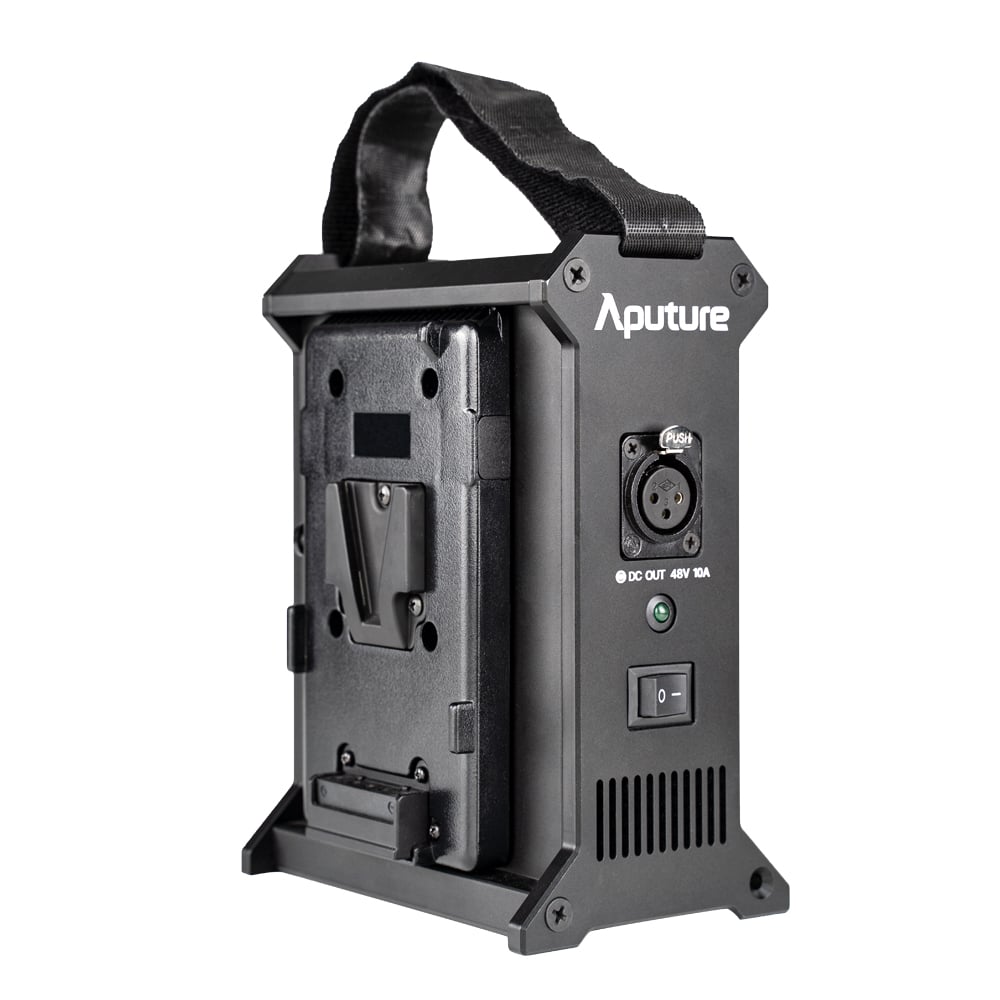
Power needs escalate rapidly when you transition from camera rigs to high-output LED lighting panels or full production carts. Standard 14.4V batteries simply cannot power massive 48V lighting fixtures directly.
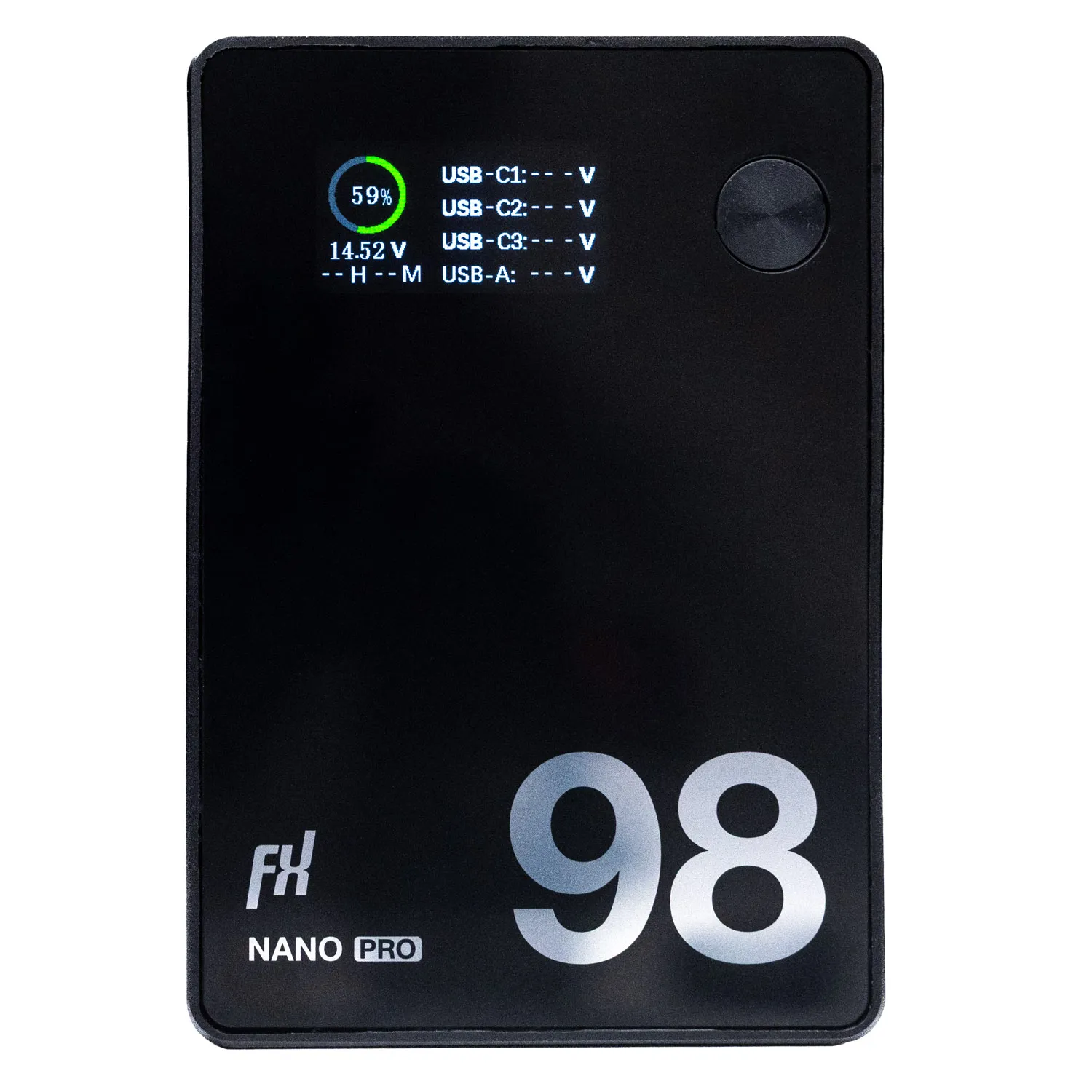
You need a dedicated power station that converts the standard V-mount voltage into a regulated 48V DC output. This allows you to scale up your power distribution without changing your entire battery ecosystem.
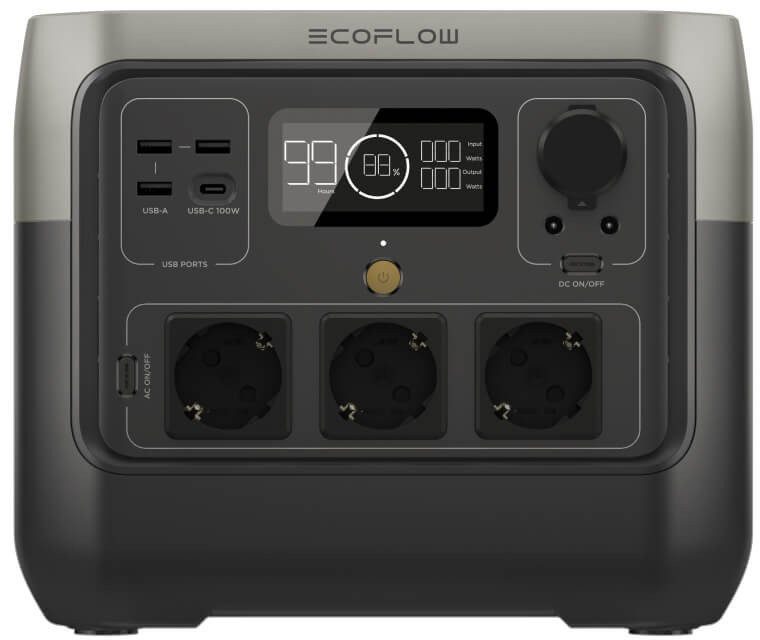
For full production bases, high-capacity portable power stations are the most reliable option. They allow you to charge multiple batteries, run field monitors, power laptops, and keep lights illuminated without draining your primary camera batteries.
Circuit Protection: Preventing Electrical Failures
Distributing power across multiple power accessories always introduces some risk. A short circuit in a frayed cable can rapidly pull massive current. This single mistake will melt wires, destroy sensitive camera boards, or even cause a battery fire.
Proper distribution setups rely on strict circuit protection. Professional installation guidelines state that any dedicated DC system <a href="https://www.victronenergy.com/media/pg/MultiPlus12V500-1200VA120Vac/en/installation.html”>must include appropriate fusing and correct wire gauges. For large production carts and high-amperage equipment, <a href="https://www.youtube.com/watch?v=9zDMwf9lKQ”>ignition-protected circuit breakers are absolutely mandatory.
On a standard camera rig, this vital protection lives inside your battery distribution plate. Premium plates feature built-in short-circuit protection. If an accessory fails or a cable shorts out, the plate’s protection circuit trips instantly. This cuts the power long before the battery overloads. Never use unbranded, unregulated splitter cables for your expensive cinema equipment.
Key Takeaways
- Match inputs carefully: Always check device manuals for acceptable DC voltage ranges before connecting power. Use regulated cables to step down voltage for 5V or 8V accessories.
- Observe the 70% rule: Calculate the total wattage of your rig. Keep your continuous current draw at roughly 70% of your battery plate’s maximum rating to prevent system failure.
- Centralize distribution: Use a dedicated V-mount or Gold-mount plate to split power safely. Avoid daisy-chaining multiple splitters directly from a single battery.
- Prioritize circuit protection: Only invest in plates and cables with built-in short-circuit protection to safeguard your camera from electrical faults.
If you are struggling to balance the power draw on your rig or need advice on outfitting a new production cart, contact our technical support team to find the right distribution setup for your workflow.