





Fluid Head Tripod for Video: Match the Kit to Your Rig
A fluid head tripod gives you smooth pans and tilts without jerks at the start or end of a move. To pick the right one, do three things. Weigh your full camera rig. Choose a head whose payload and counterbalance fit that weight. Make sure the head’s bowl size fits the tripod legs.
Here is a quick guide to the kits we stock. Weights are the payload each maker lists. Prices include VAT and are from our product pages in October 2026.
| Rig weight (camera, lens, cage, monitor, mic) | Kit to look at | Head payload | Counterbalance | Price |
|---|---|---|---|---|
| Up to 2 kg | Libec TH-650EX | 3 kg | Fixed | €233.12 |
| Up to 3 kg | Manfrotto 500 + 190X | 5 kg | Preset 2.4 kg at 55 mm | €420.96 |
| Up to 4 kg, tall legs | SmallRig 4686 AD-01S | 6 kg | Preset 4 kg at 55 mm | €198.30 |
| Up to 5–6 kg | Libec LX7 or SmallRig 3751 | 8 kg | Fixed / built-in | €677.04 / €175.48 |
| 7–10 kg and changing rigs | Sirui SVT-75 Pro + SVH15 | 15 kg | 7 steps | €1,124.77 |
| Up to 9 kg, cinema and ENG rigs | Manfrotto 509 + 545GB | 13.5 kg | 4 steps + ABR | See product page |
The “rig weight” column leaves headroom. The reasons are below.
What a fluid head does that a photo head cannot
A fluid head has sealed chambers of viscous fluid. When you move the pan bar, the fluid pushes back evenly. This is called drag. It stops the camera from lurching when you start or stop a move.
A ball head cannot do this. It locks or it moves freely, and a free move is rarely smooth.
Many buyers mix up two other terms:
- Drag is the resistance you feel when you pan or tilt.
- Counterbalance cancels the weight of the camera. It lets the rig stay where you leave it at a tilted angle.
B&H’s video team makes the same point: counterbalance is not there to fix a camera that is too heavy for the head. Fluid heads are built for a set weight range (B&H Explora on tripod settings).
Step 1: Weigh the whole rig, then add headroom
Add up everything on top of the head. That means the camera, lens, cage, monitor, microphone, battery and matte box.
Here is an example. A mirrorless body at 0.7 kg, a 0.9 kg lens, a 0.4 kg cage, a 0.3 kg monitor and a 0.2 kg microphone make 2.5 kg. A body alone can look like 0.7 kg. The finished rig is more than three times that.
Next, add headroom. Sources differ on how much. Some suggest 20–30% above your heaviest rig. Others say at least 1.5 times. We prefer the larger margin for run-and-gun shooting, because you tend to add things later. For the 2.5 kg example, 1.5 times is about 3.75 kg. A 3 kg head is too small. A head rated for 5–6 kg is a safe choice.
One more trap is that a head’s payload rating and its counterbalance range are not the same. A head might safely hold 12 kg while its counterbalance is tuned for 6 kg. Look at both numbers.
Step 2: Pick a kit by rig weight
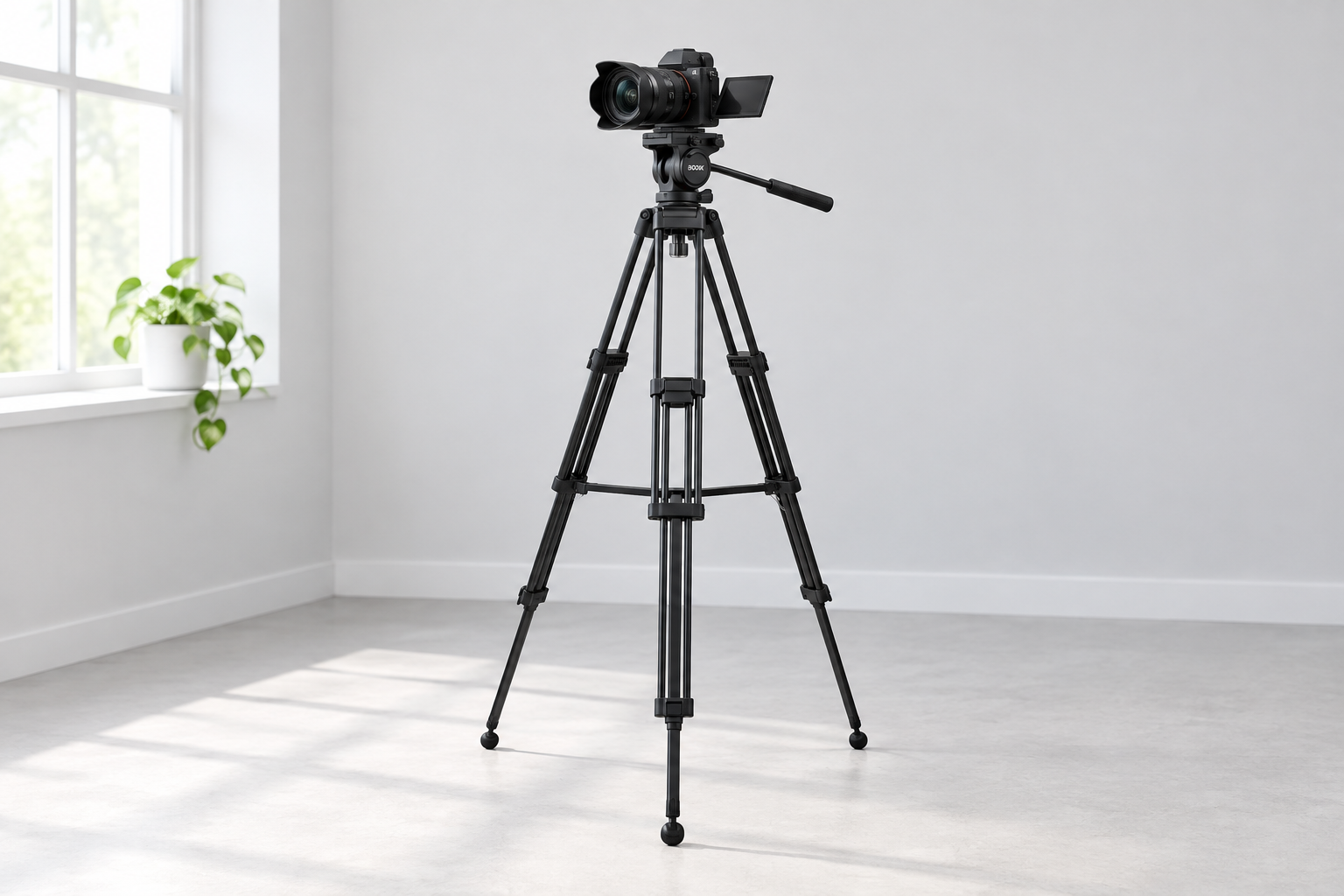
Light mirrorless rigs: Libec TH-650EX
The Libec TH-650EX is our entry point. It has a 3 kg payload and a fixed counterbalance. The tripod reaches 150 cm. At €233.12 it suits a bare mirrorless camera with one lens and a small microphone. Our product page lists it as in stock.
It does not suit a cage plus a monitor plus a battery plate. That easily passes 3 kg.

Mid-weight mirrorless and small cinema rigs: Manfrotto 500 and SmallRig AD-01S
The Manfrotto 500 + 190X kit has a head with a preset counterbalance of 2.4 kg at a 55 mm centre of gravity (CoG). Our page lists a 5 kg payload. The head has a flat base, so you can later move it to a slider or jib.
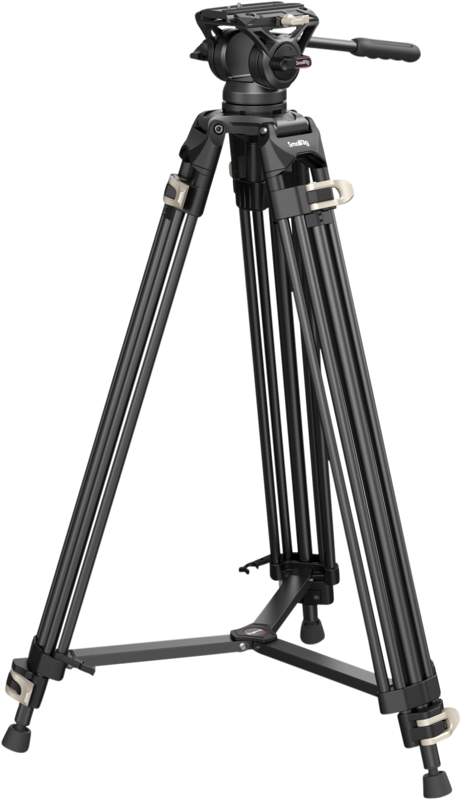
The SmallRig 4686 AD-01S is cheaper and taller. Its legs run from 84 to 187 cm and fold to 88 cm. The head has stepless tilt damping and a preset counterbalance for rigs up to 4 kg at a 55 mm CoG. Its payload is 6 kg.
Note the gap between payload and counterbalance. On the SmallRig, a 6 kg rig is held safely, but the counterbalance is set for 4 kg. A heavier rig will feel front- or back-heavy when you tilt. Stay close to the counterbalance figure.


Heavier DSLR and shoulder-camera rigs: Libec LX7 and SmallRig 3751
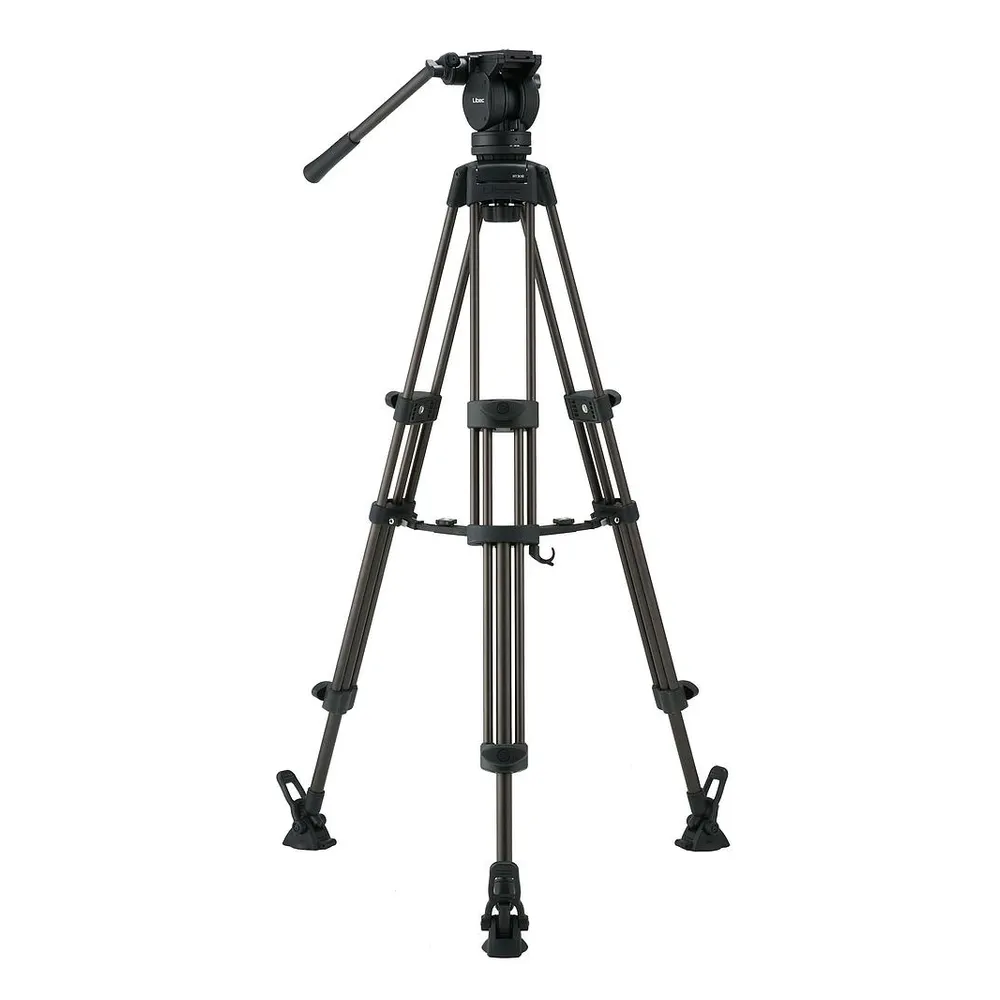
The Libec LX7 carries 8 kg and has a fixed counterbalance. Its working height is 65 to 166 cm, and the whole kit weighs 5.5 kg. It comes with a mid-level spreader, which keeps the legs from sliding on smooth floors.
The SmallRig 3751 AD-01 also holds up to 8 kg. It has a 75 mm bowl and 360° pan, with +90°/−75° tilt. It costs far less than the Libec.
Choose the Libec if you want a more traditional broadcast-style kit. Choose the SmallRig if budget matters most and your rig is stable. Some of these kits are in partner stock, and our product pages say partner-stock items reach us in about a week.
Rigs that change: Sirui SVT-75 Pro + SVH15
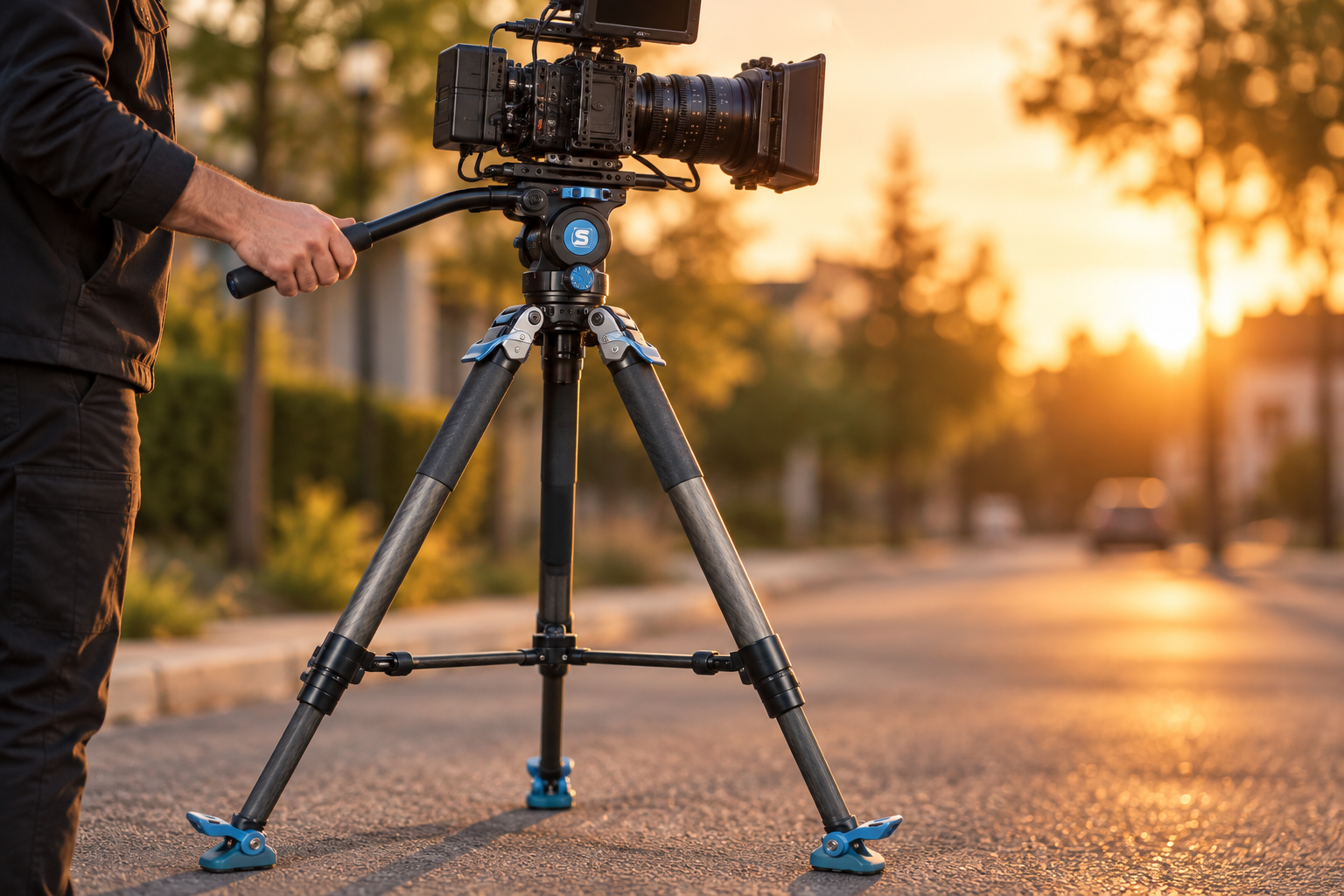
If you swap between a light mirrorless setup and a loaded cinema build, you need an adjustable counterbalance. The Sirui SVH15 has seven steps that cover 4 kg to 15 kg. The tripod is rated to 25 kg. It uses a 75 mm bowl, and the legs go from 21 cm to 153 cm without the head.
Sirui also lists hydraulic damping that works from −40 °C to 60 °C. That matters for cold-weather shoots.
It costs €1,124.77. It is too much for a hobby setup, but it makes sense for a working shooter whose rig changes from job to job.

Cinema and ENG rigs: Manfrotto 509 + 545GB
The Manfrotto 509HD is rated to 13.5 kg. It has four counterbalance steps plus Manfrotto’s ABR system, and our product page lists the counterbalance up to 8.5 kg. It sits in a 100 mm bowl. The kit has a telescopic ground spreader and extends from 48 to 172 cm. It weighs 9.8 kg.
That weight is worth knowing before you buy. It is a studio and ENG tripod, not one for a long hike.

Step 3: Fixed or stepped counterbalance?
A fixed counterbalance has one preset. It is simple, and you cannot set it wrong. It works well if your rig never changes.
A stepped counterbalance lets you match the head to the rig. It suits anyone who changes lenses, cages or monitors. The catch is that steps are not stepless. Sirui warns that adding or removing accessories on its VHS10 head can break the balance. Plan to re-balance whenever the rig changes.
If your rig stays the same from job to job, a fixed counterbalance is fine. If it changes a lot, buy a stepped head.
Step 4: Check the bowl and the mount
The bowl is the cup on top of the tripod where the head sits. You level the head by loosening one clamp, tilting until the bubble centres, and tightening again. This is much faster than levelling each leg.
Bowl diameters come in 75 mm, 100 mm and 150 mm. A larger bowl carries a heavier head more rigidly, but adds weight and cost. Heads and tripods must share the same size. Adapters exist, but each one adds height and another part that can move.
You will also see two head styles:
- Half-ball heads drop into a tripod bowl.
- Flat-base heads bolt to a 3/8″ mount. They fit sliders and jibs, and they can sit on a half-ball adapter.
If you plan to use a slider, choose a flat-base head. The Manfrotto 500 above is an example.
How to balance the head
Sachtler’s published method is simple and works on most fluid heads (Sachtler tutorial on counterbalancing):
- Attach the plate to the camera and level the head.
- Set pan and tilt drag to zero and lock them off. Set counterbalance to the lowest level.
- Slide the camera on the plate until its balance point sits over the head’s axis.
- Release the tilt lock. Raise the counterbalance until the camera stays level when you let go.
- Tilt about 30° each way and release. If it rises, reduce counterbalance. If it drops, add some.
Only then add pan and tilt drag to taste.
Common mistakes to avoid
- Buying for the body, not the rig. Add the cage, monitor and battery first.
- Using counterbalance to hide an overload. The head will feel dead or springy at its limits.
- Ignoring the legs. Check the tripod’s load rating, not only the head’s.
- Mismatching bowls. A 100 mm head will not sit in a 75 mm bowl.
- Buying a tripod when you need something else. If you move constantly, compare it with a monopod in our tripod vs monopod guide. If you want moving shots, read our gimbal vs tripod comparison.
Key Takeaways
- Weigh your full rig and buy a head rated for about 1.5 times that weight.
- Check the counterbalance range, not only the payload. A head can hold more than it can balance.
- Choose a fixed counterbalance for a stable rig and stepped counterbalance if your rig changes.
- Match bowl size (75, 100 or 150 mm) between head and tripod.
- Balance the camera over the head’s axis before you set counterbalance.
Not sure which kit fits your camera? Browse all fluid head kits in our tripods category, or send us your camera and accessory list. We will suggest a kit that fits it.


