In-Ear Monitor Systems for Live Events: A Setup Guide
A performer struggling to hear themselves will inevitably deliver a compromised show. Traditional wedge monitors push stage volumes into chaotic territory, creating feedback loops and muddy phase issues. Wireless in-ear monitoring (IEM) systems fix this problem at the source. They isolate the performer, lower the overall stage volume, and deliver a clean, customized mix directly to their ears.
We have seen first-hand how an unstable monitoring rig leaves performers flying blind on stage. If the wireless signal drops out, the show stops. If the earpiece distorts the audio, vocalists will strain their voices trying to compensate. Selecting an in-ear monitor system for live events requires matching the hardware to the scale of your venue and the density of the local radio frequency (RF) environment.
Here is how you can configure a resilient monitoring setup from the ground up.
Stepping Into Professional UHF Monitoring
For beginning musicians or smaller venue installations, you need a straightforward setup that does not require a dedicated RF coordinator on the stage crew. You need a system that scans for clean frequencies automatically and pairs quickly without deep menu diving.
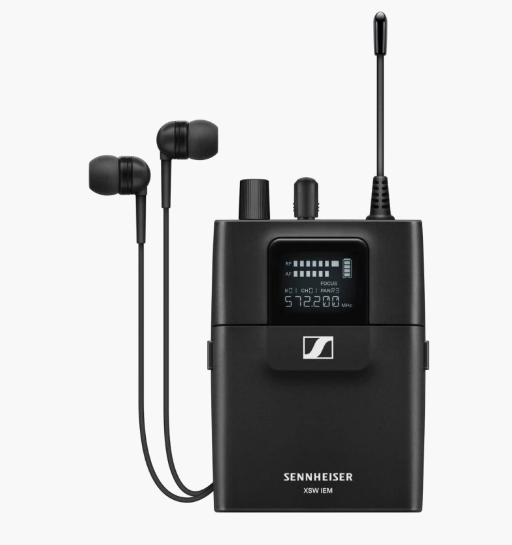
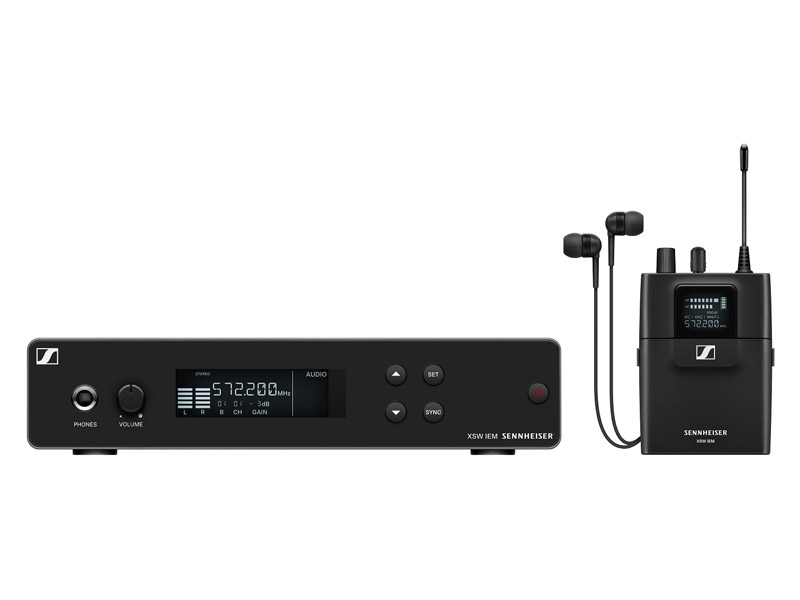
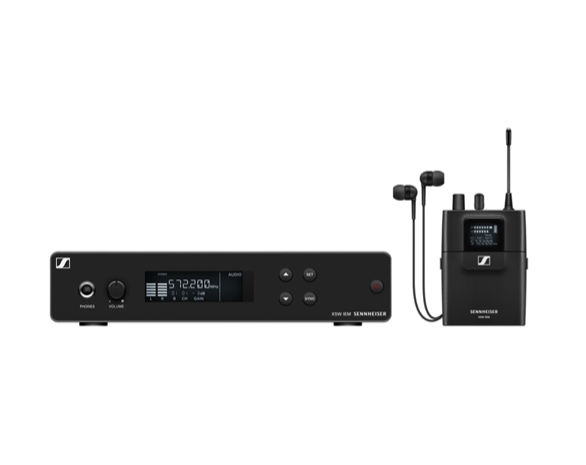
The Sennheiser XSW IEM series serves as the ideal entry point into professional stage monitoring. Unlike consumer-grade 2.4GHz devices that compete with venue Wi-Fi and smartphones, the XSW systems operate in the professional UHF range. This provides a much stronger, more reliable signal path through physical obstacles and crowded rooms.
The system features infrared sync for rapid setup between the transmitter and the bodypack. More importantly, it offers a built-in Focus mode. This allows performers to adjust the balance between their personalized vocal mix and the rest of the band directly on their bodypack, giving them control without needing to flag down the sound engineer.
Scaling Up to High-Bandwidth Systems
As your productions move into larger venues or festivals, the RF environment becomes increasingly hostile. LED video walls, wireless intercoms, and hundreds of active mobile devices create a saturated airspace. To guarantee an uninterrupted signal, you need an IEM system with wider tuning bandwidth and higher transmission power.
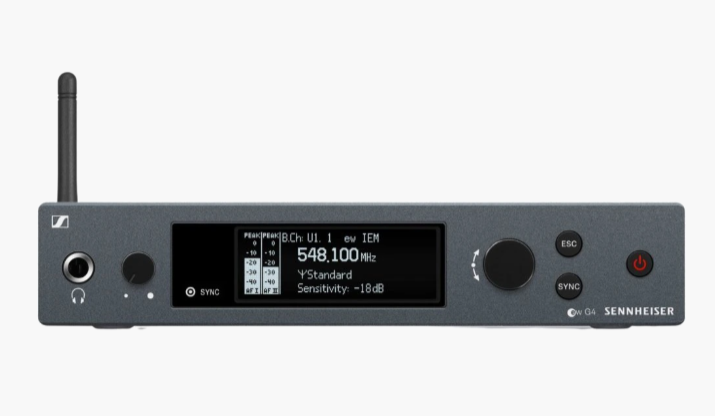
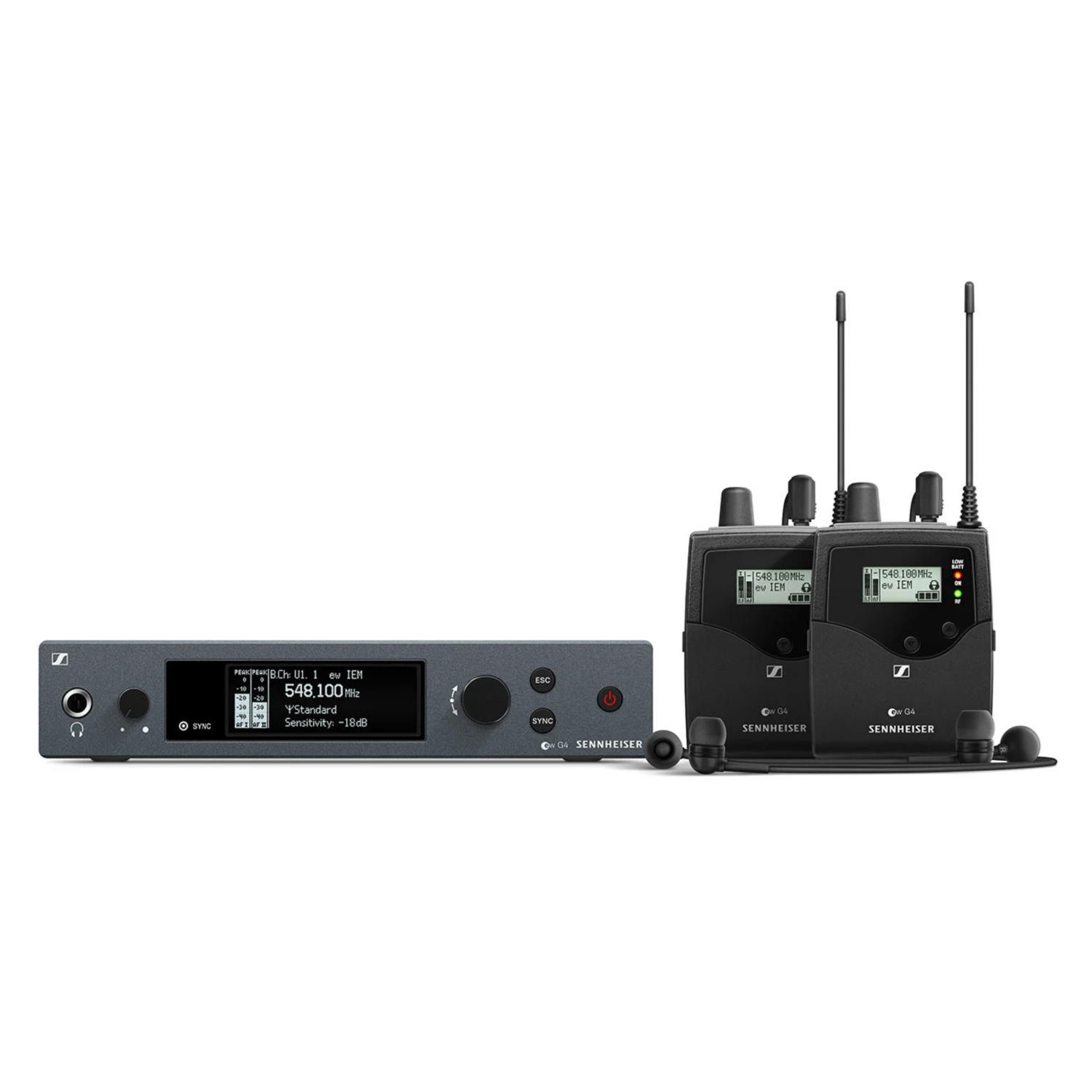
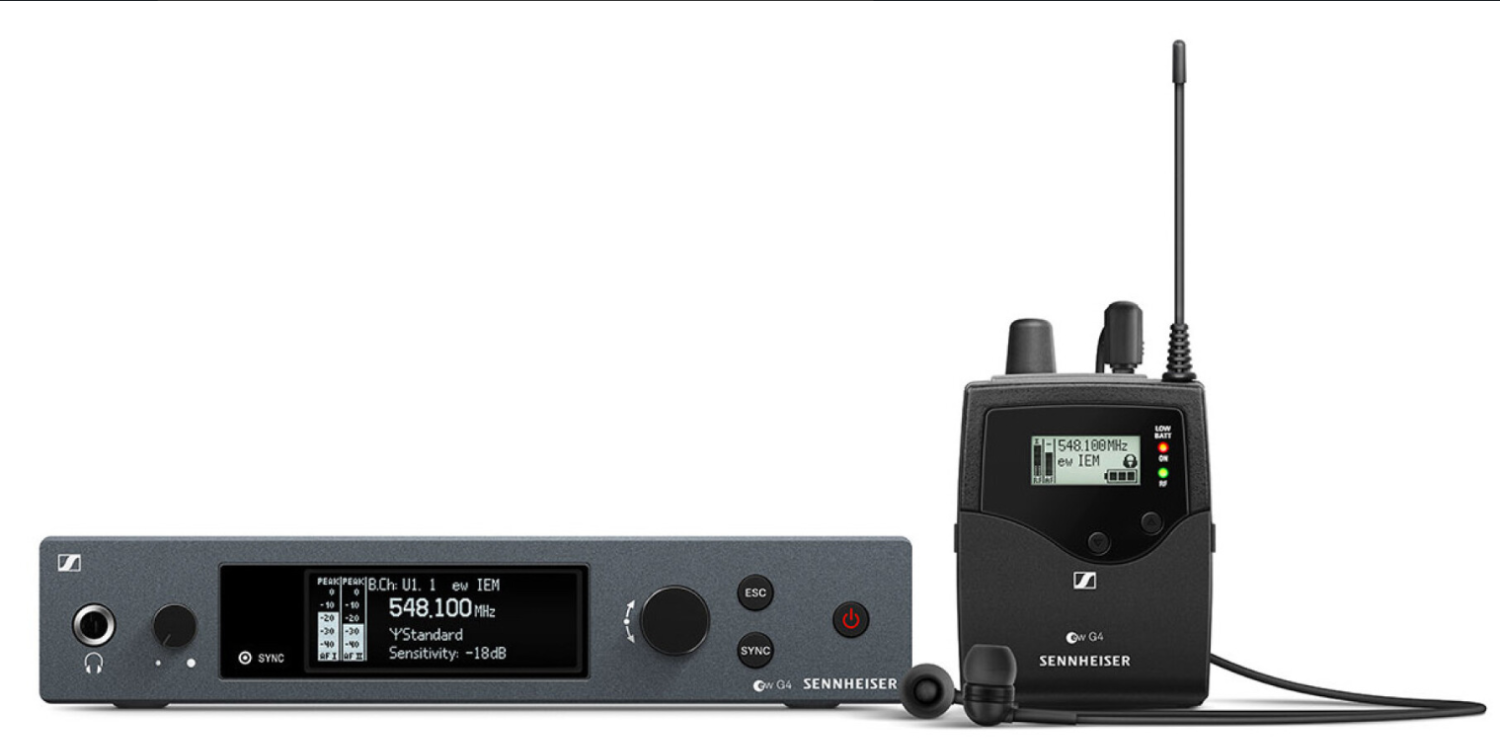
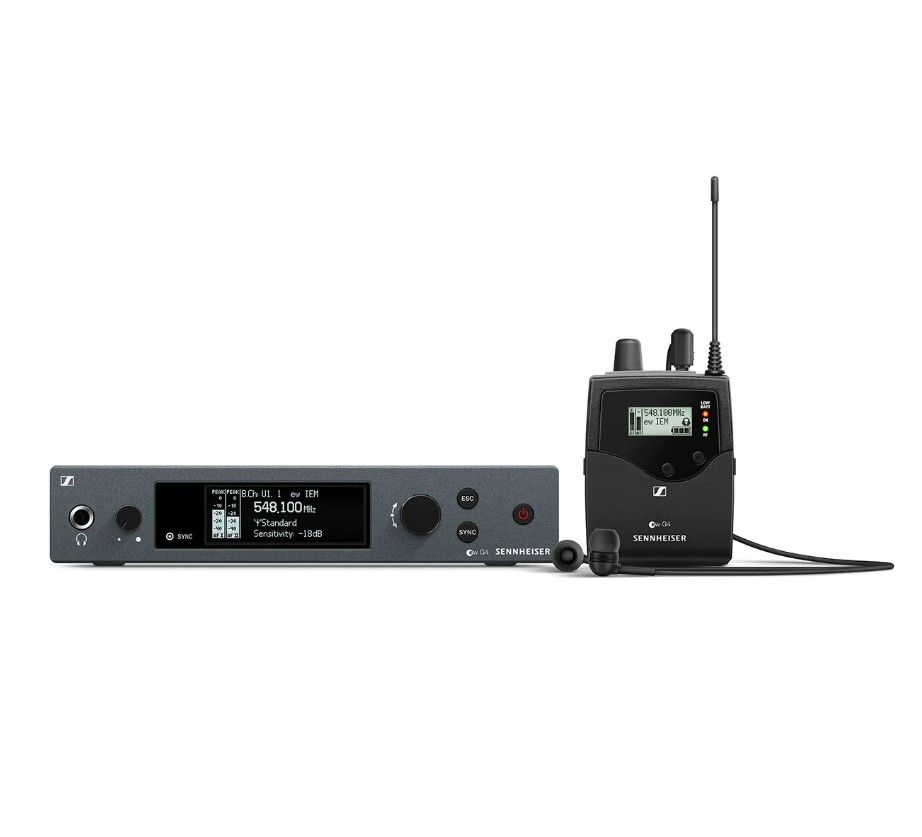
We consistently rely on the Sennheiser EW IEM G4 series for mission-critical live sound applications. It stands as an industry benchmark. With up to 42 MHz of tuning bandwidth, you can navigate around local TV stations and other interference sources easily.
You can configure these systems based on the specific needs of your band or crew. An all-in-one kit provides a single transmitter and receiver pair for individual performers. If you have two performers – such as a rhythm section – who want to hear the exact same monitor mix, a Twin kit proves highly efficient. It provides one rackmount transmitter and two bodypack receivers, which saves both rack space and budget while conserving wireless frequencies.
-
 Microphones
SENNHEISER SR IEM G4 A Transmitter for In Ear Monitoring, 516 – 558 MHz, generation 4, incl. GA3, antenna and power supply
€ 498.86€ 618.59 (incl. VAT) -
 Microphones
SENNHEISER ew IEM G4-Twin Wireless Monitor System Kit (A 516-558 MHz)
€ 1 248.17€ 1 547.73 (incl. VAT) -
 Microphones
SENNHEISER EW IEM G4-A1 IEM wireless monitoring kit (1x EK + IE4), GA3, 470 – 516 MHz, generation 4
€ 915.14€ 1 134.77 (incl. VAT) -
 Audio accessories
SENNHEISER EW IEM G4 all-in-one wireless monitoring system
€ 915.14€ 1 134.77 (incl. VAT)
RF Management and Antenna Combiners
If your stage requires three or more wireless monitor mixes, you must rethink how you manage your antennas. Simply racking four separate transmitters and leaving their individual antennas attached will create a phenomenon called intermodulation distortion. The transmitters will interfere with one another, creating ghost frequencies that cause dropouts and static in the performers’ ears.
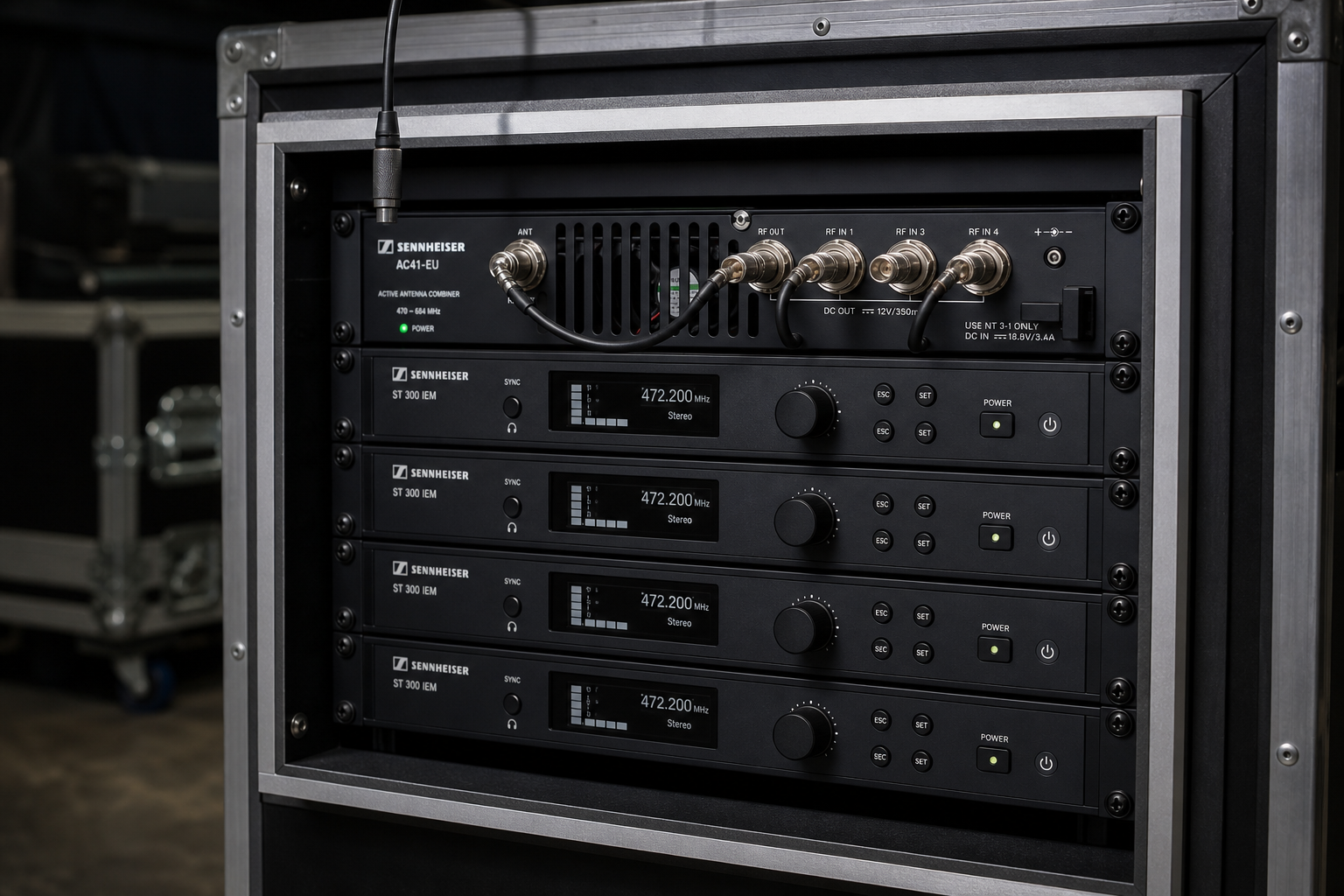
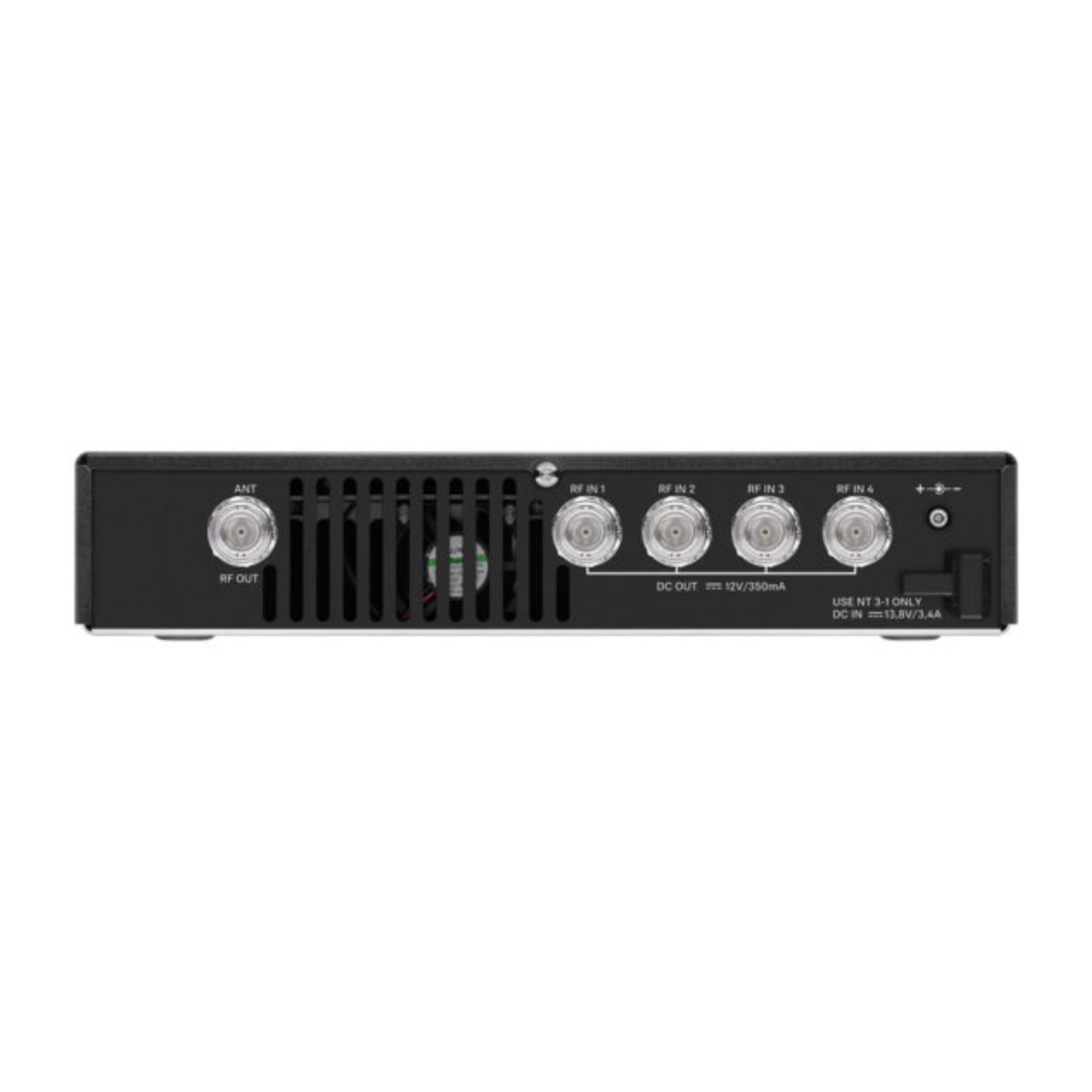
You must combine your transmission signals. An active antenna combiner acts as the structural backbone of a multi-channel wireless rack.
The Sennheiser AC41-EU active antenna combiner takes the signals from up to four SR IEM G4 transmitters and routes them through a single transmitting antenna. This drastically cleans up your RF environment. As a secondary benefit, it delivers DC power to the transmitters via the included BNC cables, eliminating the need for multiple bulky power supplies in the back of your rack.
Delivering the Mix with Precision Earpieces
A robust wireless transmitter means nothing if the actual earpieces fail to reproduce the frequency spectrum accurately. The bodypack receiver is only half of the monitoring equation on stage.
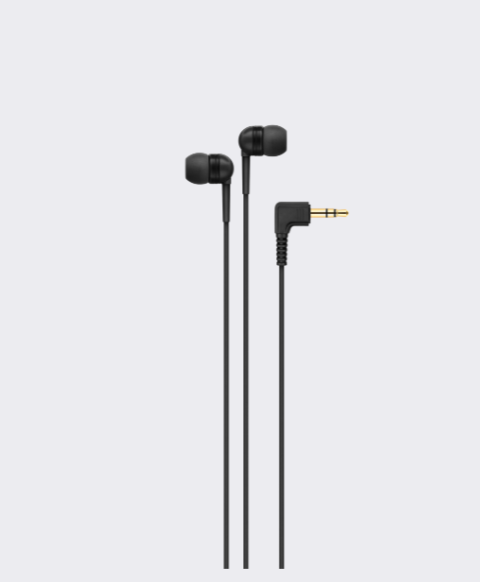
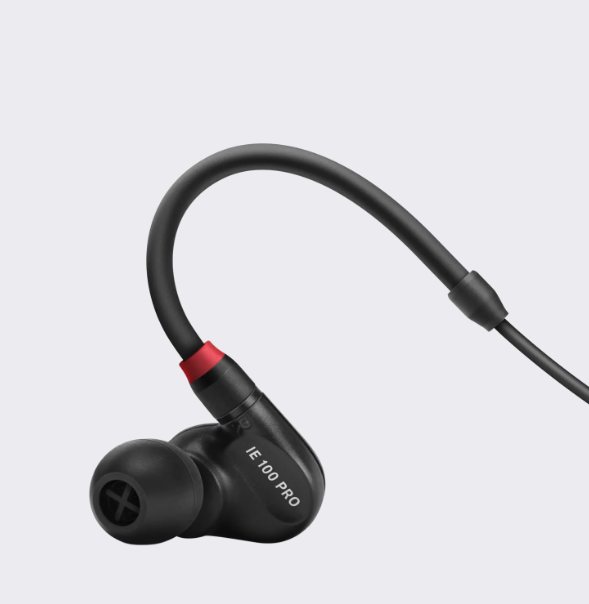
The standard IE 4 earphones offer a solid, durable starting point with natural sound and high isolation. However, performers who demand distinct instrument separation often upgrade to the IE 100 PRO series.
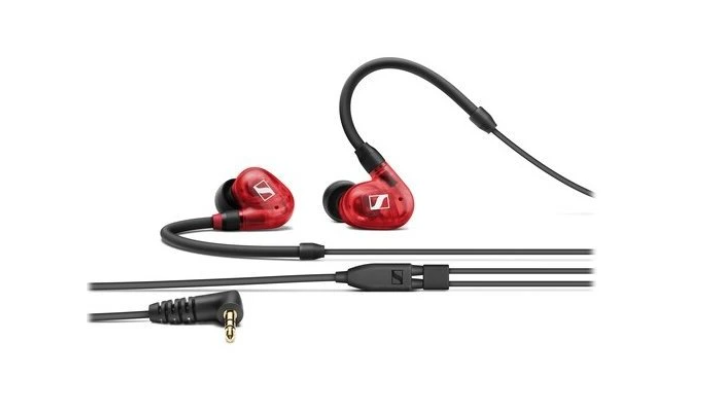
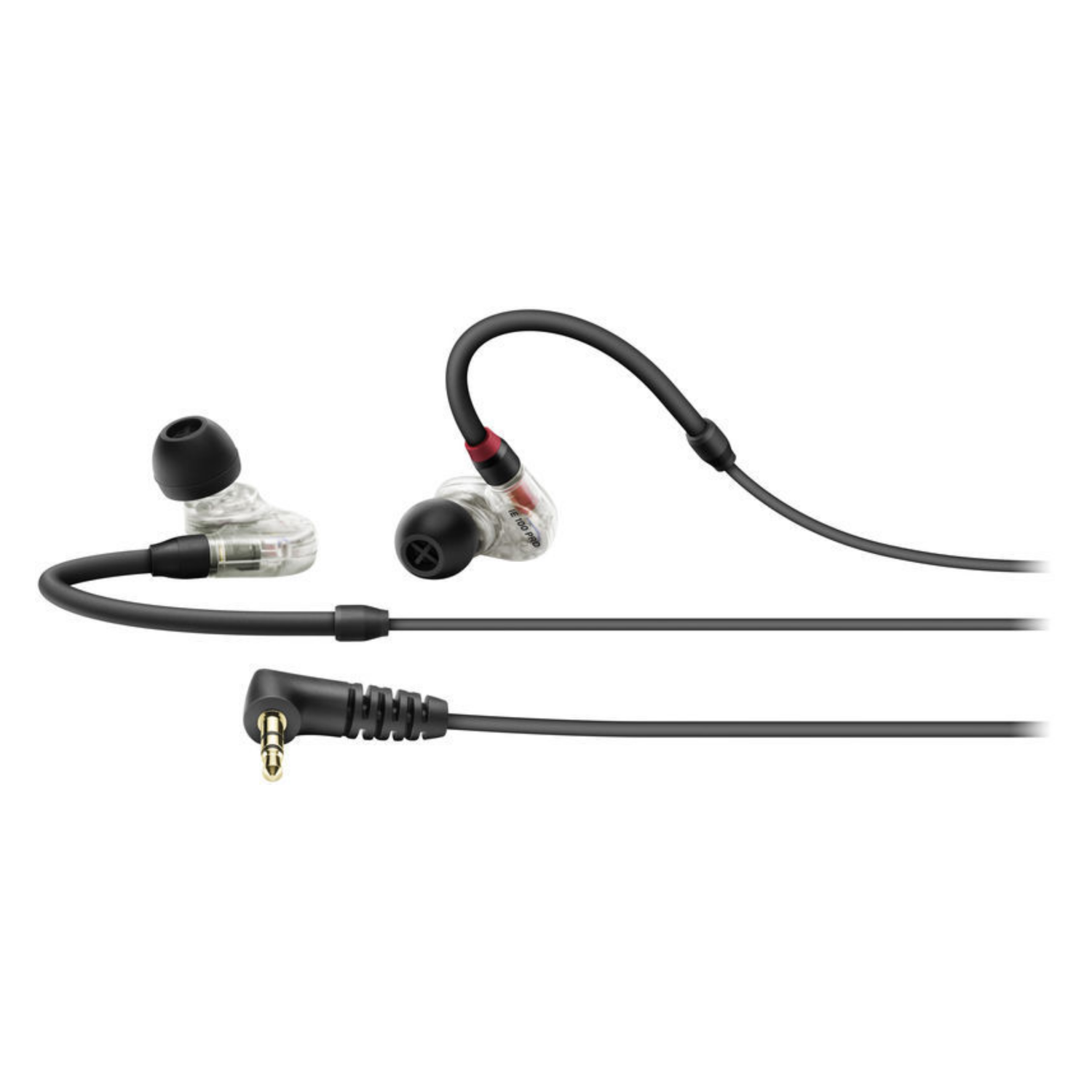
These advanced earpieces utilize a 10-mm broadband dynamic driver featuring True Response technology. Unlike multi-way driver systems that can introduce phase issues at crossover points, this single-driver design ensures excellent phase linearity. They deliver punchy lows and silky highs, and they handle extreme sound pressure levels without distortion. The secure, ergonomic fit remains crucial for active performers who move aggressively across the stage.
| Earphone Model | Driver Technology | Best Use Case |
|---|---|---|
| Sennheiser IE 4 | Standard Dynamic Driver | Entry-level stage monitoring and general wireless IEM use |
| Sennheiser IE 100 PRO | 10-mm Broadband Dynamic Driver | High sound pressure environments requiring phase linearity |
-
 Headphones & speakers
SENNHEISER IE 4 Dynamic headphones for monitoring, black
€ 65.93€ 81.75 (incl. VAT) -
 Headphones & speakers
SENNHEISER IE 100 PRO RE Dynamic headphones for monitoring, red
€ 87.67€ 108.71 (incl. VAT) -
Headphones & speakers
SENNHEISER IE 100 Pro Clear
€ 82.58€ 102.40 (incl. VAT) -
 Headphones & speakers
SENNHEISER IE 100 PRO BLACK Dynamic headphones for monitoring
€ 87.67€ 108.71 (incl. VAT)
Integrating IEMs into Your Broader AV Setup
A wireless in-ear monitor system does not operate in isolation. It relies heavily on the signal routing capabilities of your overall production setup.
When you capture live music for video, routing flexibility takes priority. You need a highly capable digital audio mixer that provides sufficient auxiliary outputs. This allows you to send an independent, customized monitor mix to the IEM transmitters without affecting the main recording feed going to your cameras.
High-quality IEMs also serve as specialized audio accessories that physically block out ambient stage noise. This acoustic isolation proves highly beneficial when you need to record clean audio in a loud environment. By relying on the tight seal of the earpieces rather than raw stage volume, performers protect their hearing while maintaining absolute pitch accuracy.
Furthermore, pairing professional IEMs with a resilient wireless microphone system ensures that both the input and the output of your live performance remain pristine and free of dropouts. If your broader production team requires comprehensive monitoring solutions off-stage, you can explore our complete range of headphones and speakers as well as professional broadcast microphones to finalize your setup.
Key Takeaways
- Rely on professional UHF systems instead of 2.4GHz bands to avoid interference from venue Wi-Fi and mobile devices.
- Deploy Twin kits to send a single monitor mix to two separate performers, saving valuable rack space and conserving wireless frequencies.
- Use an active antenna combiner whenever running three or more transmitters in a single rack to prevent RF intermodulation and static.
- Upgrade to specialized single-driver earpieces for a secure stage fit, high sound pressure tolerance, and zero phase distortion.
- Ensure your mixing console has enough independent auxiliary outputs to separate the performers’ monitor mixes from the main front-of-house or video recording feeds.
Ready to secure reliable audio for your next live production? Browse our carefully selected in-ear monitoring gear above and check the stock indicators for immediate local availability. If you need assistance designing a multi-channel wireless rack, reach out to our team today for fast technical support.