Streamline Film Set Coordination with Wireless Intercoms
Film sets are inherently chaotic. Time equals money, and every production delay costs your budget. Shouting across a busy soundstage breaks creative focus, while hand signals easily vanish in the dark. You need clear, immediate communication between departments to keep the shoot moving forward.
We supply communication gear to demanding video productions across Europe. We’ve seen how poor coordination stalls schedules and frustrates crews. A full-duplex wireless intercom system solves this structural problem. It allows your camera, lighting, and sound departments to talk naturally in real time, streamlining your entire workflow.
Beating Set Noise and Signal Drops
Production locations are rarely quiet. You also face heavy radio frequency (RF) interference in most modern venues. Analog walkie-talkies often suffer from static. Standard 2.4 GHz digital systems compete with local Wi-Fi routers and smartphones, leading to dropped signals and missed cues.
This is why professional crews rely on the 1.9 GHz DECT band for wireless microphone systems and intercoms. It offers a secure, interference-free channel. These systems use automatic frequency hopping to keep your signal clear, even in dense urban areas.
Background noise presents another major barrier. When a wind machine runs or a crowd cheers, standard headsets pick up everything. Modern professional headsets feature dual-mic Environmental Noise Cancellation (ENC). One microphone captures your voice while an omnidirectional mic records ambient sound. An algorithm then removes up to 20 dB of background noise. This drastically improves the speech-to-noise ratio, making it much easier to record audio in a noisy environment.
Nimble Setup for Small and Medium Crews
Run-and-gun crews need gear that works straight out of the box. You do not have time for complex pairing routines on location.
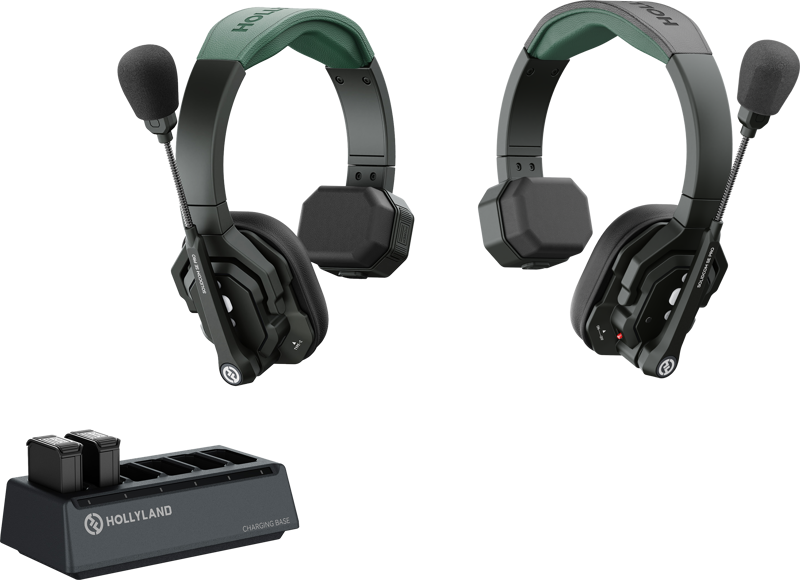
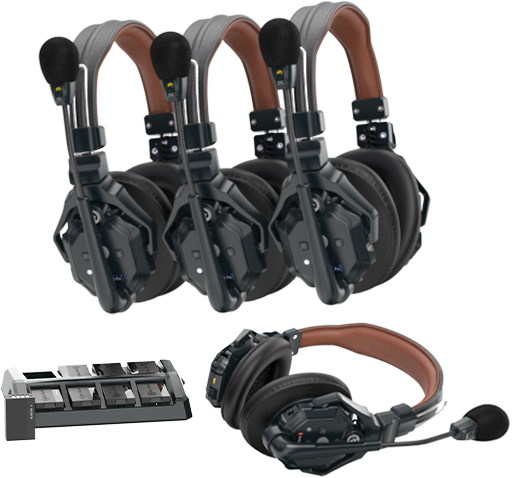
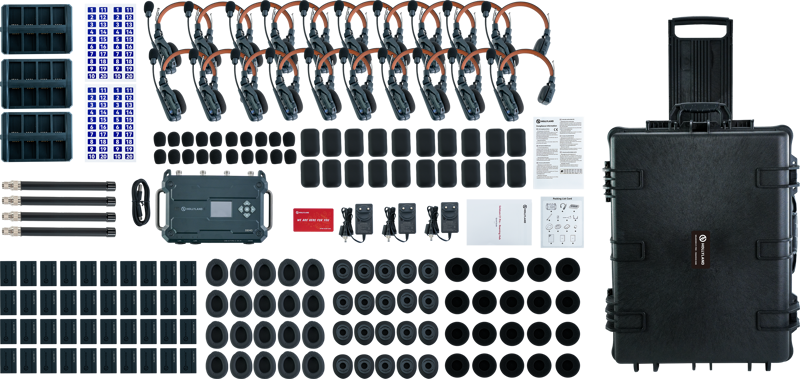
The Hollyland Solidcom SE Pro series is built for this exact scenario. It operates as a full-duplex system. This means it runs on an open channel with no push-to-talk button required. Up to eleven users can talk freely, just like they are on a standard phone call.
These headsets deliver a 400-meter line-of-sight range. They weigh under 186 grams, preventing neck fatigue on 12-hour shoot days. We recommend these kits for documentary teams, indie films, and live events. You can scale the system by choosing the exact headcount your crew needs.
-
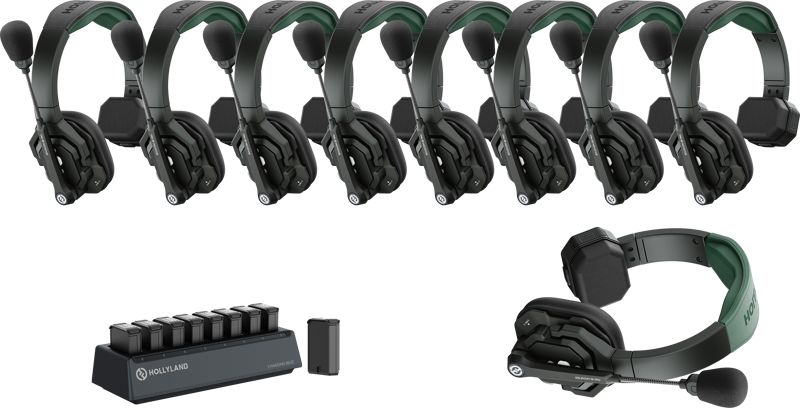
 Intercom systems
HOLLYLAND Solidcom SE Pro- 9 Person Noise Cancelling Headset Intercom
€ 1 335.92€ 1 656.54 (incl. VAT) -
 Intercom systems
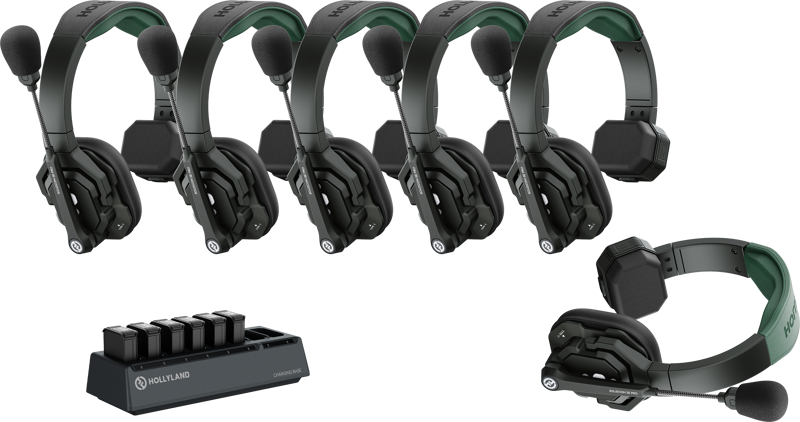
HOLLYLAND Solidcom SE Pro- 6 Person Noise Cancelling Headset Intercom
€ 951.92€ 1 180.38 (incl. VAT) -
 Intercom systems
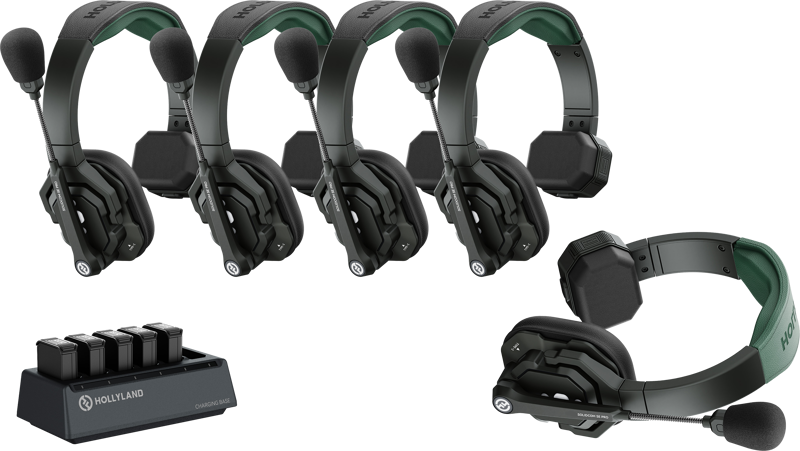
HOLLYLAND Solidcom SE Pro- 5 Person Noise Cancelling Headset Intercom
€ 791.92€ 981.98 (incl. VAT) -
 Intercom systems
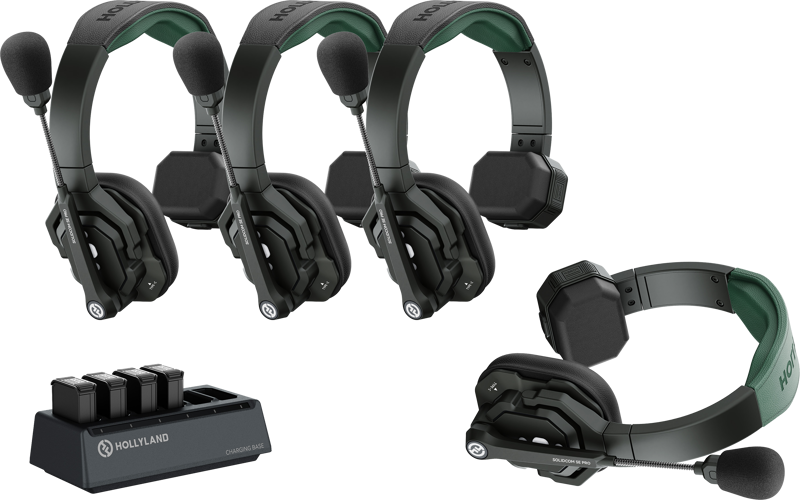
HOLLYLAND Solidcom SE Pro- 4 Person Noise Cancelling Headset Intercom
€ 631.92€ 783.58 (incl. VAT) -
 Intercom systems
HOLLYLAND Solidcom SE Pro- 2 Person Noise Cancelling Headset Intercom
€ 343.92€ 426.46 (incl. VAT)
Managing Complex and Large-Scale Productions
As your set grows, a single open channel becomes too chaotic. You need to divide your crew into specific groups. The camera team does not always need to hear the art department’s internal chatter.
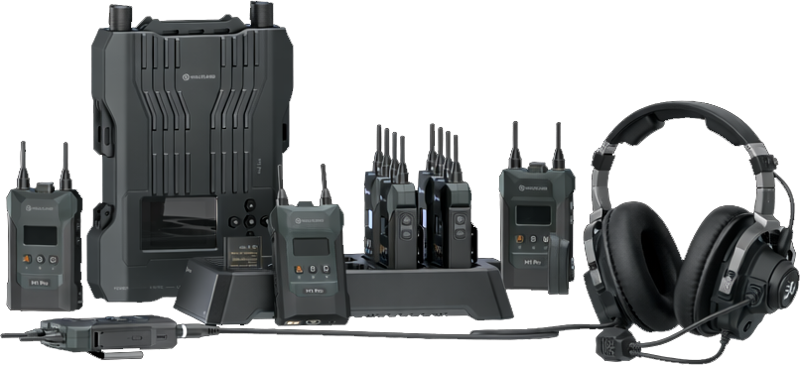
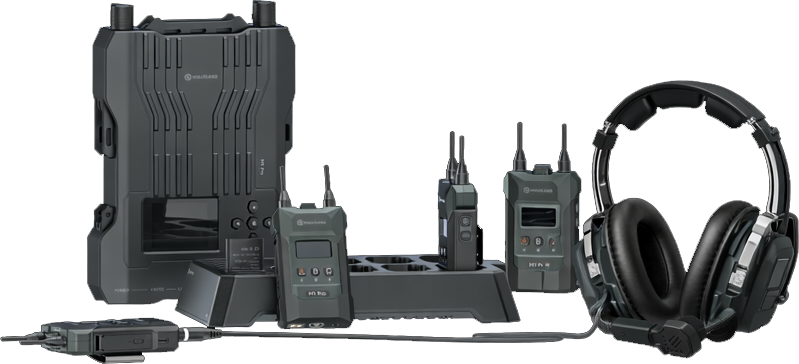
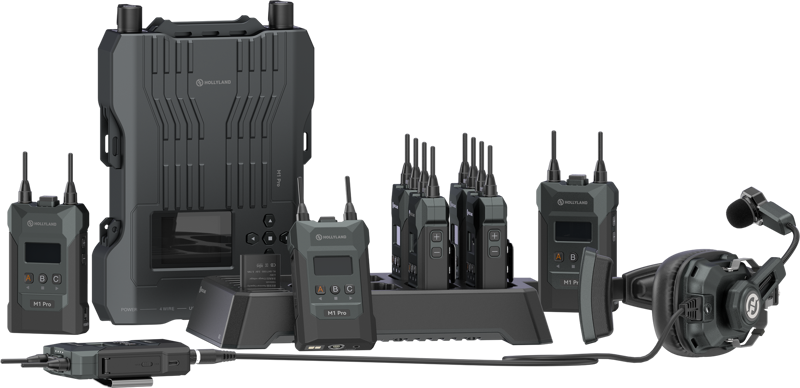
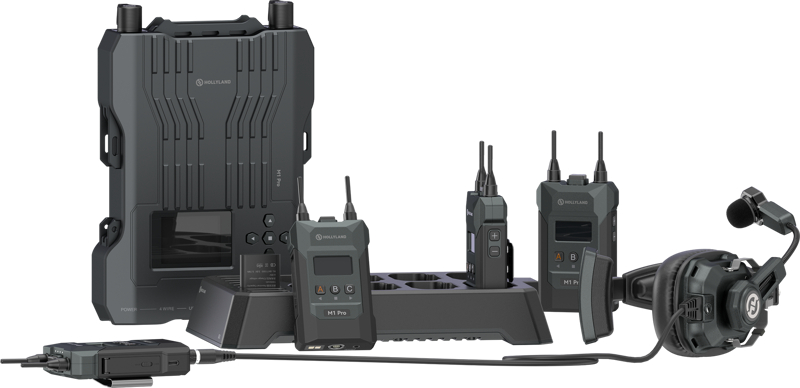
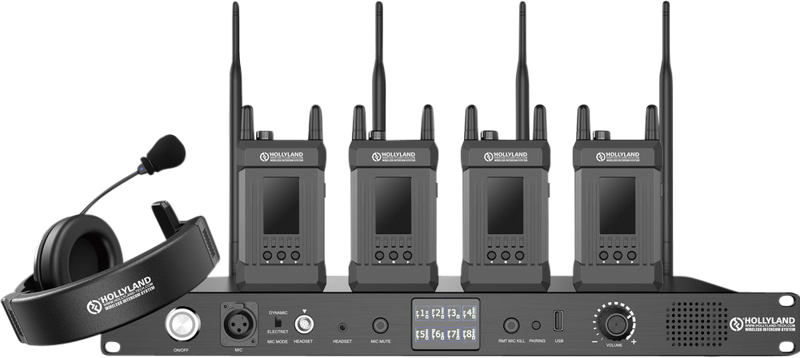
For these demanding environments, you need a hub-based architecture. The Hollyland Solidcom C1 Pro and M1 Pro systems offer advanced audio routing. They provide Push-To-Talk (PTT) capabilities and A/B group assignment.
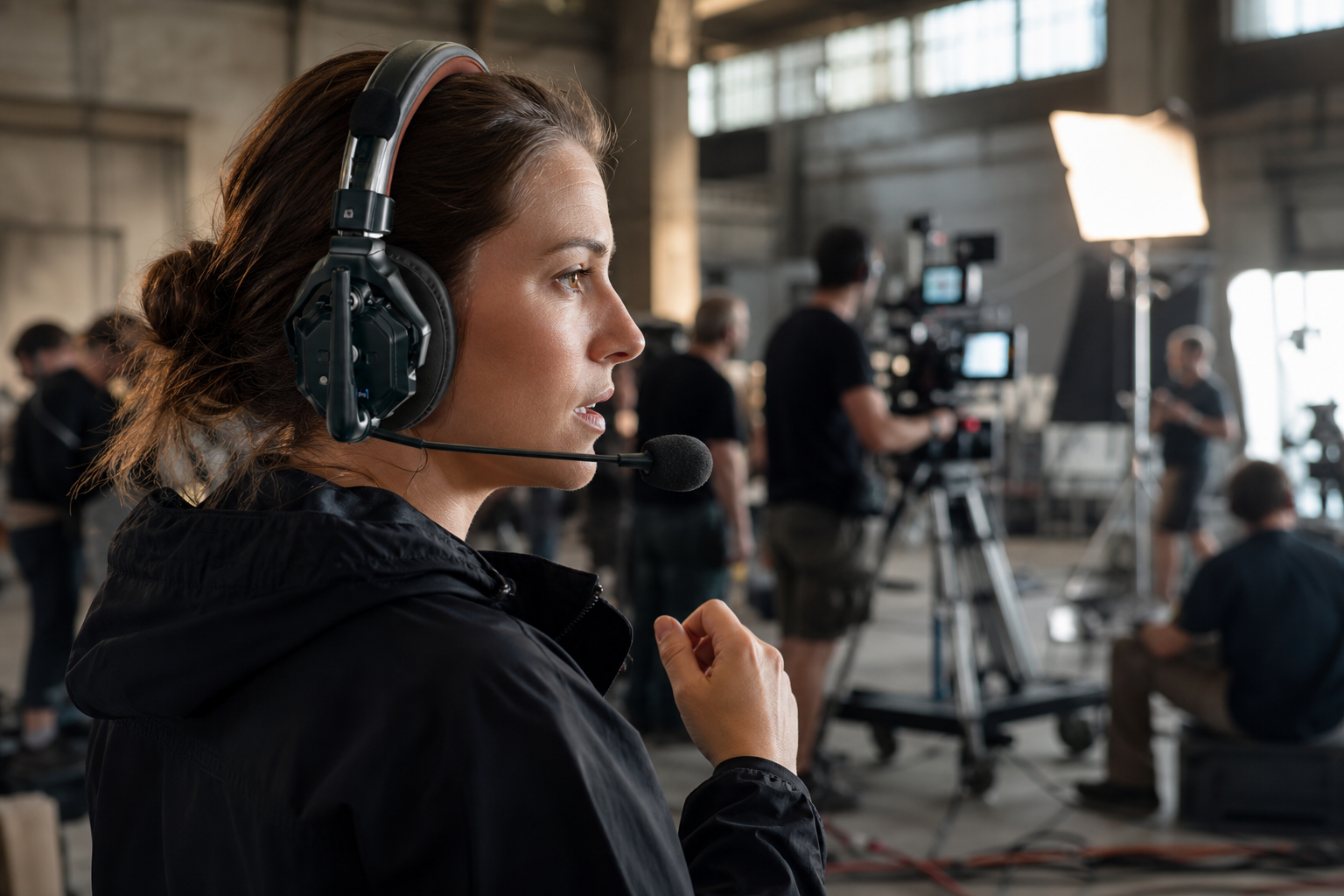
With an optional battery-powered roaming hub, you can extend your coverage significantly. The hub cascades up to three systems together and pushes the communication range up to 500 meters line-of-sight. The hub includes a one-key mute and an announce function. This lets a director or assistant director communicate instantly with all headsets at once. As noted in technical analyses by CineD, these DECT 6.0 systems securely encrypt your signal so outsiders cannot monitor your conversations.
-
 Intercom systems
HOLLYLAND Solidcom C1 Pro-4S-DH – 4 Person Noise Cancelling Headset Intercom Double-Ear Version
€ 1 287.92€ 1 597.02 (incl. VAT) -
 Intercom systems
HOLLYLAND Solidcom M1 Pro-8 Double Ear Headsets
€ 8 392.00€ 10 406.08 (incl. VAT) -
 Intercom systems
HOLLYLAND Solidcom M1 Pro-4 Double Ear Headsets
€ 5 343.92€ 6 626.46 (incl. VAT) -
 Intercom systems
HOLLYLAND Solidcom M1 Pro-8 Single Ear Headsets
€ 8 152.00€ 10 108.48 (incl. VAT) -
Intercom systems
HOLLYLAND Solidcom M1 Pro-4 Single Ear Headsets
€ 5 159.92€ 6 398.30 (incl. VAT) -
 Intercom systems
HOLLYLAND Solidcom C1 Pro – Roaming Hub 20S V-mount
€ 11 912.00€ 14 770.88 (incl. VAT) -
 Intercom systems
HOLLYLAND Solidcom C1 Pro – Roaming Hub 10S V-mount
€ 9 112.00€ 11 298.88 (incl. VAT)
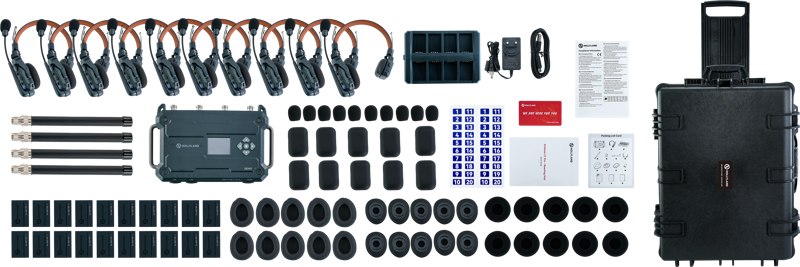
Specialized IFB and Talkback Integration
Sometimes you need more than basic crew coordination. You must feed audio back to on-screen talent or integrate your communication into your primary audio mixer for video production.
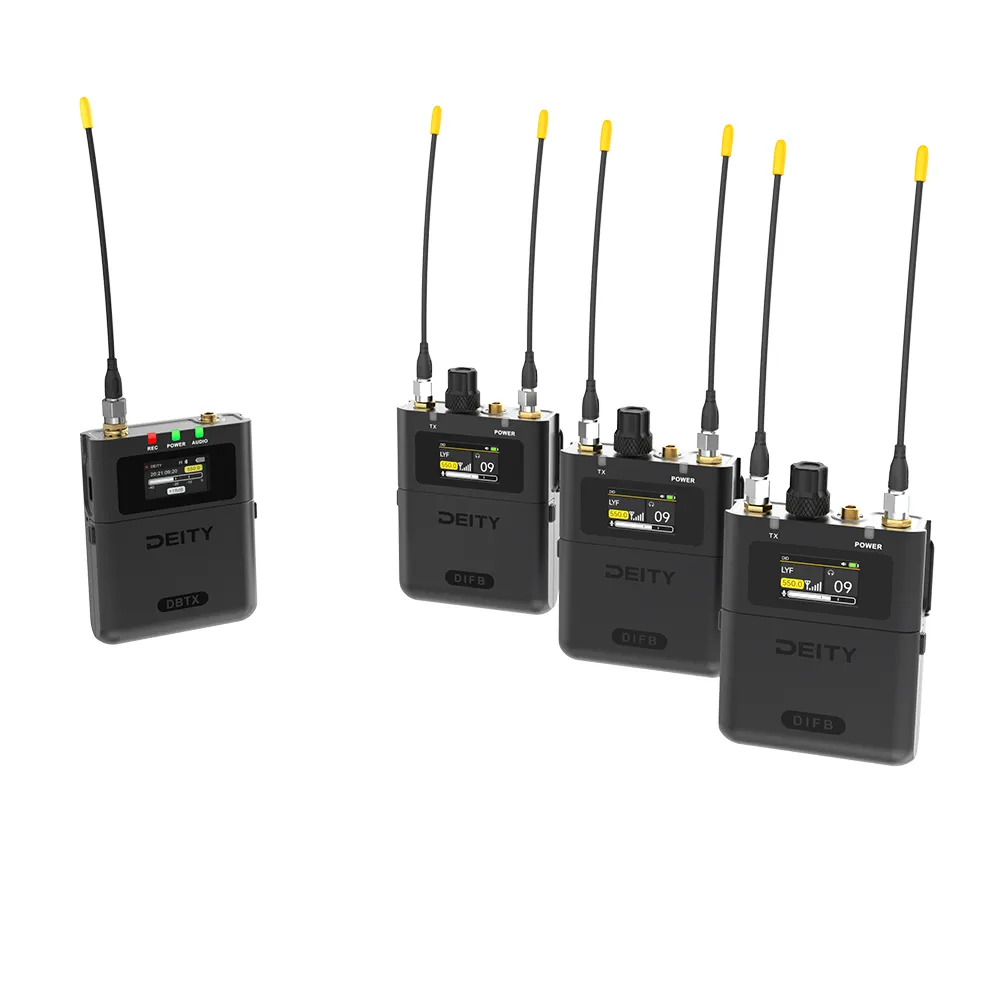
Broadcasters and live event crews require dedicated IFB (Interruptible Foldback) kits. Systems like the Deity Theos DIFB deliver ultra-wideband audio directly to talent monitors. For maximum range and carrier-grade voice quality, robust setups like the Syscom 1000T offer reliable base stations and belt packs capable of connecting large-scale broadcast studios.
Adding the Right Accessories
A great intercom system relies on consistent power. Headsets typically run for about 10 hours per charge. You will always need backup batteries to survive extended shoot days.
You should also stock up on charging bases, spare ear cushions, and protective cases. Browse our full range of intercom systems and intercom accessories to ensure your communication network stays fully operational on location.
Key Takeaways
- Use 1.9 GHz DECT systems to bypass crowded 2.4 GHz Wi-Fi frequencies and secure your team communication.
- Prioritize headsets with dual-mic Environmental Noise Cancellation (ENC) if you film in loud locations or live event spaces.
- Choose hub-based systems with A/B grouping capabilities for productions requiring more than 10 crew members.
- Protect your crew from fatigue by selecting headsets that weigh under 190 grams and support at least 10 hours of battery life.
Need help configuring a reliable communication network for your next production? Contact the MediaGear team today for expert advice, fast European shipping, and customized installation solutions.