Shoulder Rigs vs Camera Cages: Choosing Handheld Video Gear
Choosing between a shoulder rig and a camera cage shapes how you shoot handheld video. Both systems convert mirrorless bodies and compact cinema cameras into production-ready setups. However, they handle weight distribution, mobility, and accessory integration in fundamentally different ways.
In our experience working with camera crews and solo operators across Europe, choosing the wrong support system leads to physical fatigue and missed shots. A bare camera body lacks the stability needed for long takes. Adding accessories without a clear plan creates an unbalanced setup that strains your arms quickly.
Understanding how shoulder rigs and camera cages perform across stability, ergonomics, modularity, and portability helps you select the right build for your production style.
Stability: Inertia vs Quick Maneuverability
Stability in handheld filmmaking depends on mass distribution and physical contact points.
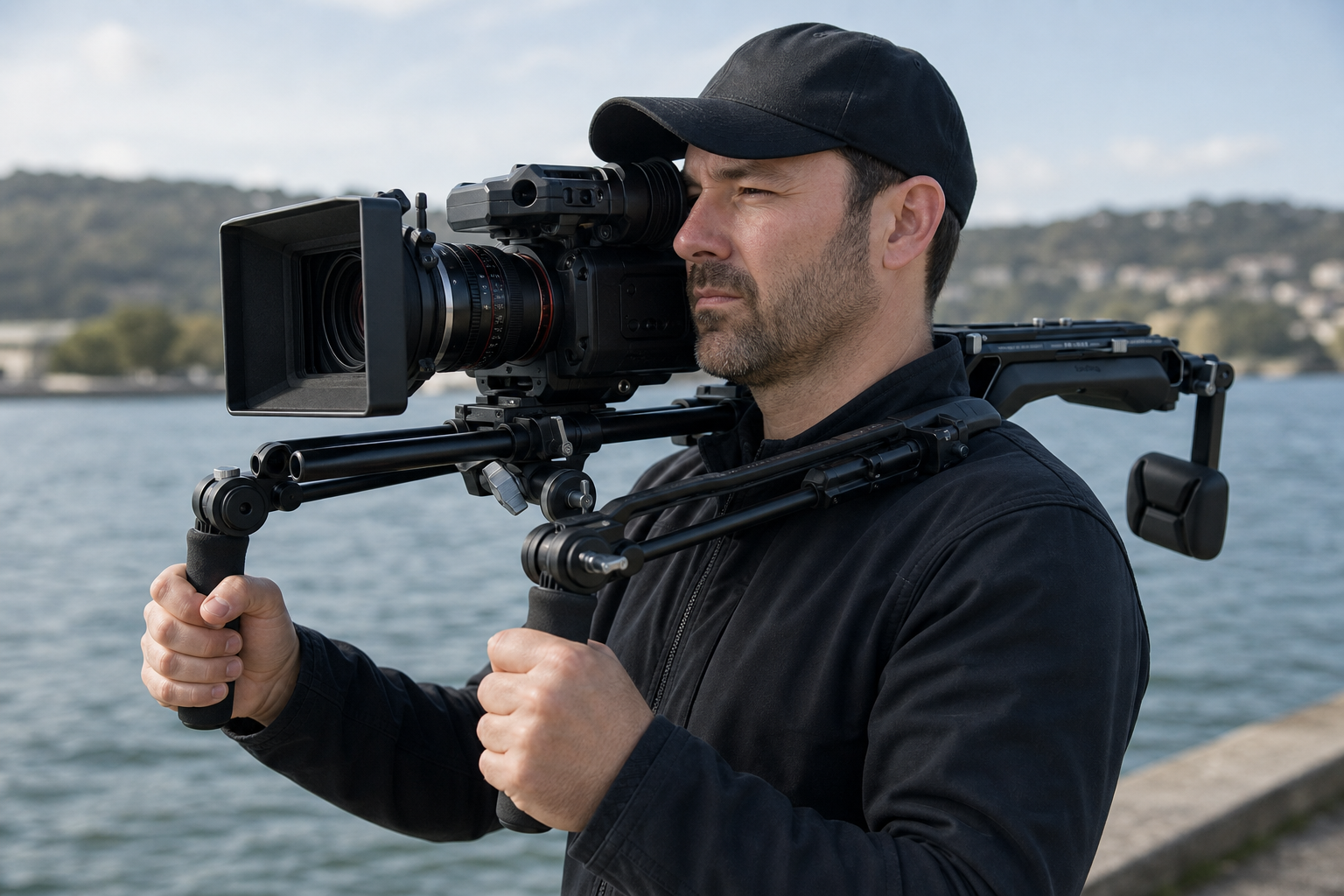
A shoulder rig adds physical mass and creates three solid points of contact: your shoulder and both hands on front grips. According to ARRI support standards, transferring camera weight to the torso stabilizes the shot by dampening micro-jitter from hand movements. Heavy cinema setups benefit from this extra inertia because the added weight prevents sudden camera shakes.
A standalone camera cage for video relies on direct hand contact via top and side grips. You hold the camera in front of your body, which gives you complete freedom for dynamic pan and tilt movements. However, maintaining smooth shots over several minutes requires constant muscle engagement.
If your work demands long tracking shots or unscripted documentary interviews, a shoulder rig offers reliable stability. If you shoot fast action, tight interior scenes, or low-angle movement, a lightweight cage setup allows much faster camera repositioning.
Ergonomics: Managing Operator Fatigue
Ergonomics determines how long you can operate comfortably without physical strain.
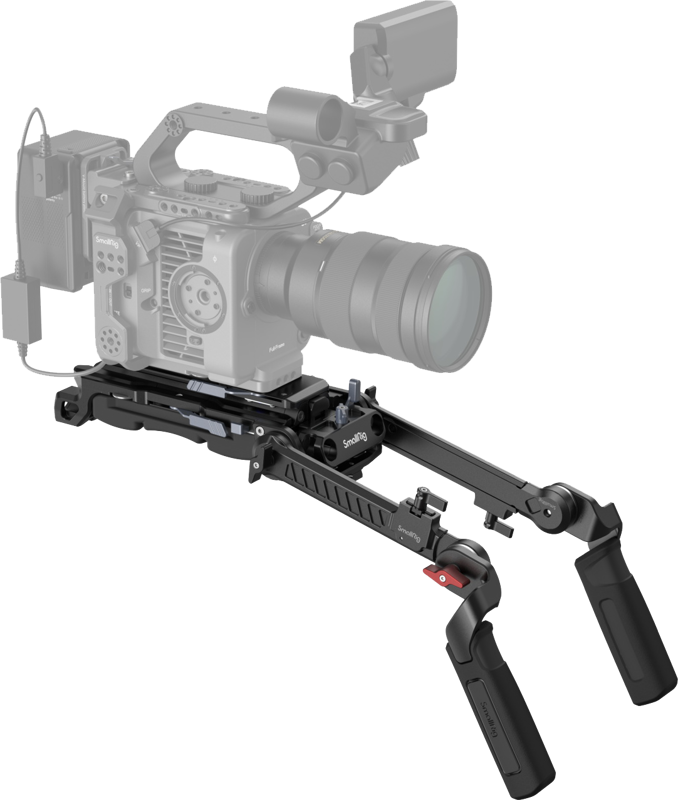
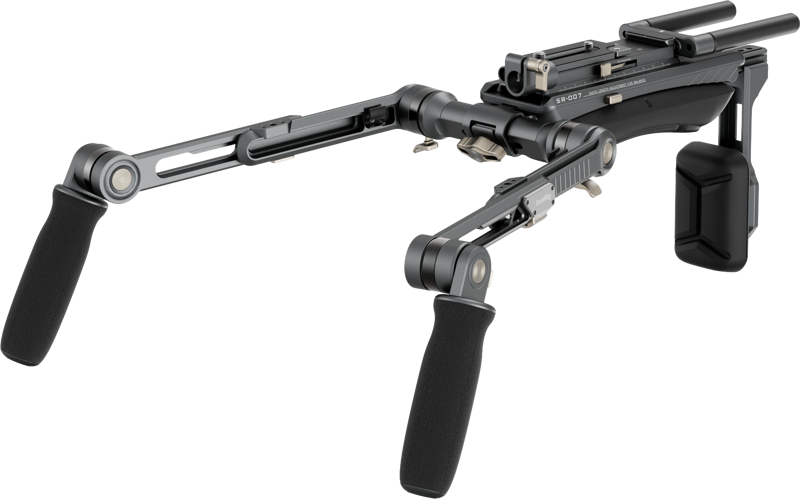
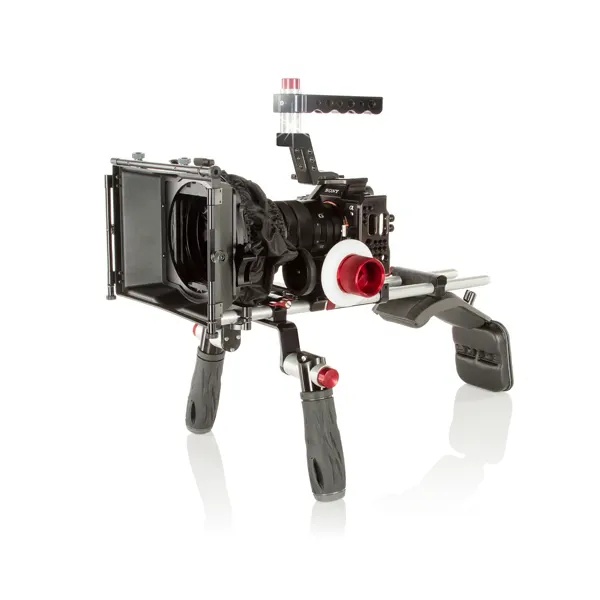
Shoulder rigs distribute the combined weight of your camera, lens, matte box, and V-mount battery directly onto your shoulder. Manufacturers like SHAPE build baseplates with adjustable shoulder pads that move along standard 15mm rods. Positioning the pad under the rig’s center of gravity takes the load off your arms, leaving your hands free to pull focus or guide movement.
Camera cages place the entire weight load on your wrists, forearms, and shoulders. Adding an ergonomic side handle or top grip improves hand positions, but holding a heavy camera rig away from your torso quickly causes muscle fatigue.
We have seen operators struggle on 10-hour event shoots simply because they carried cage-mounted rigs in front of their chest all day. Cages excel on short takes and fast-paced shoots. Shoulder support remains essential for continuous long-form recording.
Modularity: Expanding Your Camera Rig
Both support systems expand your mounting capabilities, but they use different structural frameworks.
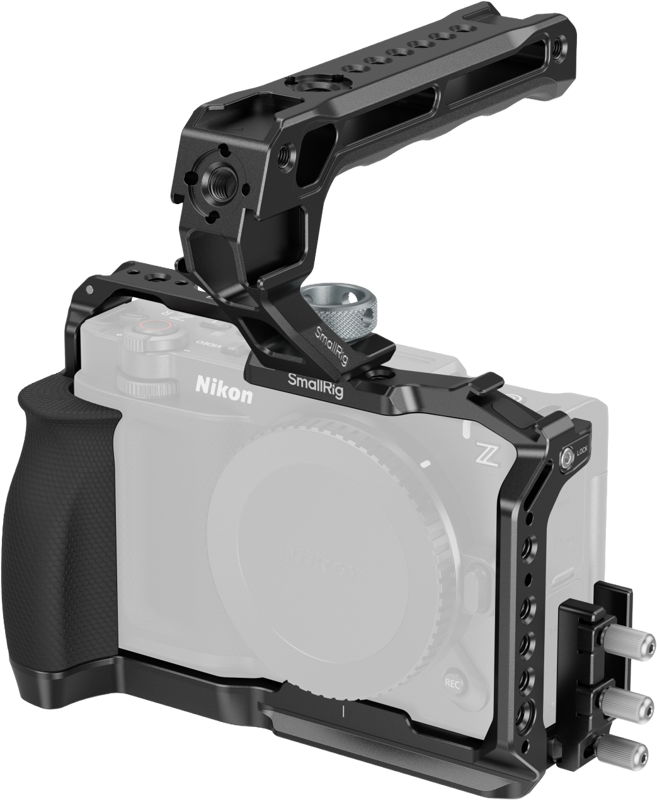
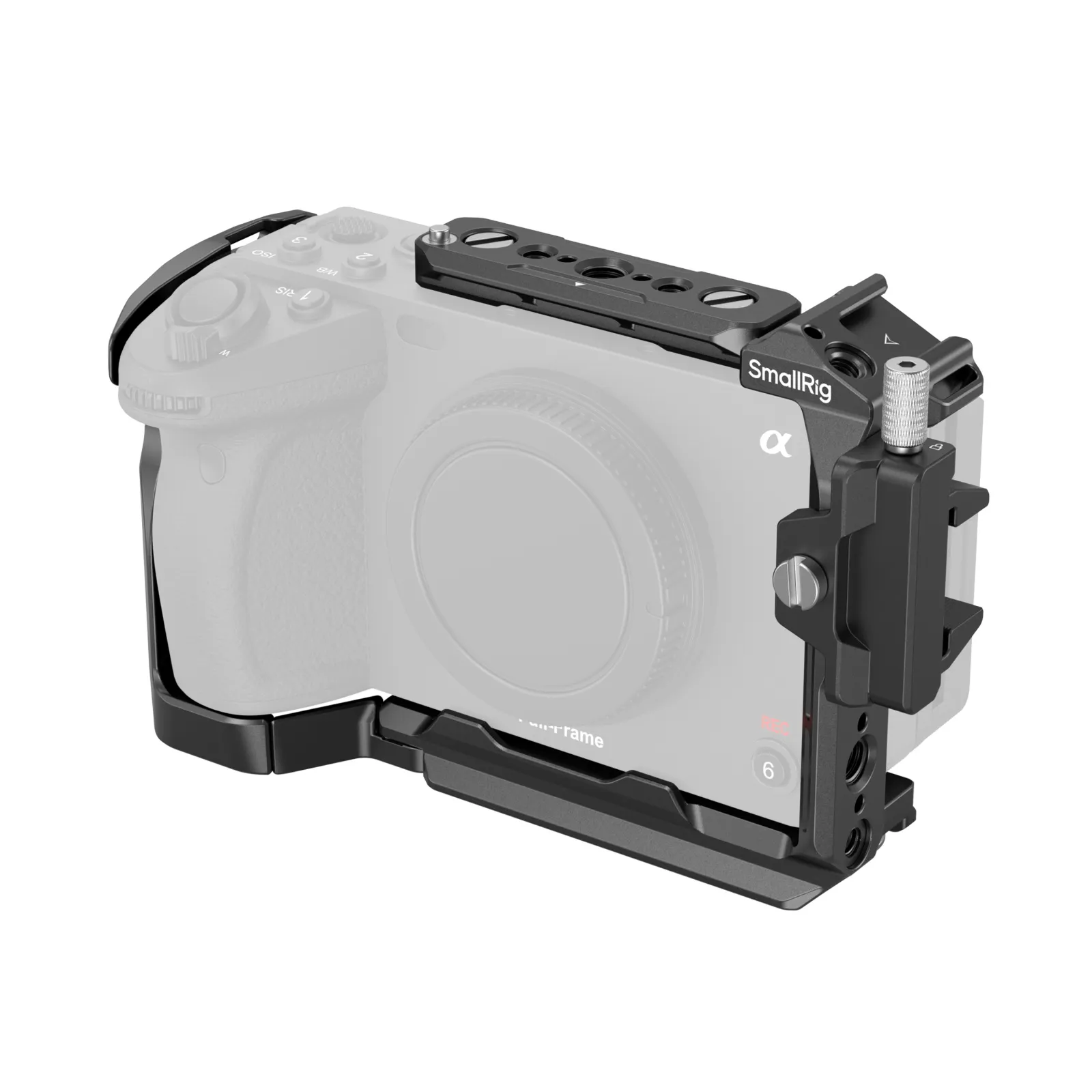
Camera cages provide form-fitting aluminum protection wrapped around your camera body. They offer standard 1/4″-20 and 3/8″-16 threaded holes, ARRI locating holes, and NATO rails. These attachment points accept camera mounting accessories, such as cable clamps, wireless transmitters, and an on-camera monitor.
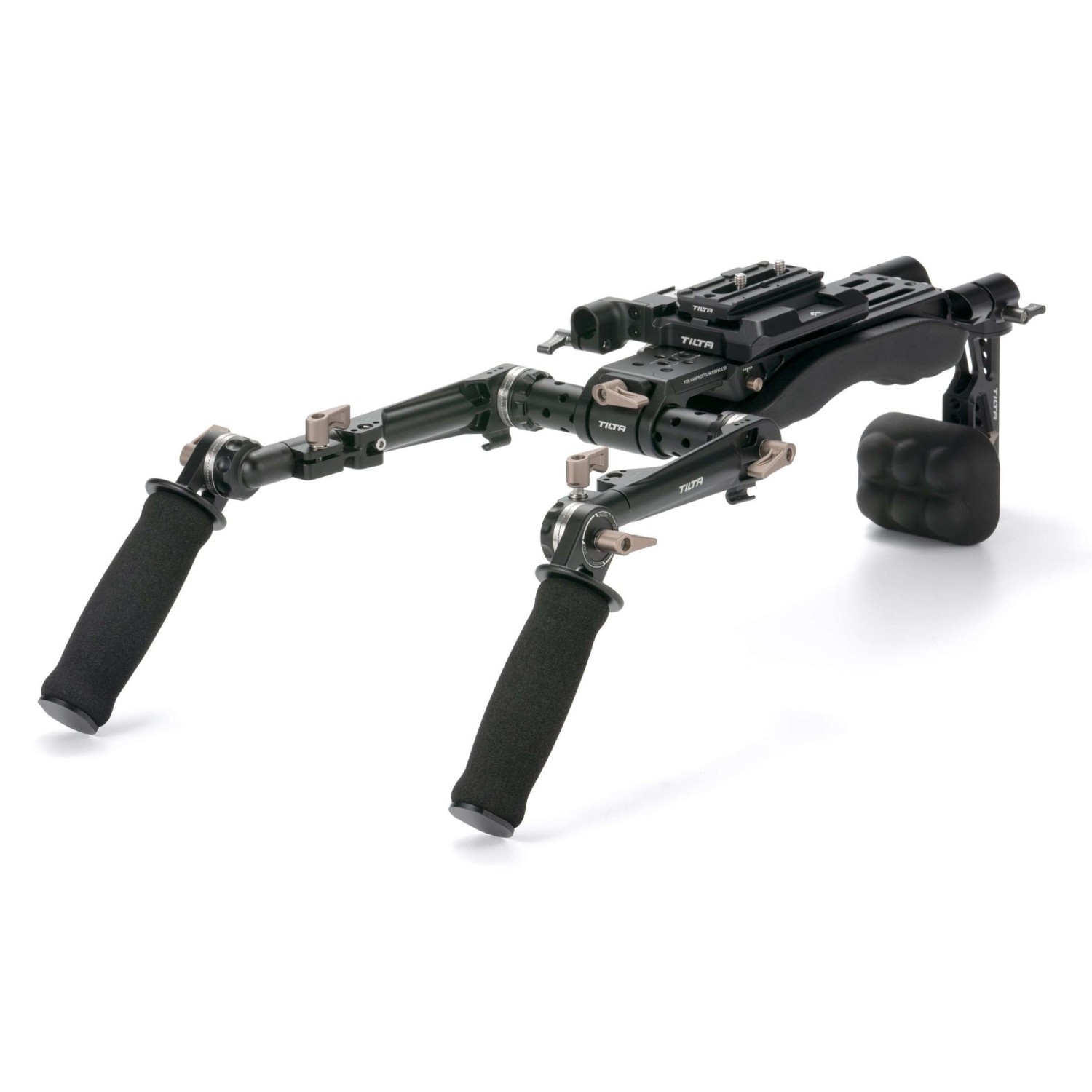
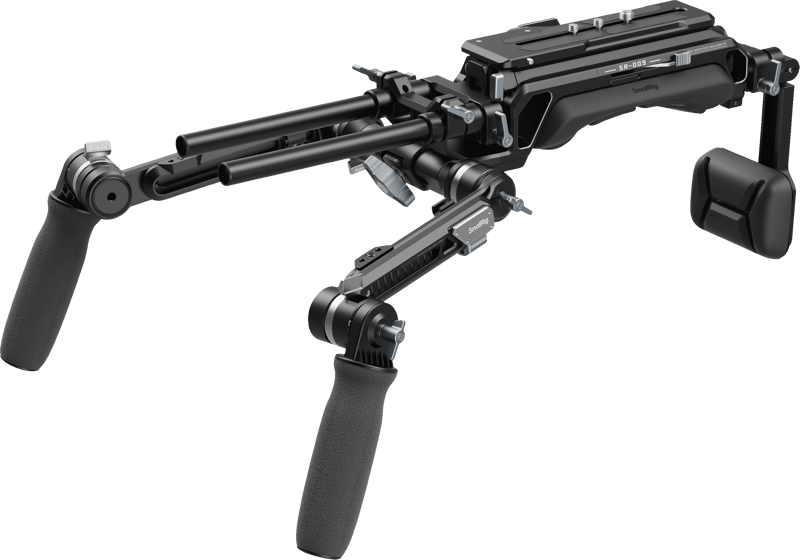
Shoulder rigs act as an expandable platform built on a 15mm or 19mm rail system. The baseplate acts as the foundation, allowing you to attach key components:
- Follow focus units and matte boxes on front 15mm carbon fiber rods
- Rosette handgrips for adjustable hand angles
- V-mount battery plates on the back to act as a counterweight and power hub
A cage serves as the primary enclosure for your camera. When paired with fixing accessories, a cage becomes the core building block that mounts directly onto a full shoulder baseplate system.
Portability and Setup Speed
Portability depends on how quickly you can pack, move, and deploy your equipment on location.
Camera cages remain compact. You can keep the cage attached to your camera body inside a standard video equipment bag without disassembling your main setup. Integrated Arca-Swiss quick-release baseplates allow instant transitions between handheld operation, gimbals, and fluid-head tripods.
Shoulder rigs require more storage space and setup time. A fully assembled rig includes handles, extension arms, rod clamps, and shoulder pads. While VCT-14 quick-release baseplates let you snap the complete rig onto a tripod plate instantly, transporting the rig usually requires removing rear batteries and front handle extensions.
Innovations from SmallRig, such as HawkLock quick-release systems, significantly reduce assembly times on location. Still, a complete shoulder rig requires more breakdown effort than a cage kit.
Shoulder Rig vs Camera Cage: Side-by-Side Comparison
| Feature | Shoulder Rig | Camera Cage System |
|---|---|---|
| Primary Support | Shoulder pad + Dual handgrips | Top & side handles attached to cage |
| Weight Distribution | Torso and shoulder (Center of gravity shifted back) | Wrists and arms (Weight extended forward) |
| Shot Stability | High inertia; eliminates hand micro-jitter | High agility; requires active arm stabilization |
| Operating Duration | Extended long takes (10+ minutes) | Short to medium takes |
| Expansion System | 15mm / 19mm rod baseplates & ARRI rosettes | NATO rails, cold shoes, 1/4″-20 & 3/8″-16 threads |
| Transition Speed | Rapid tripod mounting via VCT-14 plates | Rapid gimbal and tripod switching via Arca-Type plates |
| Best Use Cases | Documentary, broadcast, feature films, long events | Run-and-gun, commercial work, gimbal setups, tight spaces |
Selecting Your Rigging Setup
Your production workflow determines which setup fits your needs best. You do not always have to choose one over the other – many professional setups use a form-fitting cage as the core enclosure, which quickly docks into a full shoulder system when needed.
Standard Camera Cages for Agility and Compact Builds
If you shoot run-and-gun content, move between handheld and gimbal operation, or keep your camera package lightweight, start with a modular cage kit.
-
 Camera accessories
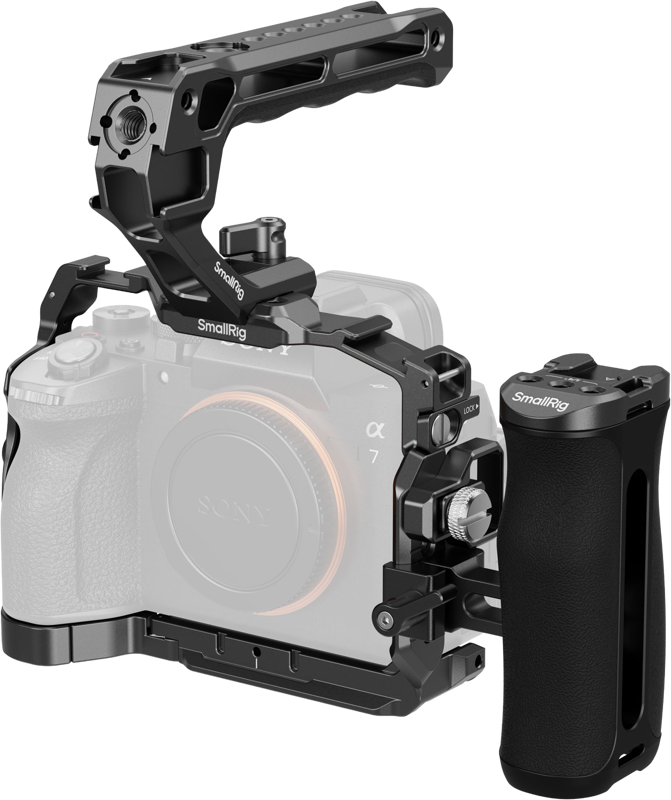
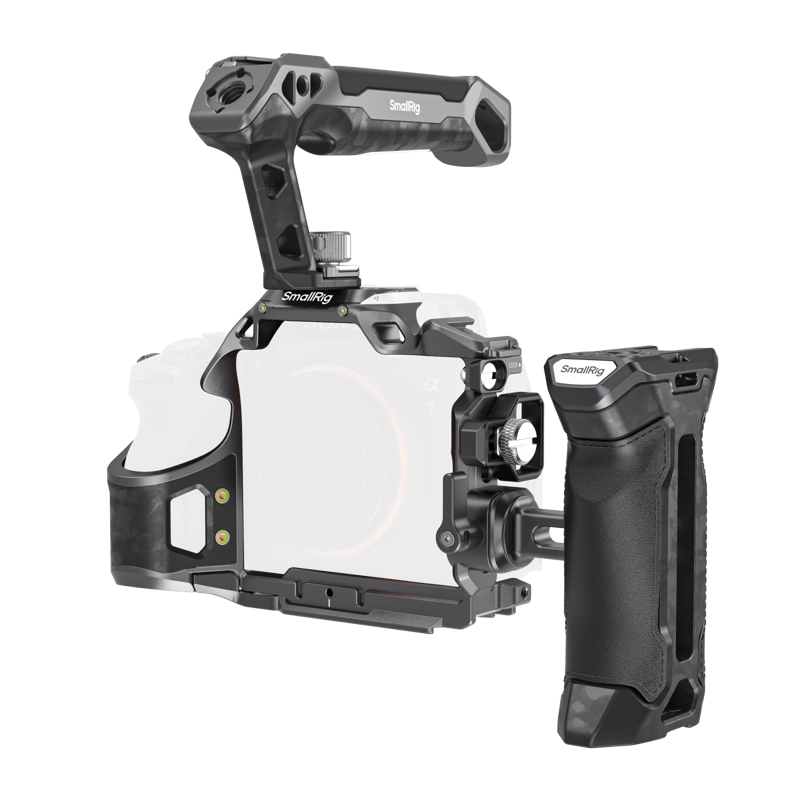
SMALLRIG 6026 Advanced Cage Kit for Sony Alpha 7 V / 7R V / 7 IV
€ 127.92€ 158.62 (incl. VAT) -
 Camera accessories
SMALLRIG 6031 Advanced “Rhinoceros” Cage Kit for Sony Alpha 7 V / 7R V / 7 IV
€ 297.52€ 368.92 (incl. VAT) -
 Camera accessories
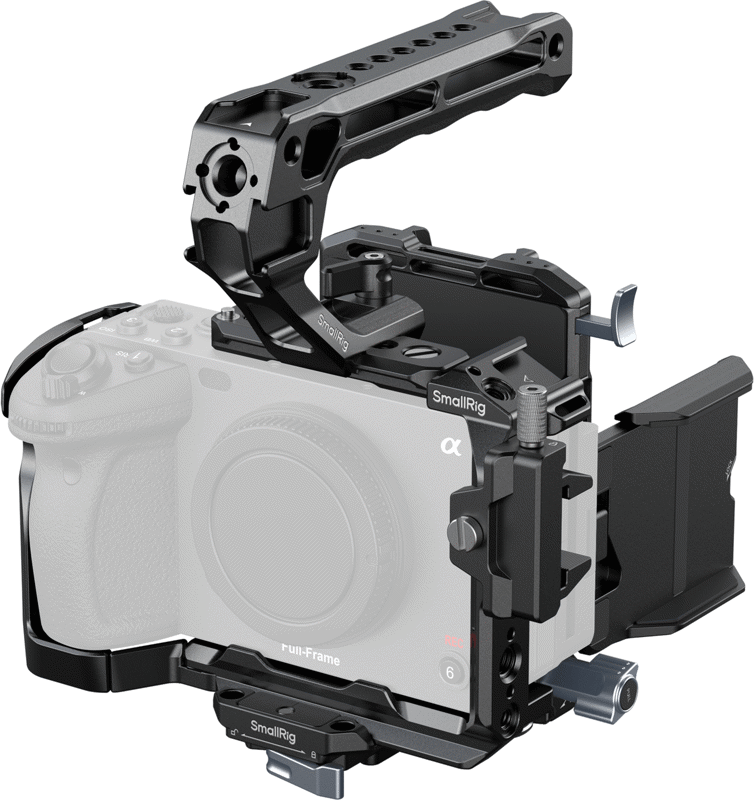
SMALLRIG 5823 Cage Kit for Sony FX3 / FX30
€ 201.52€ 249.88 (incl. VAT) -
 Camera accessories
SMALLRIG 5647 Cage Kit for Nikon ZR
€ 100.72€ 124.89 (incl. VAT) -
 Camera accessories
SMALLRIG 4183B Cage For Sony FX30 / FX3 (New Version)
€ 94.32€ 116.96 (incl. VAT)
Shoulder Rigs for Long Takes and Heavy Camera Packages
If you operate heavy cine lenses, use follow focus motors, or film long live events and documentaries, choose a shoulder rig to protect your body from fatigue and deliver steady shots.
-
 Camera accessories
TILTA Lightweight Shoulder Rig – Black
€ 339.00€ 420.36 (incl. VAT) -
 Camera accessories
SMALLRIG 5199 HawkLock VCT-14 Type Shoulder Rig (SR009)
€ 527.92€ 654.62 (incl. VAT) -
 Camera accessories
SMALLRIG 4274 Shoulder Rig Kit Pro
€ 439.92€ 545.50 (incl. VAT) -
 Camera accessories
SMALLRIG 4181 HawkLock Shoulder Rig Pro SR007
€ 407.92€ 505.82 (incl. VAT) -
 Camera accessories
SHAPE Complete Shoulder Rig for Sony A7S II, A7R II and A7 II
€ 1 899.85€ 2 355.81 (incl. VAT)
When planning your power strategy for longer production days, learn how to power multiple devices from one battery to keep your rig streamlined. If static interview shots or locked-off framing are required alongside handheld work, review our guide on tripod vs monopod for video to complete your support kit. Explore our full range of camera accessories to build a production rig tailored to your workflow.
Key Takeaways
- Shoulder rigs prioritize physical endurance: By transferring camera weight to your shoulder and torso, shoulder rigs enable stable, shake-free operating over extended shooting periods.
- Camera cages maximize mobility: Cages offer a compact footprint and rapid mounting options, making them ideal for run-and-gun filmmaking, tight spaces, and gimbal setups.
- Modularity connects both systems: A form-fitting cage acts as the base unit for your camera, allowing you to attach handles for light handheld work or mount onto a 15mm baseplate for a full shoulder setup.
- Quick-release ecosystems save time: VCT-14 plates on shoulder rigs and Arca-Type plates on cages allow fast transitions between handheld support and fluid-head tripods.
Need help building the ideal rig for your camera package? Contact our technical team today for expert guidance on selecting compatible cages, shoulder supports, and power accessories for your next production.