





V-Mount vs Gold Mount Battery: Which Fits Your Rig?
Pick the mount your camera, plates and chargers already use. If you are starting fresh, choose V-mount. It has more brands, more battery sizes and more plates. Choose Gold Mount only if your camera or crew already works with Anton/Bauer gear, as in many broadcast and studio setups.
The two systems are close in voltage. Both are built around a 14.4 V nominal battery. The real differences are the physical lock, the ecosystem around it, and how much current a given battery and plate can deliver. This guide shows you how to compare them and how to avoid buying the wrong one.
| V-mount | Gold Mount | |
|---|---|---|
| Developed by | Sony | Anton/Bauer |
| Lock | V-shaped wedge; the battery slides down onto the plate | Three gold-plated studs; the battery slides on sideways |
| Nominal voltage | 14.4 V (some packs list 14.8 V) | 14.4 V (some packs list 14.8 V) |
| Ecosystem | Open; many brands make batteries and plates | Proprietary; strong in broadcast |
| Our range (at time of writing) | 37 V-mount batteries | 4 Gold-mount batteries |
What is the difference between V-mount and Gold Mount?
V-mount was developed by Sony. The battery has a V-shaped male end, and it slides downward onto a matching female plate on the camera. Gold Mount was developed by Anton/Bauer. It uses three gold-plated studs, and the battery slides on from the side (Digital Camera World; Lensrentals).
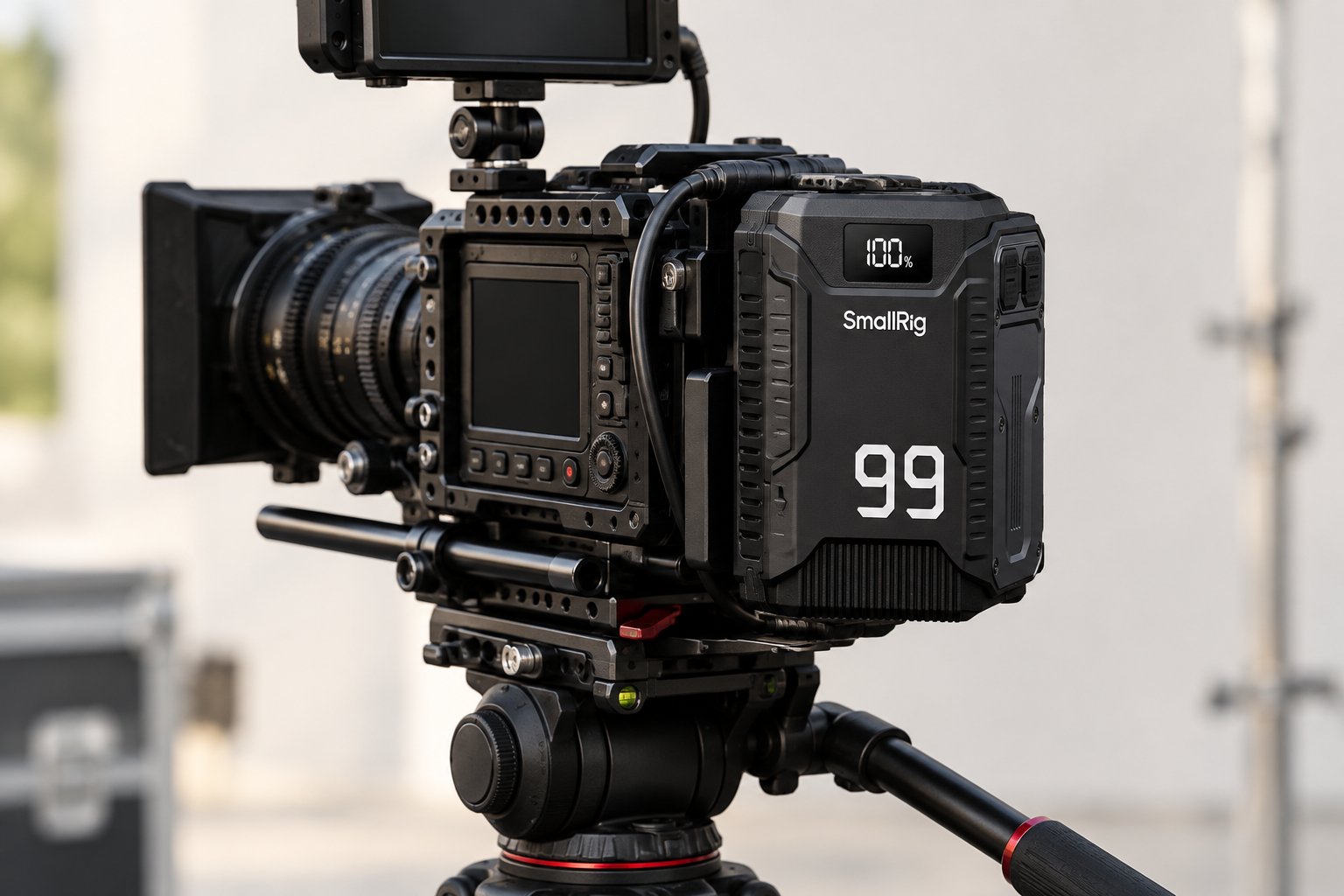
V-mount is the more open standard. Dozens of makers, including Sony, Core SWX, SWIT, Bebob and CAMVATE, build V-mount products. Gold Mount is proprietary and most common in broadcast television (Impulse Cameras). For you, that means a wider choice of sizes, prices and accessories on the V-mount side.
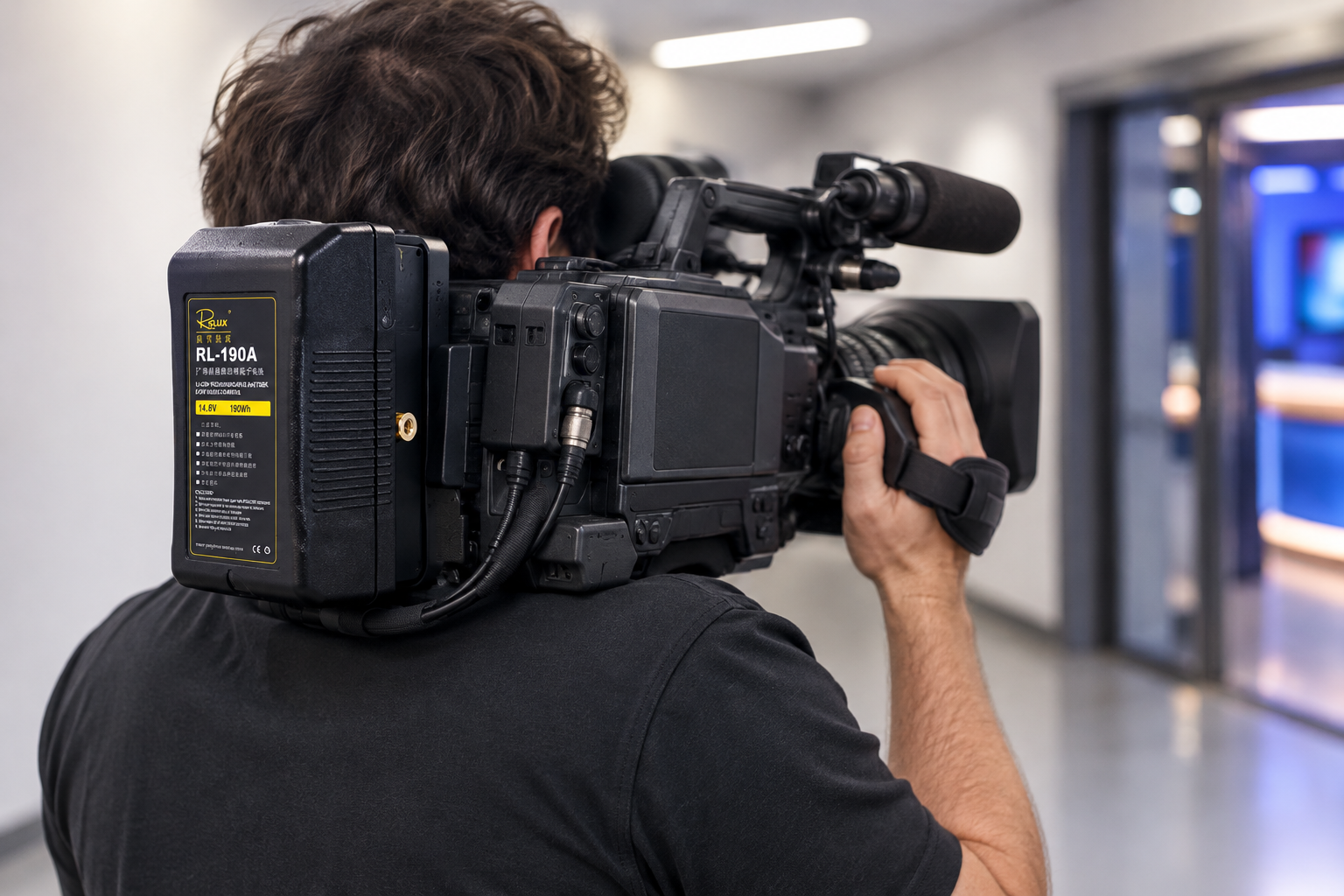
Gold Mount’s strength is its positive lock. You push the battery home and it stays put. That is why it keeps its place in news gathering, broadcast, studio and heavy Steadicam work (DFI Rentals).
If you need a Gold Mount pack, look at the ROLUX RL-190A (190 Wh).

How much power can each one deliver?
There is no single current limit for “V-mount” or “Gold Mount”. The limit belongs to the battery and the plate. Two examples show why.
- Anton/Bauer’s Titon Gold Mount batteries are rated for 10 A continuous and 12 A peak (Anton/Bauer).
- SWIT’s CIMO-98S V-mount battery is rated for 150 W / 12 A constant and 200 W peak (SWIT).
Here is the math you need. Watts divided by volts gives amps. A rig drawing 150 W at 14.4 V pulls about 10.4 A. That is already above a 10 A rating. At 10 A, a 14.4 V battery delivers about 144 W, which is the figure Anton/Bauer lists for its QR Hot Swap plate (Anton/Bauer user guide).
The contact pins are one reason limits exist. Bebob states that V-mount and Gold Mount systems allow a maximum output of 8 to 13.5 A because of their contact pins (Bebob). Some makers get more from their own connectors. Bebob says its CINE V-mount connection can deliver 20 A continuously (Bebob datasheet).
What should you do with this?
- Add up the real draw of your camera, monitor, transmitter and light.
- Convert it to amps at 14.4 V.
- Check the continuous rating of the battery, not the peak.
- Leave headroom. Do not run at the limit.
If your rig needs more than about 12 A, a 14.4 V pack on either mount is the wrong tool. Anton/Bauer’s Gold Mount Plus and B-Mount packs are native 26 V and rated for 12 A continuous and 20 A peak, which gives over 300 W (Anton/Bauer). We also stock a FXLION 26V V-mount battery with 270 Wh for gear that takes 18 to 30 V. Check your device’s input range first.
To size a battery for your rig, see our guide on how to calculate battery runtime for video gear.
Can you use a V-mount battery on a Gold Mount plate?
Not directly. The two mounts are physically different, so a battery from one does not attach to the plate of the other. Adapter plates bridge the gap, but each one works in one direction only.
- Gold Mount battery on a V-mount camera: you need a plate with a V-mount side for the camera and Gold Mount studs for the battery. Examples are the Bebob AB2V (CVP) and the FX Lion XH-AN-S (Adorama).
- V-mount battery on a Gold Mount camera: you need the opposite plate, such as the Core SWX AG-PS (Markertek).
Check three things before you buy an adapter: which side takes the battery, which side goes on the camera, and the current it is rated for. The adapter does not raise the limit of the battery behind it.
Adapters are a bridge, not a plan. They add bulk, one more connection and one more thing to forget in the kit bag. If you carry many batteries, standardise on one mount.
Some makers skip the problem by selling the same battery in both mounts. Core SWX, for example, offers most of its battery models in V-mount and Gold Mount (Core SWX). Buy the version that matches your plates.
Which mount is easier to fly with?
Neither mount changes the flight rules. Capacity does. Airlines care about watt-hours (Wh), not the mount.
Calculate Wh by multiplying volts by amp-hours (EASA). A 14.4 V, 6.9 Ah pack is about 99 Wh. The rules follow the FAA and EASA guidance:
- Up to 100 Wh: allowed in carry-on.
- 101 to 160 Wh: needs airline approval, and you may carry two spares at most.
- Over 160 Wh: not allowed on passenger aircraft.
- Spare batteries must stay in the cabin, never in checked bags.
Sources: FAA PackSafe and EASA.
This matters when you choose. Our Gold Mount range includes a 240 Wh pack (ROLUX YC-240A), which is above the 160 Wh limit. It suits studio and ground work, not flights. For travel, a 99 Wh V-mount pack such as the SmallRig T99 stays under the 100 Wh line.

Airline policies vary, so check with your carrier before you travel. Our guide to flying with video gear covers packing and paperwork.
Which one should you choose?
Use these rules.
- Your camera or plates are already V-mount or Gold Mount. Match them. Changing the mount means replacing plates, chargers and often cables.
- You are starting a new kit, shoot mixed jobs or travel. Choose V-mount. There are more batteries, more plates, and many more sizes from 50 Wh to 300 Wh. See our V-mount batteries and our V-mount battery buying guide.
- You work with broadcast crews or a studio that runs on Anton/Bauer. Choose Gold Mount so your batteries swap with theirs. Browse our Gold-mount batteries.
- You power lights or several accessories. Check the continuous current first, then pick the mount. A power-hungry rig matters more than the lock style.
For a V-mount battery with ports for accessories, the FXLION Cool Black 184 Wh has USB-A and D-Tap outputs and a 5-level power indicator. It is above 100 Wh, so it needs airline approval if you fly.
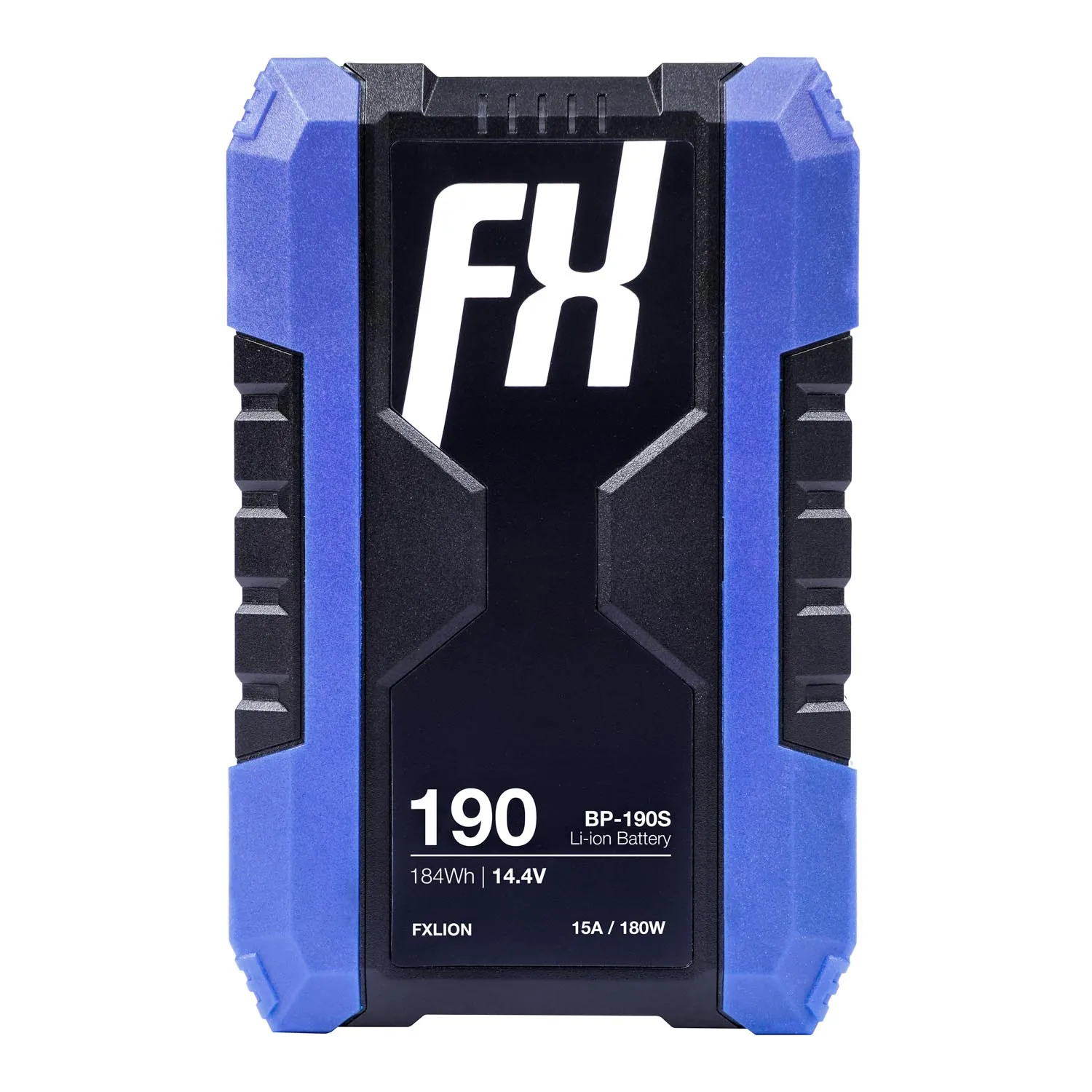
A V-mount plate with D-Tap lets you power extra gear from one battery. The FXLION V-mount plate with D-Tap mounts on a camera or acts as an interface for other uses. For gear that needs several outputs, our guide on powering multiple devices from one battery shows how to size the load.

Three mistakes to avoid
Mixing mounts in the same kit. One camera on V-mount and one on Gold Mount means two sets of batteries and chargers. Standardise where you can.
Buying by Wh alone. A bigger battery lasts longer, but it does not deliver more current. A 270 Wh pack can still be limited by its pins and plate.
Forgetting the charger. Chargers are made for a mount and a voltage. Match them, and check whether you need 14.4 V, 26 V or both. Our battery charger guide explains the options, and you can browse all chargers.
Key Takeaways
- V-mount and Gold Mount both run at about 14.4 V nominal. The difference is the lock, the ecosystem and the rated current of each battery.
- V-mount has more brands, more sizes and more plates. Gold Mount stays strong in broadcast and studio work.
- Compare the continuous amp rating of the battery against your rig’s draw. 150 W at 14.4 V is about 10.4 A.
- Adapters work in one direction only and do not raise current limits. Standardise on one mount where you can.
- For flying, keep packs at 100 Wh or below. Packs of 101 to 160 Wh need airline approval, and 160 Wh is the maximum.
Not sure which mount fits your camera and plates? Send our team your camera model and accessory list, and we will recommend a battery, plate and charger that work together. You can also browse our full batteries and power range.


