





CRI vs TLCI for Video Lights: Which Number Matters?
For video, look at TLCI first and CRI second. Aim for TLCI 95 or higher and CRI 95 or higher for faces and products. Use TLCI 90 as the floor. Then check that the maker gives the numbers at the colour temperature you will actually use.
If you shoot on a cinema camera, add a third number: SSI. It tells you how much you can trust the light on a camera that TLCI was not built for.
| Metric | What it tells you | Built for | Scale |
|---|---|---|---|
| CRI (Ra) | How well the light shows 8 pastel colours to the human eye | Human viewers | 100 is a perfect match |
| TLCI | How well a TV camera and display reproduce 18 colour patches | Video cameras | 100 is a perfect match |
| SSI | How closely the light’s spectrum matches daylight or tungsten | Cinema cameras | 100 is a perfect match |
What CRI measures, and where it falls short
CRI compares how colours look under your light and under a reference light of the same colour temperature. The general score, Ra, is the average of eight test colours (R1 to R8). All eight have low to moderate saturation, according to NIST.
That average is the problem. A light can score well on eight pastel samples and still render a strong red badly. Strong red is shown by the extra index R9, which is not part of the Ra average. The U.S. Department of Energy notes that R9 matters for skin tones. Its LED basics page says CRI is “especially poor” at predicting how saturated reds are rendered.
The wider scientific view is just as cautious. The CIE (the international lighting commission) concluded in its report 177 that CRI is generally not applicable to ranking white LED sources, as quoted in a DOE-hosted paper. CRI was written for human eyes and older lamps, not for camera sensors.
So treat CRI as a basic filter. A CRI of 95 or more is a good sign. It does not guarantee good skin tones on camera.
What TLCI measures, and why video people use it
The European Broadcasting Union (EBU) built TLCI for television. Instead of judging the light directly, it simulates a camera and a display. The method is set out in EBU Tech 3355:
- A spectroradiometer measures the light’s spectrum.
- Software passes 18 coloured ColorChecker patches through the camera-and-display model.
- It calculates colour differences with the CIEDE2000 formula and turns them into a score.
The scale runs from 0 to 100, and 100 is a perfect match with the reference at the same colour temperature. In EBU R 137, the calculation is set so a daylight fluorescent tube scores 50. That tells you how harsh the scale is at the bottom.
What does a score mean in practice? Cree, an LED maker, says in its technical note that a scene lit at TLCI 90 is easy for a professional to correct. A TLCI of 95 should remove the need for colour correction in most cases. This matches our own advice: 90 is the minimum, 95 is the target if you want to spend less time grading.
The catch: neither number is the full story
TLCI models an idealised three-chip television camera. The Academy of Motion Picture Arts and Sciences points out that this does not account well for the different spectral sensitivities of single-chip cinema and still-camera sensors. Read the Academy’s SSI page for the full argument. It also warns that a high CRI does not guarantee faithful camera rendering.
That is why the Academy created the Spectral Similarity Index (SSI), now a SMPTE standard (ST 2122). SSI does not model any camera. It compares the shape of the light’s spectrum with a reference such as daylight or tungsten. According to the Academy’s SSI overview, scores above 90 mean you are unlikely to see unexpected colour results. A lower score means a bigger chance of colour errors, but not which colours will go wrong.
You will also see TM-30 on spec sheets. It gives two numbers: Rf (fidelity, like an improved CRI) and Rg (gamut). An Rg near 100 means colours are neither pushed nor dulled on average, as the DOE explains.
How to read a spec sheet
Here is a real example of the details that matter. Litepanels lists its Astra 3X at CRI 95 and TLCI 98 at 3200K. At 5600K it lists CRI 95 and TLCI 95, as shown on a UK retailer’s page. The headline number hides a small drop at daylight. Both values are still excellent. But on a bi-colour light the score can move with the colour temperature, so check where it was measured.
Use this checklist when you compare lights:
- Look for both CRI and TLCI. A light that shows only CRI tells you less.
- Check the symbols. “95+” or “≥95” is a minimum. The amaran help centre says its figures are measured in the Aputure lab and “may vary slightly between individual units”.
- Ask about dimming. Some makers state there is no colour shift across the dimming range. For example, the Astra 3X Daylight page says so from 100% down to 0.1%.
- Find the SSI reference. SSI (D56) is compared with daylight and SSI (tungsten or D32) with tungsten. They are different numbers.
- Skip lights with no data. If a light has no figure at all, you cannot judge it.
A worked example: three lights, one interview
Say you shoot interviews on a cinema camera at 5600K near a window. You compare three lights.
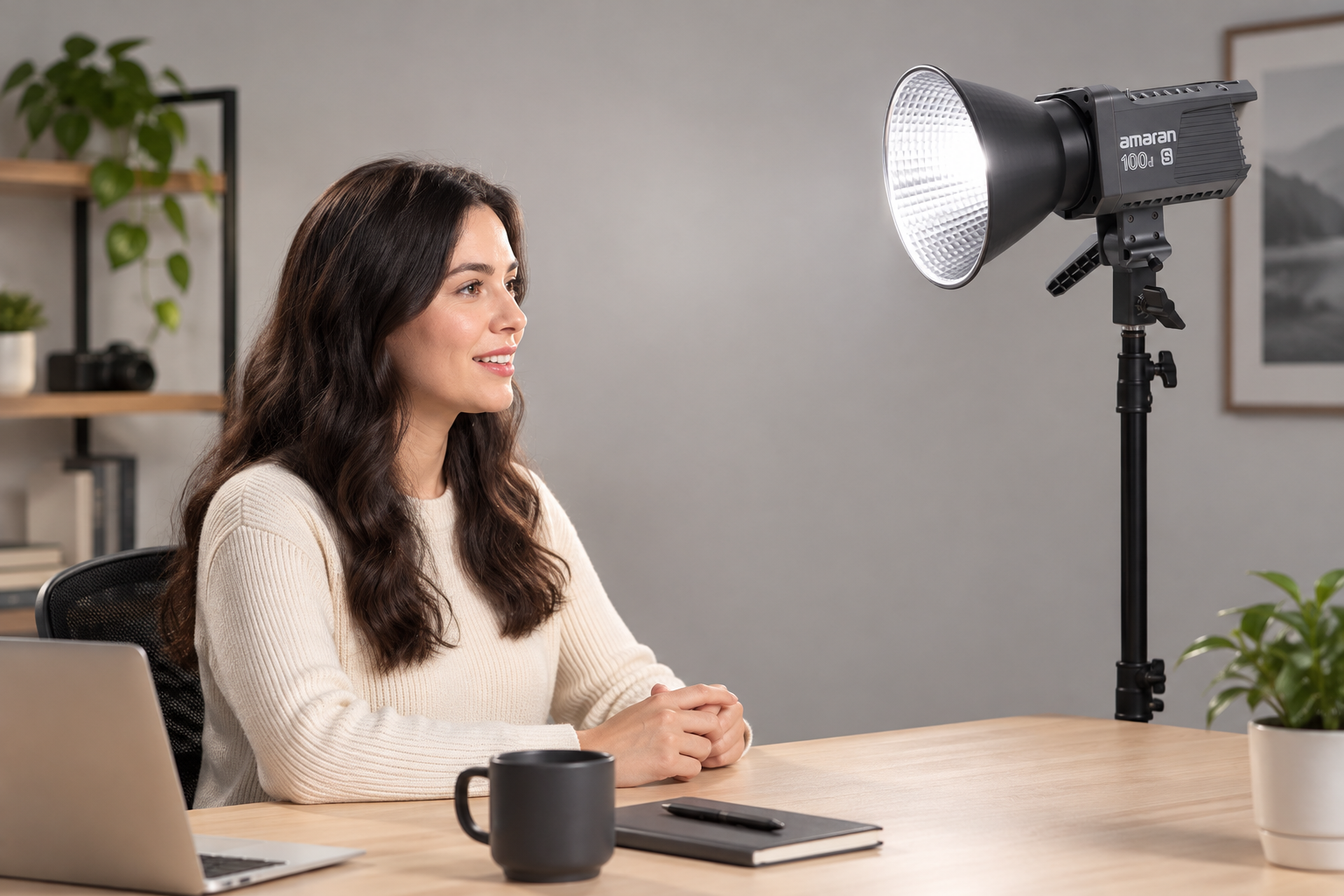
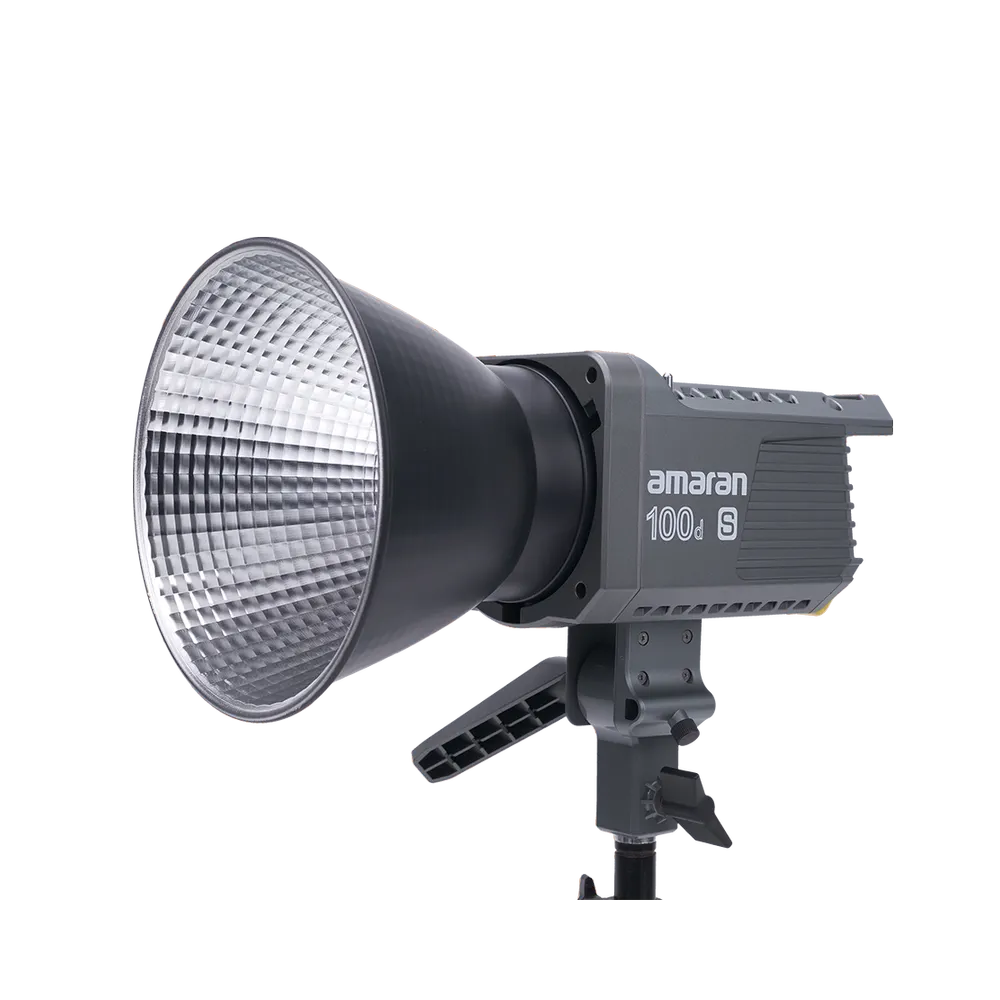
The AMARAN 100d S is rated CRI 96+, TLCI 99+, TM-30 Rf 96, Rg 103 and SSI (D56) 86+. That is a strong set, and the daylight-only design fits this job.
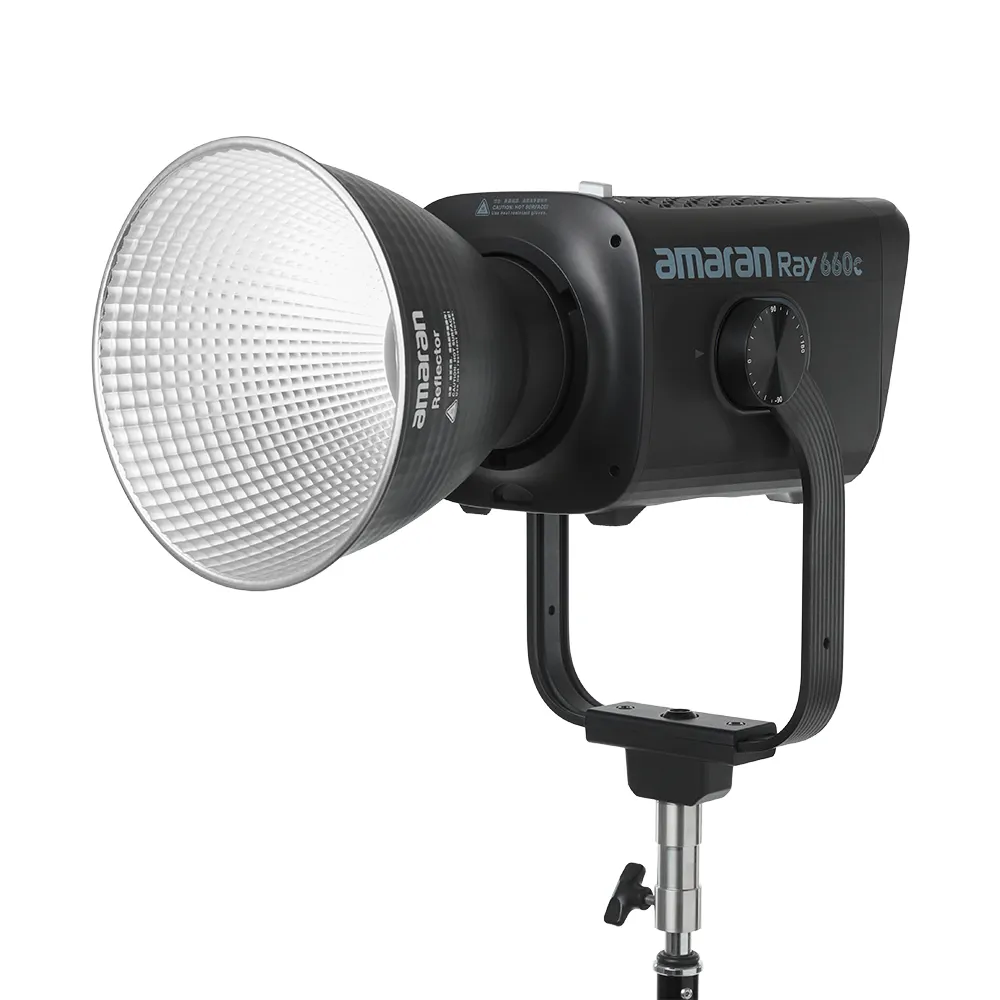
The amaran Ray series (60c to 660c) shares one colour system. The amaran specifications list CRI 95+, TLCI 95+ and SSI 87 (D32) and 80 (D56). Those figures are very good for a full-colour light. The lower daylight SSI is something to test, not to fear.
The Litepanels Astra 3X Daylight lists CRI 95 and a TLCI of 95 to 98. Our product page quotes both values in different places, so we would confirm the figure on the manufacturer’s sheet. It does not list an SSI figure.
All three meet the TLCI 95 target. The deciding factors are then practical:
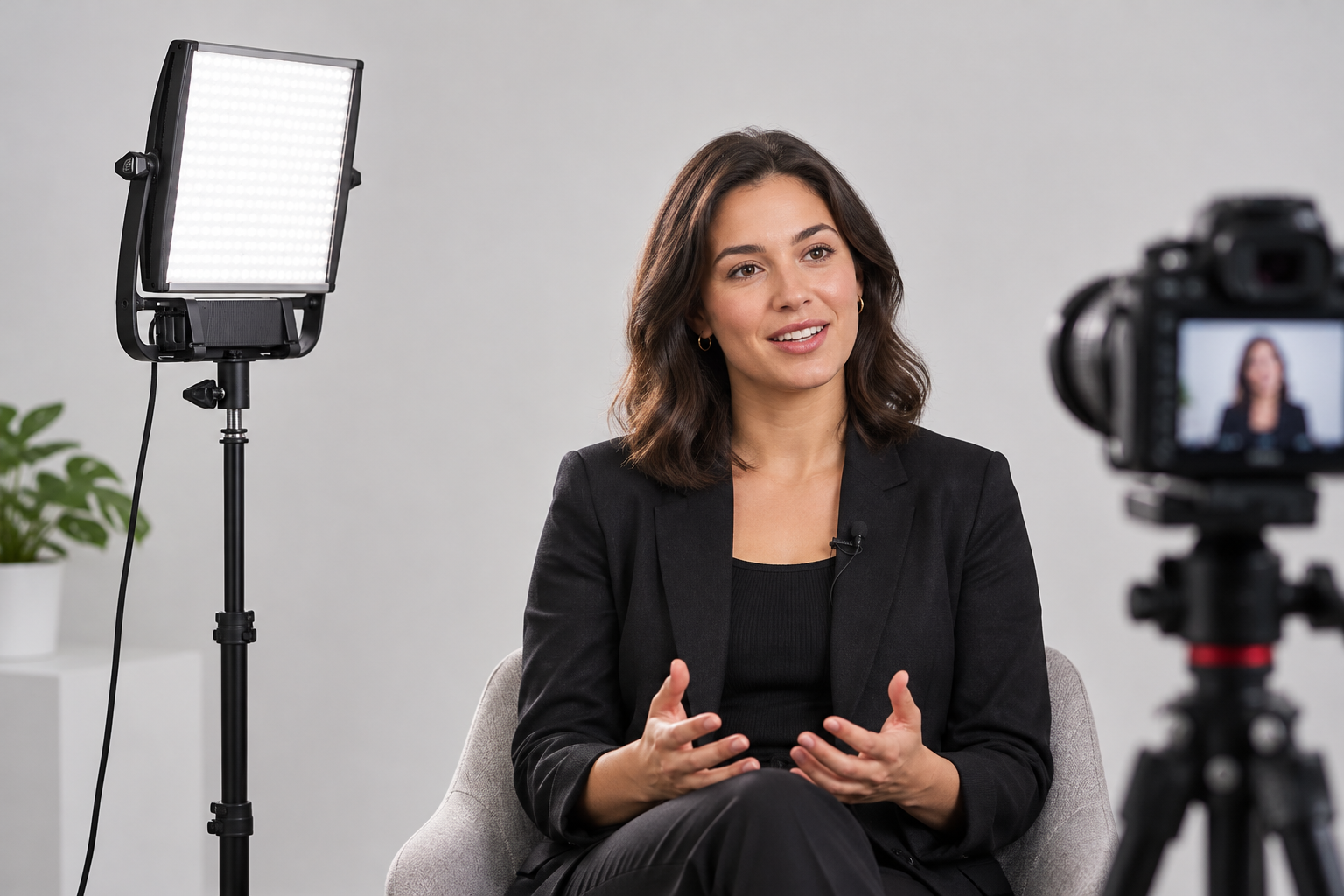
- Need a soft, flat panel on a talking head? Choose the panel.
- Need a hard, punchy key through a window-like beam? Choose a point-source light with a Bowens reflector.
- Need colour effects too? Choose a full-colour fixture.
Don’t pick on a one-point score gap. A TLCI of 98 versus 99 is far smaller than the difference a modifier or a wrong white balance makes.

When the numbers matter less
TLCI and CRI are about white light. If you use saturated RGB colours for mood, these scores say nothing about the coloured output. Use them to judge the white mode only.
They also matter less when you stack gels, use heavy diffusion or mix with window light. In those cases a test shot tells you more. Light a grey card and a ColorChecker chart, set white balance and look at the skin tones on a calibrated monitor. Our monitor calibration guide explains how to make sure the screen is telling you the truth.
Be careful when you mix brands. Two lights that both score 95+ can still differ slightly in green-magenta, because the scores are averages. Match them by eye and with a meter before the shoot, and use the same model for key and fill when you can.
Which light for which job
Colour temperature settings decide how the numbers play out in practice. Our guide to colour temperature for video lighting shows how to set Kelvin values to match a room. If you want to build a daylight look, see how to simulate natural light.
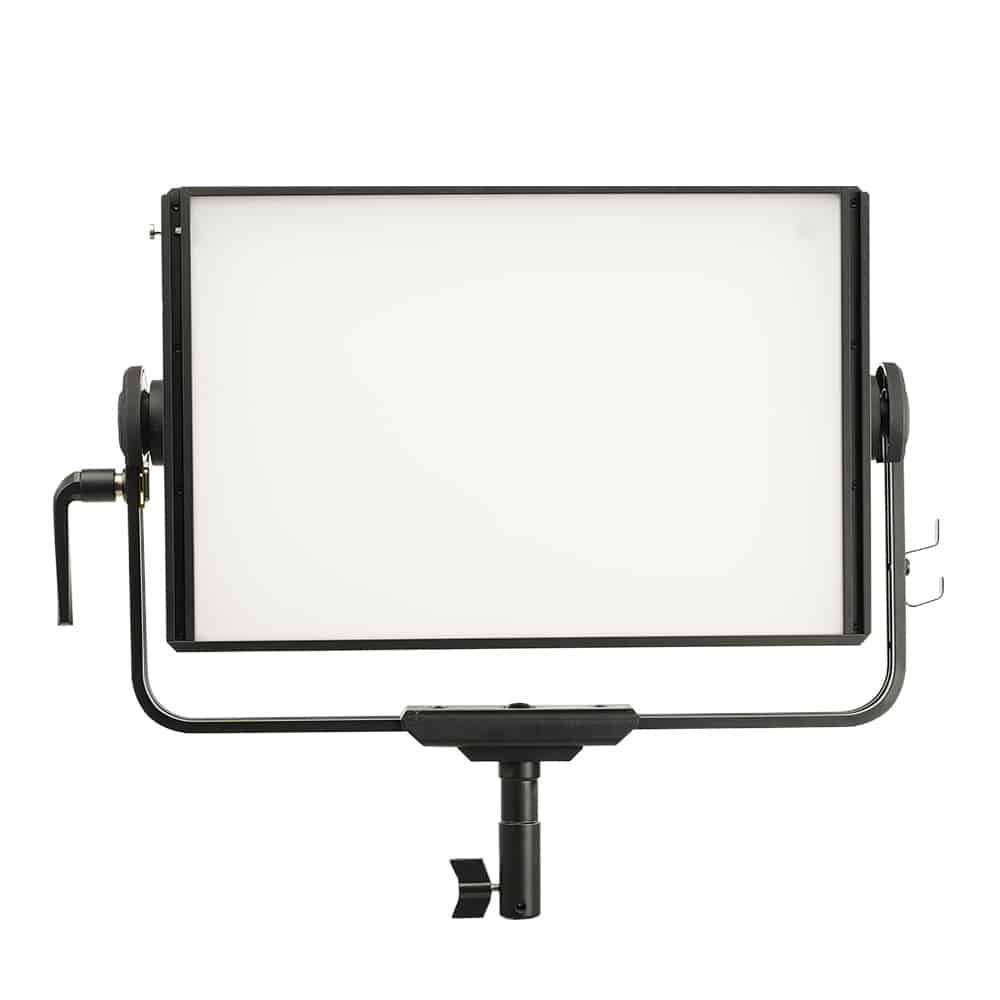
- Interviews, talking heads and streaming: a soft LED panel with TLCI 95+. See our LED panels and the live streaming lighting guide.
- Cinema camera work: TLCI 95+ and a high SSI at your working colour temperature.
- Colour-effect work plus accurate whites: a full-colour fixture with CRI and TLCI 95+, such as the APUTURE Nova P300c (CRI and TLCI >95+, 2000K to 10000K). It is currently on backorder, so check the page for stock.
Key Takeaways
- TLCI is the better first filter for video. It models a camera, while CRI models the human eye.
- Aim for TLCI 95+ and CRI 95+. TLCI 90 is the lowest score we recommend.
- Check the colour temperature and dimming. A score at 3200K can differ from a score at 5600K.
- On cinema cameras, look at SSI as well. The Academy says values above 90 make surprises unlikely.
- Always do a test shot. A grey card and a colour chart beat any spec sheet.
Not sure which light fits your camera and budget? Browse our LED panels or contact the MediaGear team, and we will help you pick a fixture with the right numbers for your shoot.


